
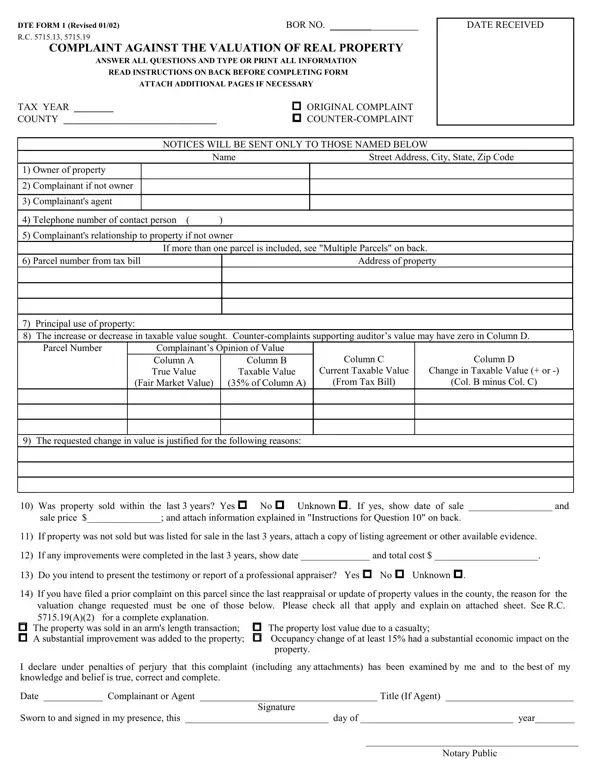
Understanding the DTE 1 form is essential for anyone involved in disputing the valuation of real property for tax purposes in specific states. Essentially, the form serves as a conduit for property owners or authorized representatives to voice concerns or disagreements with the current assessed value of a property. What stands out about the DTE 1 form is its comprehensive nature, catering to various scenarios such as casualty loss that depreciates a property's value, a significant occupancy change impacting economic performance, or a discrepancy in the taxable value of real estate. From providing basic information about the complainant and the property in question to detailed queries needing elaboration, such as changes in property use, sale history, improvements made, and the intention to present professional appraiser testimony, the form covers a broad spectrum of reasons that could affect a property's valuation. It mandates a clear articulation of the change sought in valuation, supported by factual justifications. Moreover, it stipulates deadlines for filing a complaint and outlines who may file, emphasizing a structured process for tendering payment of taxes based on the contested valuation pending the complaint's resolution. With penalties for undervaluation and stringent requirements for documentation and evidence presentation, the DTE 1 form underscores the importance of accuracy and thoroughness in challenging property tax assessments.
| Question | Answer |
|---|---|
| Form Name | Dte Form 1 |
| Form Length | 2 pages |
| Fillable? | Yes |
| Fillable fields | 54 |
| Avg. time to fill out | 30 sec |
| Other names | DTE, dte 1 form, taxable, nonattorney |
Dte Form 1 isn’t the one you’re looking for?