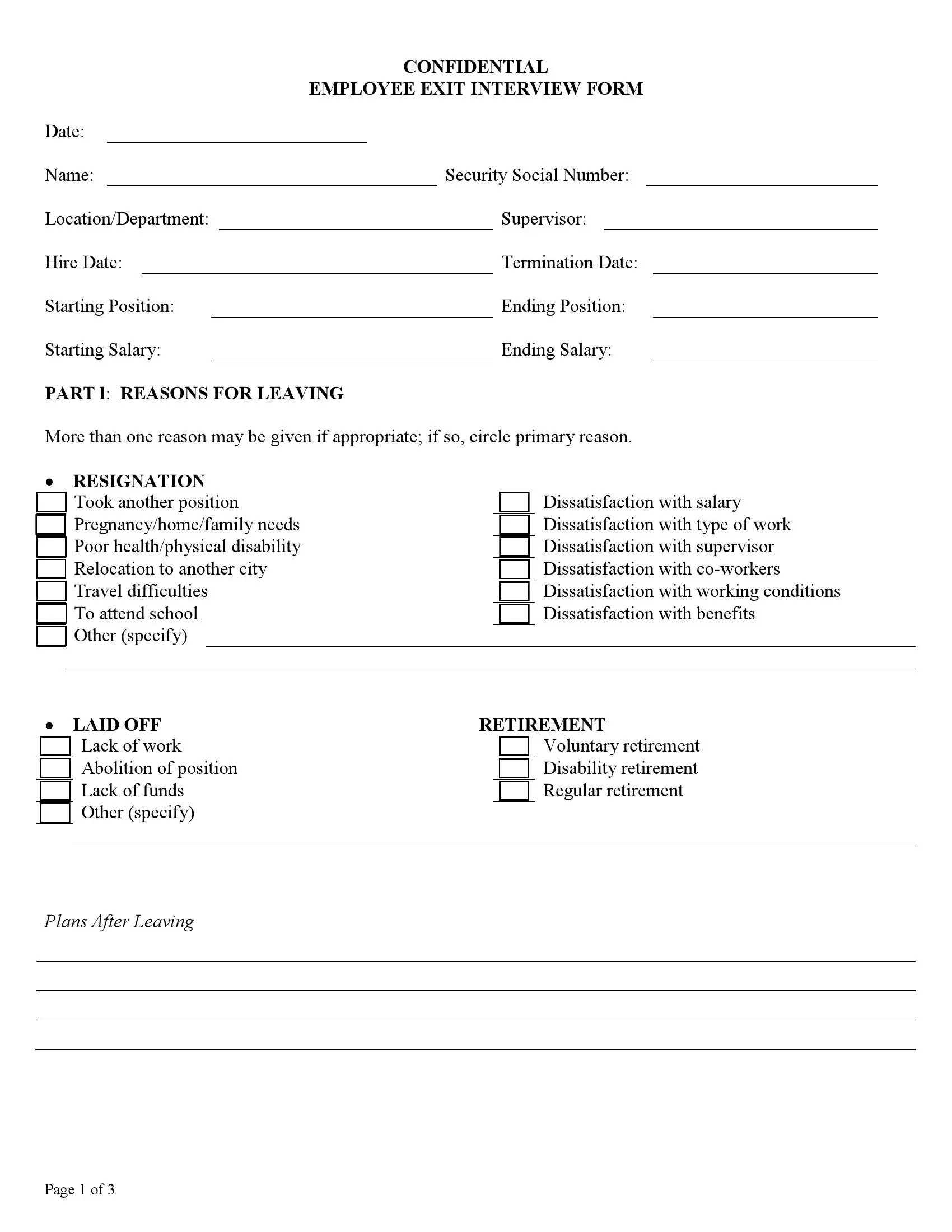
An exit interview template is a short form that records why an employee is leaving and how they felt about the job. Employees use it to share honest feedback with their manager. Employers use it to learn why people go and what to change. This guide shows how the form works, how to fill it out step by step, and how to run a useful exit interview.
Last Updated: October 2026. This guide is reviewed and updated regularly to reflect current law. If you notice an error or outdated information, please contact us.
The Importance of Exit Interviews
Exit interviews show you what it is really like to work at a company. They give both sides a chance to talk openly, share feedback, and spot what needs work. Here are the main reasons exit interviews matter:
- Identifying trends and patterns: Exit interviews can uncover trends in employee dissatisfaction or areas that need attention. Organizations can pinpoint recurring issues and address them early by reviewing feedback from many employees over time.
- Enhancing employee engagement: By showing a genuine interest in employees’ opinions and experiences, employers demonstrate their commitment to a better work environment. This can lift engagement and satisfaction among the remaining staff and foster a more positive work culture.
- Reducing employee turnover: Learning why employees leave can help organizations address the underlying issues and improve employee retention. Lower turnover saves time and resources in recruiting and training new employees and contributes to overall company stability.
- Learning about management effectiveness: Exit interviews often include feedback on managers and supervisors, helping organizations identify strengths and weaknesses in their leadership teams. This information can be used to improve management practices and offer targeted training and development opportunities.
- Assessing company culture: Departing employees may be more forthcoming about the work culture and any issues that exist. This feedback can help employers understand their company culture’s strengths and weaknesses and make necessary adjustments to create a more inclusive and supportive environment.
- Uncovering potential legal or ethical concerns: Exit interviews can help organizations identify potential legal, ethical, or compliance issues that may have gone unnoticed. Addressing these concerns promptly can minimize risks and protect the company’s reputation.
- Providing closure for departing employees: Exit interviews offer employees a chance to voice their concerns, share their experiences, and leave on good terms. This process can contribute to maintaining positive professional relationships and even future re-hiring opportunities.
How to Use the Employee Exit Interview Template
The exit interview usually takes place after an employee has decided to resign and has told their manager. How you use the exit interview template depends on your role in the company, so the table below shows what each side does with the form and what each side gets from it.
| Your role | How to use the form | What you get |
|---|
| Employee | Explain your reasons for going, share concerns, and suggest changes to the workplace. | A calm, clear way to give constructive feedback before your last day. |
| Employer | Add the form to your resignation process and ask each departing team member to fill it out honestly. | Insight into turnover, management, and culture that helps you improve operations and spot hidden issues. |
Filling out the exit interview form is a straightforward process. As an employee, your main goal is to describe your reasons for leaving honestly and to suggest ways your soon-to-be former employer could improve. Share your suggestions tactfully, so you keep a good relationship while still giving critiques that help the company in the long run.
Before you start, make sure you have the right form. You can complete the form on a computer with an online PDF editor, or print it and fill it out by hand.
- Date the document. Start by entering the current date at the top of the form.

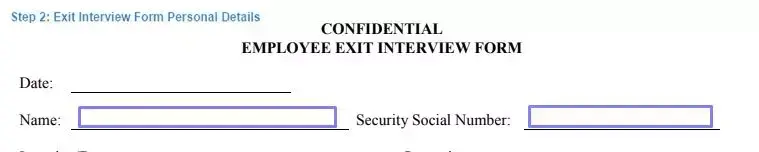
- Add your personal details. Provide your full name and Social Security Number (SSN).
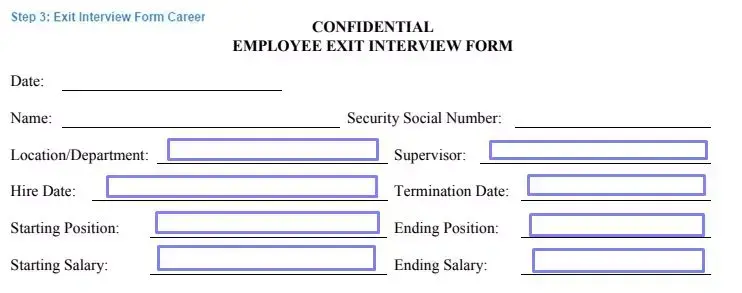
- Insert your employment details. Include information about your position, such as the department, supervisor’s name, hire and termination dates, starting and ending positions, and starting and ending salary.
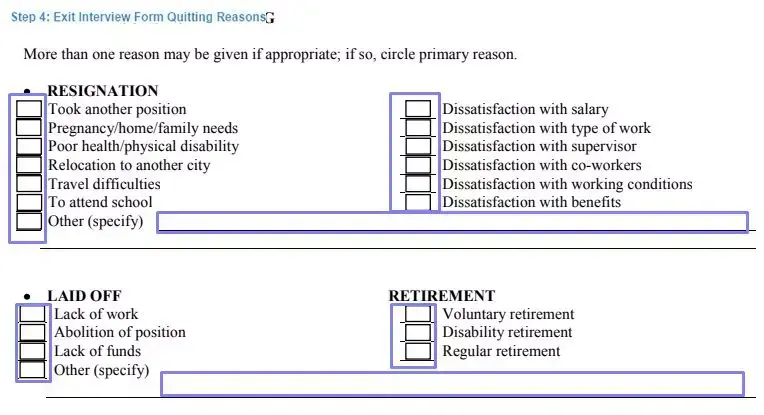
- Outline the reasons for leaving. The next part of the form covers why you are leaving your position. It is divided into blocks with these options: Resignation, Laid Off, and Retirement.
If you are resigning, you can select from over ten explanations. They include relocation to another city, family needs, and dissatisfaction with coworkers or the work itself. Mark the boxes that suit your case.
If you were laid off, you may pick one of three options. They all describe layoffs for reasons outside your control: lack of work, an abolished position, or lack of funds.
If you are retiring, there are also three options: voluntary retirement, regular retirement, or disability retirement.
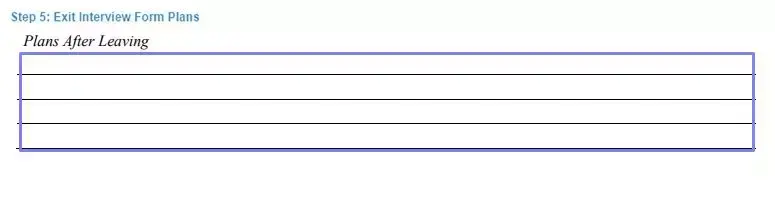
- Share your future plans. Briefly describe your plans after you go in the space provided.
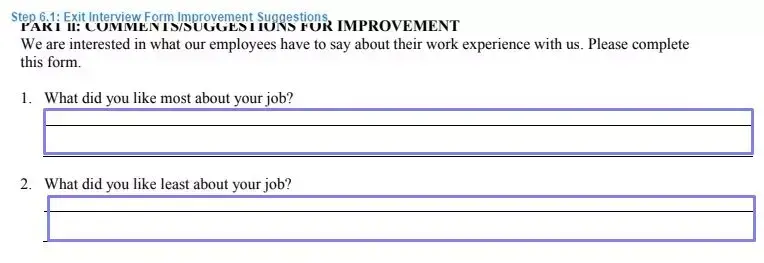
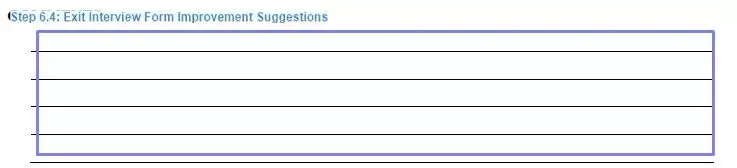
- Provide suggestions for improvement. Complete the sections that gather your feedback on different parts of your job, including salary, benefits, training, promotion policies, management, and more. Give honest feedback and do not hesitate to offer critique where it is needed.
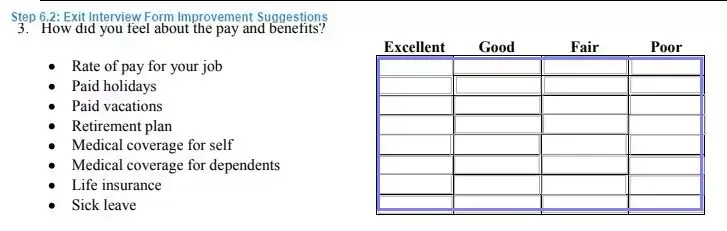
You will see a chart where you choose between “excellent”, “good”, “fair”, and “poor.”
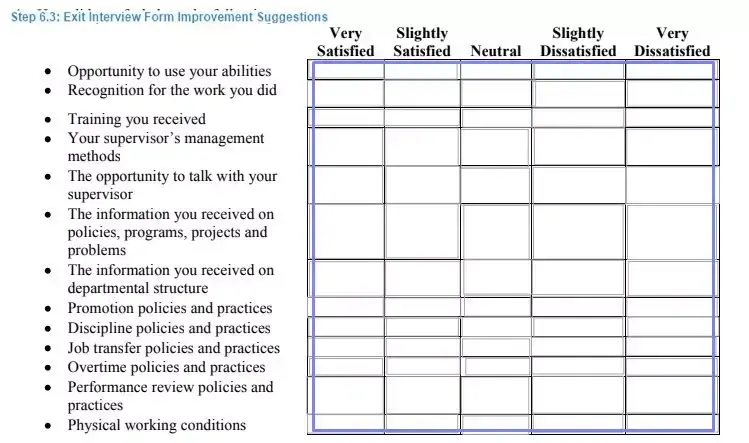
After rating these key elements, move to the chart below, where you rate other features of your past job. Show how satisfied or dissatisfied you were with the following:
- Training you received
- Promotion policies and practices
- Discipline policies and practices
- Opportunities to use your abilities at work
- Your supervisor’s management skills
- Physical working conditions
- Overtime policies and practices, etc.
On the next page, you will find empty lines for your comments.
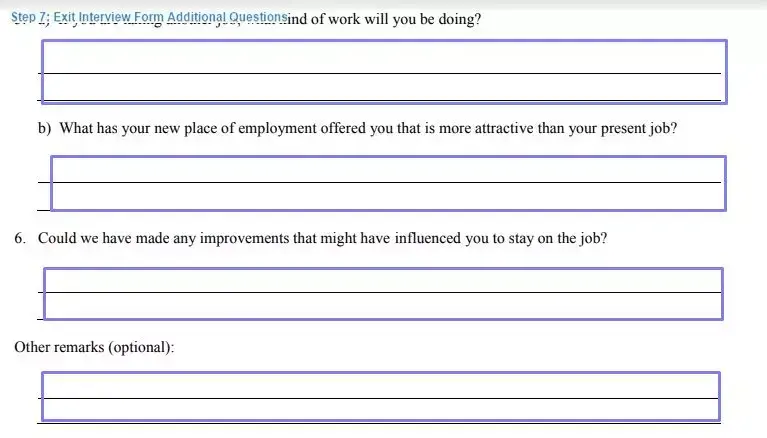
- Answer additional exit interview questions. Respond to the questions about your new position, your new workplace, and any improvements that might have convinced you to stay.
- Sign the form. Sign and date the form to confirm your identity.
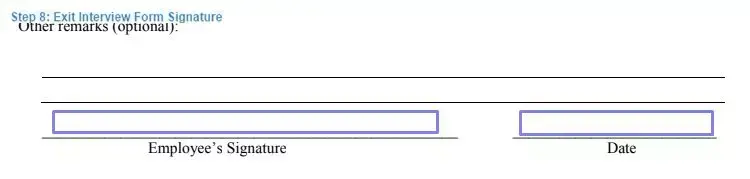
- Submit the form to your company’s representative. Under the signature, you will see a small block that you do not have to fill out. It is only for your interviewer, or the company’s representative, to complete.
Once the form is done, you will have an interview with the company representative. They will go over what you wrote, and you can add more thoughts and comments about the form.
Tip: Write down your main points before the meeting. Two or three specific examples keep your feedback clear and calm, and they are easier for the company to act on.
Sample Exit Interview Questions
The form covers the basics, but a conversation goes deeper. These sample questions work well in an exit interview. Pick the ones that fit your workplace and ask them in a calm, open way. Employees can also read them ahead of time to get ready.
Questions About the Role
- What did you enjoy most about your role here?
- Did your day-to-day work match what you expected when you were hired?
- What would have made your job easier or more rewarding?
Questions About Management and Culture
- How would you describe the support you got from your manager?
- Did you get the training and tools you needed to do your best work?
- How would you describe the culture of the team and the company?
Questions About Leaving
- What factors contributed to your decision to leave?
- What could we have done to keep you here?
- What would you change about the company if you could?
Best Practices for Conducting Productive Exit Interviews
An effective exit interview process gathers honest feedback and useful insights from departing employees. These best practices help keep the conversation productive, respectful, and focused on what the company can learn from it:
- Create a comfortable environment: Hold the exit interview in a quiet, private space where employees feel at ease sharing their thoughts and experiences. The atmosphere should be relaxed and non-confrontational.
- Be prepared: Review the employee’s work history, performance, and accomplishments beforehand. Get to know the exit interview form and any specific questions you want to ask. This preparation makes the conversation more focused and insightful.
- Keep it professional and objective: Approach the exit interview as a fact-finding mission rather than a personal discussion. Remain neutral, objective, and professional throughout the conversation to encourage open communication.
- Ask open-ended questions: Use open-ended questions that let employees express their thoughts and opinions freely. Examples include, “What did you enjoy most about your role here?” or “What factors contributed to your decision to leave?”
- Actively listen: Be attentive to the employee’s responses, take notes when needed, and show genuine interest in their feedback. Avoid interrupting or jumping to conclusions, and give them the time and space to share their perspective.
- Encourage honesty and candor: Assure the employee that their feedback will be treated confidentially and stress the importance of honest feedback for the organization.
- Probe for specific examples: If an employee mentions a concern or issue, ask for specific examples or situations to better understand the problem. These details help you find what needs to change.
- Discuss potential improvements: Ask the departing employee for suggestions on how the organization could address the concerns they raised. This can point to useful changes and shows that you value their input.
- Stay focused on the employee’s experience: Keep the conversation centered on the employee’s experience, feedback, and suggestions. Avoid gossip and unrelated topics.
- Follow up and take action: After the exit interview, review the feedback and identify what to change. Share relevant insights with key decision-makers and plan how to address the concerns raised. This follow-up shows a commitment to growth and continuous improvement.
With these habits, exit interviews become a reliable way to learn what your people think and to build a better work environment.
Common Exit Interview Mistakes
Even a well-designed form falls flat when the meeting itself goes wrong. These mistakes are easy to avoid once you know what they look like, and each one can keep a departing team member from speaking openly:
- Treating the exit interview as a formality instead of a chance to learn.
- Holding the meeting in a rushed, noisy, or public place.
- Arguing with the feedback or defending past decisions.
- Collecting forms and never reading them again.
- Asking only yes or no questions, which hide the reasons behind a decision.
- Skipping the follow-up, so the team never sees what changed.
Frequently Asked Questions
What is an exit interview template?
An exit interview is a structured conversation between a departing employee and their employer, often led by HR or a manager. The template is a ready-made form that keeps the conversation organized. It records why an employee is moving on, how they rate the job, and what they suggest, so the employer can learn from every departure and compare feedback across the team.
What should I say in an exit interview?
Be honest, specific, and calm. Name what worked well and what did not, and give an example for each point. Offer one or two ideas for improvement, and leave out personal attacks so your feedback stays easy to act on.
How should I prepare for an exit interview?
A little preparation keeps the meeting calm and useful:
- Read the form ahead of time.
- Pick two or three main points.
- Write down one example for each point.
- Decide how much you want to say about your next steps.
Keep your tone friendly, even when the feedback is hard to hear.
How long does an exit interview take?
Plan for about 30 to 60 minutes. Filling out the form takes less time, so you can finish it before the meeting and use the meeting to talk through what you wrote.
Who should lead an exit interview?
A person from HR or a manager one level above the employee often leads it. A neutral interviewer makes it easier for the employee to speak openly. The interviewer should listen, take notes, and avoid arguing with what they hear.
What should employers do with the feedback?
Review the feedback together with notes from other departing employees. Look for themes that repeat, share the main points with decision makers, and pick one or two changes to try first.
What questions should an exit interview include?
Good questions are broad and easy to answer. Ask why the employee decided to leave, what they liked most about the company, and how they felt about their manager and team. Add a question about what the company could do better, and one about what would bring them back. Broad questions invite stories, which tell you far more than a yes or no.
How can a company keep exit interview feedback useful?
Collect every form in one place and review the answers on a regular schedule. Group comments by team, role, and theme so patterns stand out. Share a short summary with managers, and tell employees what changed because of their feedback. A company that acts on what it hears gets more honest answers from the next person who leaves.
What happens after the exit interview?
The company usually reviews the feedback, compares it with earlier exit interviews, and looks for patterns. Keep a copy of your signed form for your own records.
General information, not legal or tax advice.
With over 25 years of experience as a business and transactional attorney, Jennifer has mastered the craft of closing highly successful deals for her clients. Through her wide-ranging expertise in commercial contracts, real estate transactions, M&A and corporate law, Jennifer secures results that are second-to-none.