
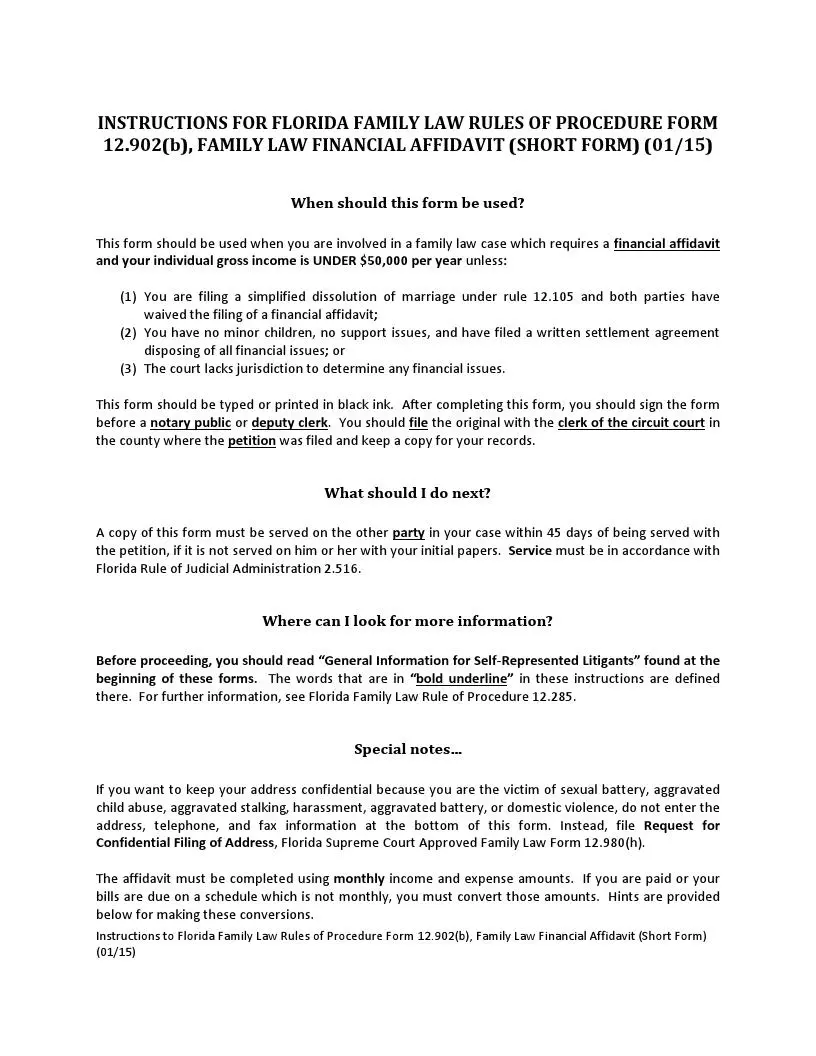
The Florida family law financial affidavit short form (Form 12.902(b)) is a detailed list of your monthly income, deductions and everyday spending, organized by section. To complete it, keep your checkbook, receipts and a bank statement handy, plus a rough estimate of your smaller expenses.
Last Updated: October 2026. This guide is reviewed and updated regularly to reflect current law. If you notice an error or outdated information, please contact us.
Lawyers make extensive use of the Florida Financial Affidavit in family law cases. The statement is especially true in cases of divorce, alimony, and changes concerning alimony payments. As you can see, these are situations when the court really needs to know the financial capabilities of the payer.
Thus, the financial affidavit is necessary for the financial testimony of the parties involved in the lawsuit.
The difference between Florida Family Law Rules of Procedure Form 12.902(b) (Short Form) and Form 12.902(c) (Long Form) lies in the individual gross income threshold for each form. The Short Form, 12.902(b), is used when an individual’s gross income is under $50,000 per year, while the Long Form, 12.902(c), is used when an individual’s gross income is $50,000 or more per year.
Please note that there are two varieties of the form. You need to fill out a suitable one. Otherwise, you will have to rewrite the application. Select the paper according to your total annual income.
If you earn less than $50,000 a year, fill out a short form; if your income is more than that amount, use a lengthy affidavit.
Please note that the form has instructions inside. It is a short guide that provides a few comments but does not contain detailed information on how to fill out the application. The instructions have a warning when you don’t use the form. These are the following cases:
Both Spouses Declined to File a Financial Affidavit
The parties may exercise this right if the judge conducts divorce proceedings in accordance with rule 12.105. It is a simplified divorce procedure applied when the spouses do not have underage children and agree on the division of property between each other. Simply put, the affidavit is unnecessary if the spouses do not need a third party to settle issues on the division of property.
Divorce Process Does not Affect Minors
In relation to minor children, this situation is a special case of simplified divorce. Since the financial affidavit is needed to compile the amount of alimony payments, this paper is not required if there is no reason for alimony. In financial matters that do not concern child support, the spouses can file a settlement agreement that indicates a successful solution to financial issues.
Court Does not Decide Financial Issues
The local court does not deal with financial matters in relation to divorce proceedings or other matters related to payments.
If your divorce case does not fit any of these three situations and, on the contrary, meets the requirements of the previous section of this article, you need to fill out the Florida financial affidavit short form.
There are some simple but strict official rules for filling out the form. They cover how to complete the document so that it is accepted, as well as where to submit it. So, do the following:
Fill out the form electronically or by hand in black ink only
Please note that even if you fill out everything correctly, the court may refuse to consider the form if you used blue or colored ink.
Submit the form via e-service
Applicants must submit all documents, except for certain circumstances, electronically in Florida (this is indicated in the instructions to the form). You can submit the paper by email or through the Florida Official Portal.
So you have two ways to either print out the document, fill it out, and make a scan or complete the sections immediately in electronic form. The second option is much easier and more convenient, so use our online constructor to prepare legal forms.
Make a copy
Before submitting the financial affidavit form, make a copy for your needs. You may need to notarize it in order to use it in your case.
File it in the circuit court
File your application with the exact district court office where you filed for divorce. Please be careful with this because if the documents are located in different offices, the case may be suspended. At any rate, the financial affidavit will not be attached to the case if it is filed somewhere else.
Both spouses typically fill out a financial affidavit since the court takes into account each party’s need for alimony, as well as the paying capacity of each of the parties. The form includes a header and six sections. Work through them in order.
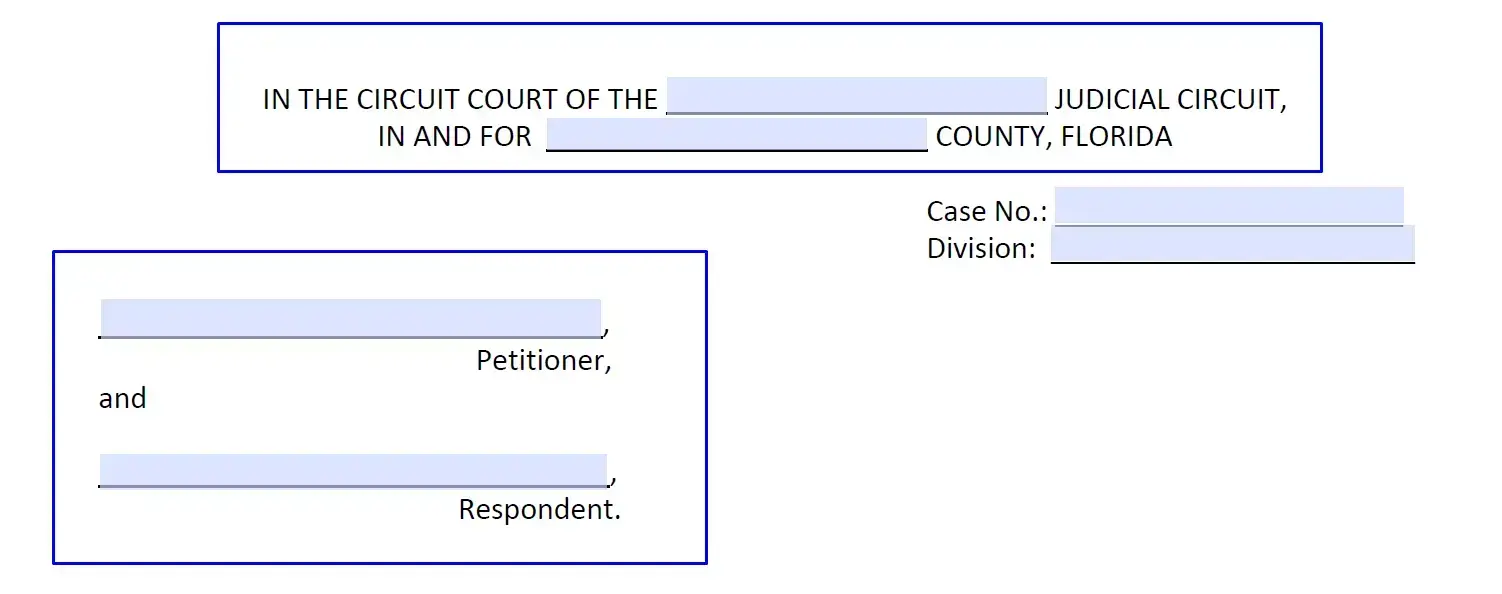
Fill in the Document Header
Enter the relevant data on the line about the circuit court location and the state. Below, identify the Petitioner (the person who submits the application and signs it) and the Respondent (your spouse). The clerk usually fills in the case number and division information.
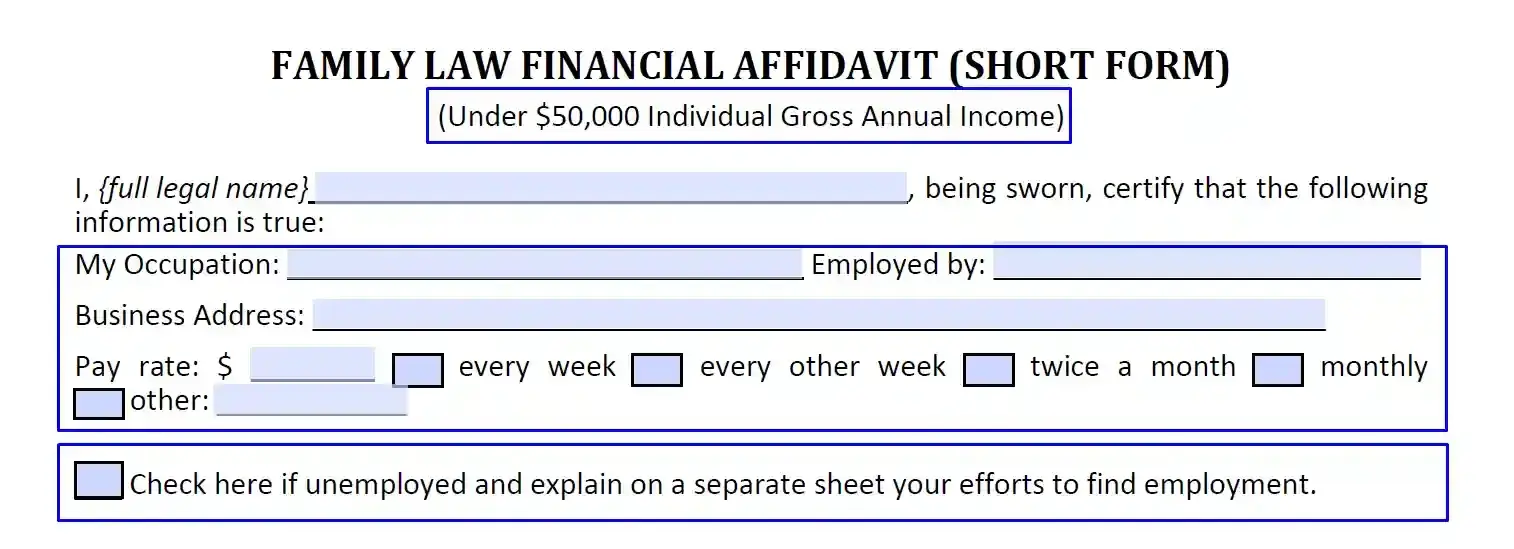
Indicate Your Name and Place of Work
Enter the initial data, such as your full name. Fill in the lines regarding your work, if you are employed, or indicate that you are unemployed. Once again, please note that this form is for those who receive less than $50,000 in total annual income.
Determine Your Monthly Income
The first section of the financial affidavit requires data on the person’s monthly earnings. Please note that you must specify exactly the monthly income (this requirement is written in bold under the section heading).
If you receive any type of income, whether it is a salary, pension, or compensation, for the amount of work less or more than one month, you must convert these bills into monthly income. Please enter the amounts according to the types of income.
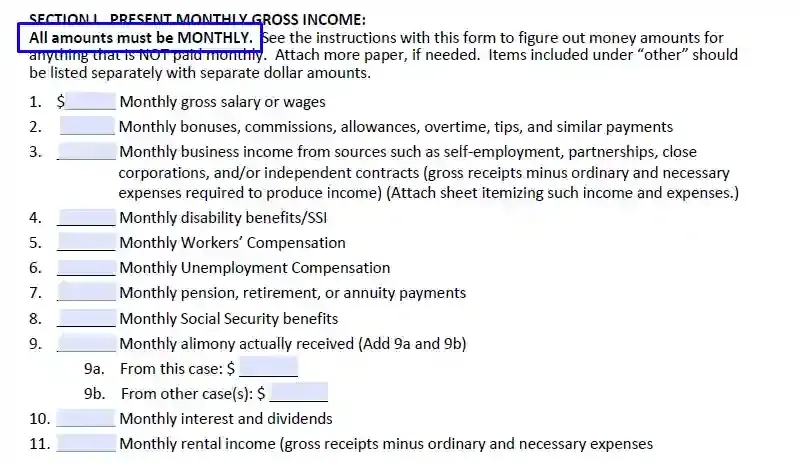
The form instructions explain the calculation. For example, if you are paid by the hour, multiply your hourly rate by the hours you work per week. Multiply that by 52, the number of weeks in a year. Then divide by 12 to get the monthly amount for the line.
Be sure to fill in line 17, which shows your total income for the month.
Specify Monthly Deduction
This part of the first section indicates such mandatory expenses as taxes of various levels, medical insurance and treatment, current alimony if any, and other types of mandatory contributions. Please note that you also need to count for one month.
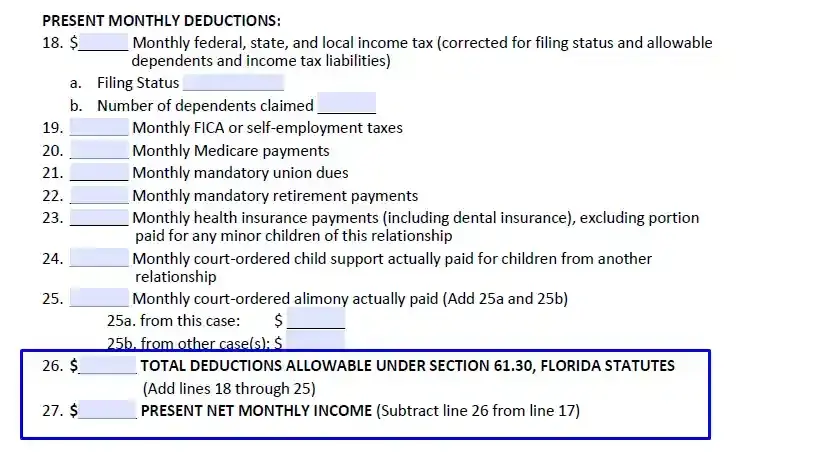
To fill in line 26, add up all the previous deductions. In line 27, enter your net income, that is, after deducting all taxes and other expenses.
Indicate Current Additional Outlay
The second section covers the implied regular costs. These are detailed expenses for the maintenance of an apartment and car service, providing for children, and contributions to medical insurance. You also need to specify such basic outlay as buying clothes, gifts, and contributions to religious organizations. The final subsection requires you to specify the credit contributions if any.
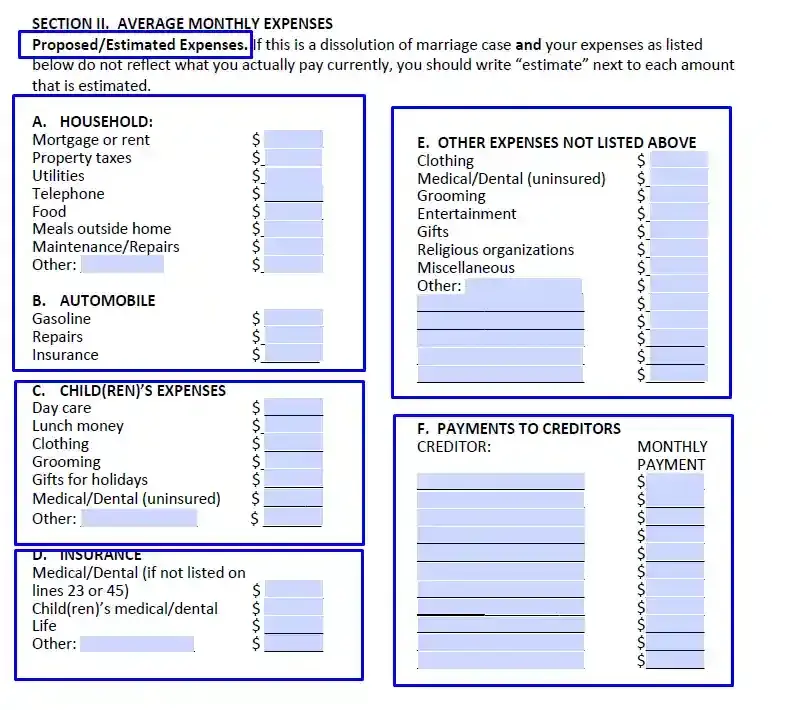
Such a detailed description is necessary for the judge to let them understand your real financial circumstances. Since the final court decision on the finance distribution will depend on this data too, try to fill in the lines as fully and truthfully as possible. Remember the expenses that are not mentioned in the subsection lists, if any, and enter them in the “Other” line.
Be sure to calculate your average monthly expenses for line 28 at the top of the next page.
Make Intermediate Calculations
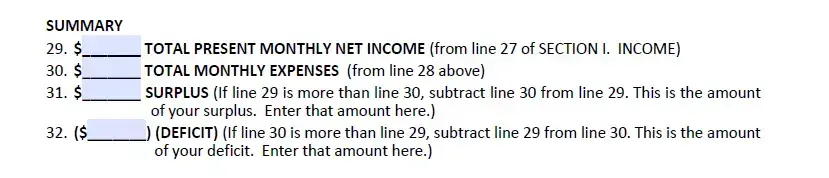
Move the corresponding numbers to lines 29 and 30 and make calculations for the two following lines according to the instructions in parentheses.
Determine Non-Divided Property, if any
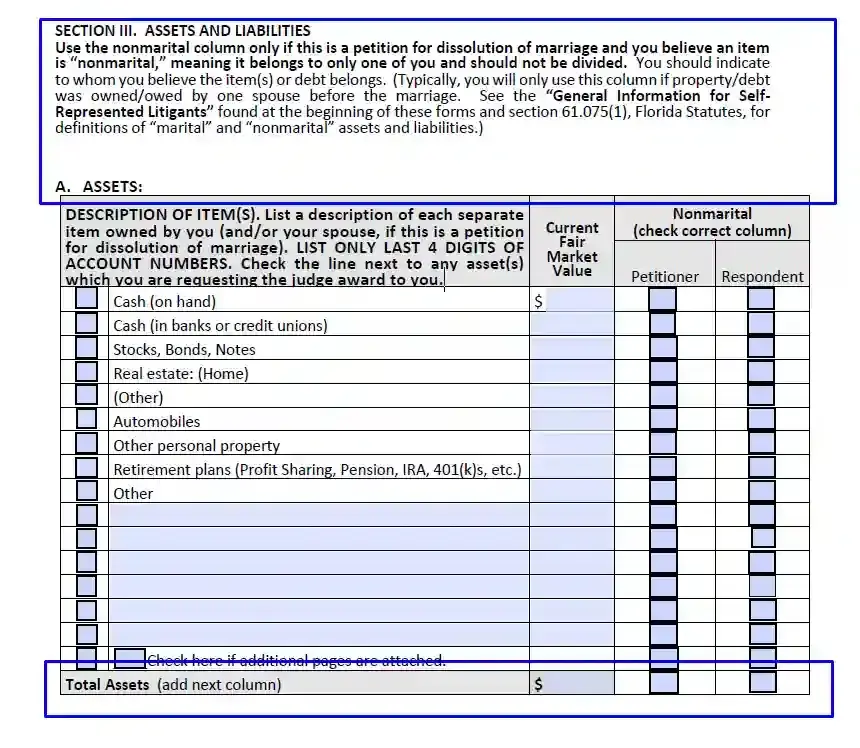
The third section deals with property or debt that, in your opinion, belongs only to one of the spouses and should not be divided after the divorce. Usually, this is an extramarital property that was acquired before the marriage.
Check the box according to the type of property and its owner (Petitioner or Respondent). The first subsection covers information on acquisitions.
The second subsection concerns debts and collateral.
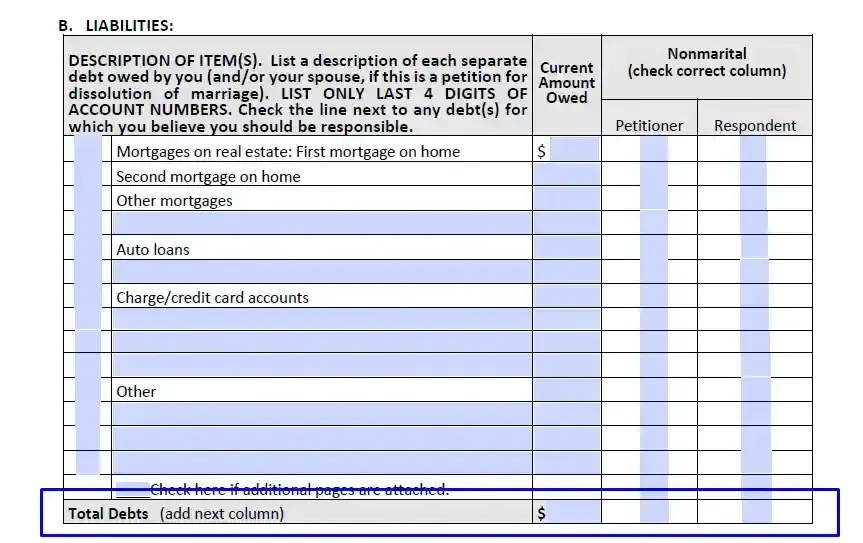
The third subsection discloses information on potential profits or losses. If you have any ideas about your financial future, define them here.
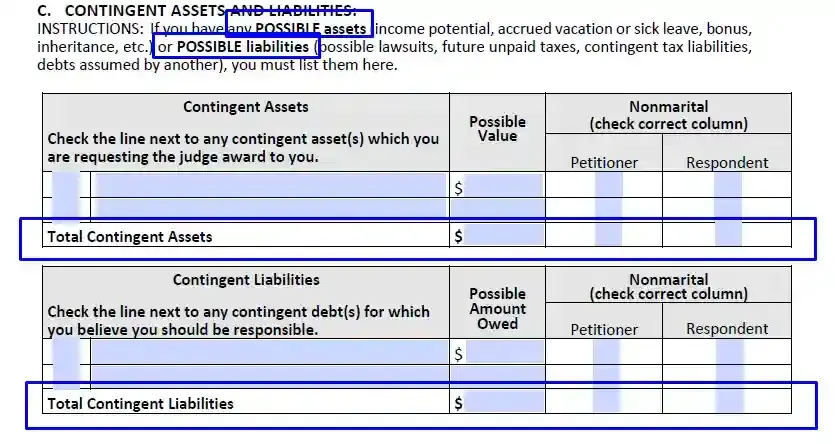
Again, calculate the total amount for each table.
Specify on the Alimony Sheet
Check one of the options to see if the child support form will be completed (or has already been completed) or if it is not required in this case.
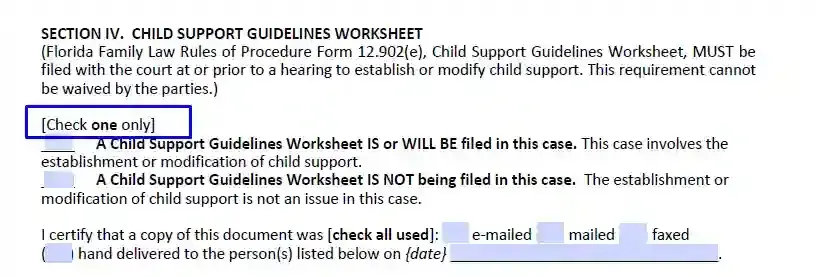
Confirm Sending the Copy
Specify how you sent a copy of this document to the other party and have them confirm receipt.
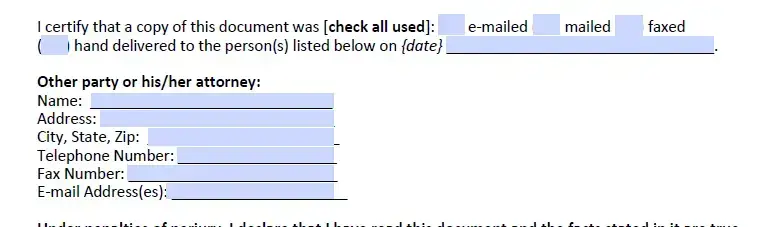
Certify the Document
Set the date and enter all your full identification data.
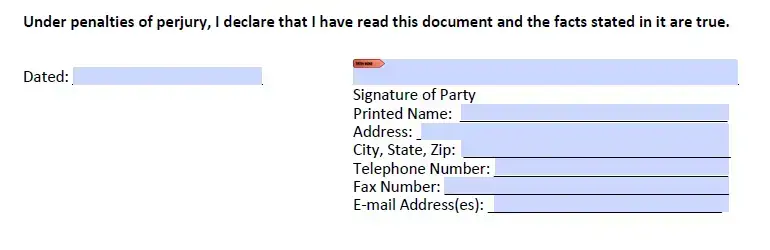
The last part applies only if someone helped the Petitioner fill out the form. In that case, enter that person’s details here.
Thus, the family law financial affidavit form is in demand in various court cases related to financial court decisions. You may need to fill out the paper for divorce for child support, in other cases for the payment of court costs, and so on.
There are various cases in which this form is involved, but everywhere it is important to know how to fill it out without mistakes. Since, as a rule, the form 12.902(b) is only a part of the overall package, errors can delay the progress of the case. Therefore, to fill out the document quickly and accurately, use our online form builder.
The Florida Statutes provide more detailed information on how the financial affidavit is applicable and provide a legal justification for the form’s validity. For information about child support, you can see Title VI “Civil Practice and Procedure,” Chapter 61, Section 8.
Information on the use of the financial affidavit in the divorce process is disclosed in Section 125 of the same chapter, which deals with parental control. To learn more about the legal background of the family law financial affidavit, see the other sections of Chapter 61.
Looking for another document? Browse our full set of printable affidavit form pages.
Gather your checkbook, receipts and a bank statement before you start. Add a rough estimate of your smaller expenses, because the form asks for monthly amounts. With these on hand, each section goes much faster.
Multiply your hourly rate by the hours you work in a week. Multiply that by 52, the number of weeks in a year, then divide by 12. Enter the result on the matching income line of the first section.
Line 17 shows your total income for the month. Line 26 adds up your deductions, and line 27 shows your net income, which is what remains after taxes and the other deductions are taken out.
Use it for any expense that the lists above it do not mention.
General information, not legal or tax advice.
