
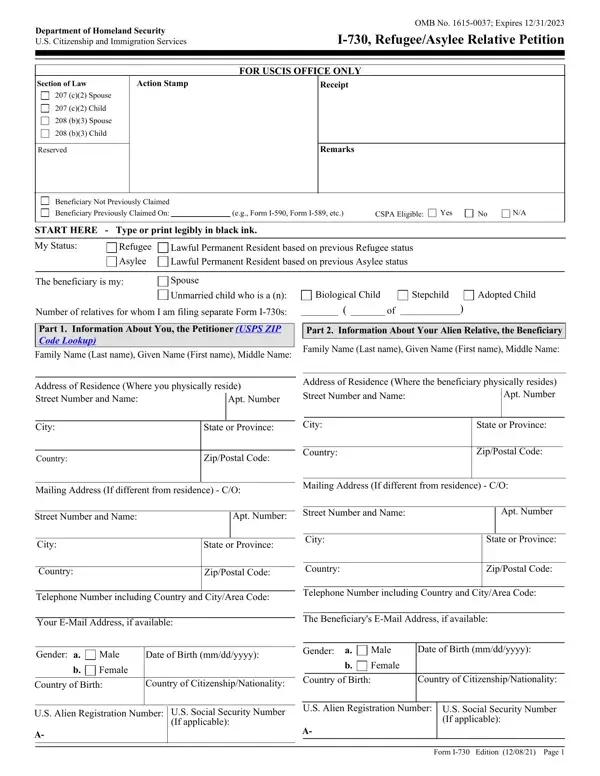
The beneficiary is your spouse or an unmarried child who is a biological child, stepchild or adopted child.
Delay: if you answered Yes to the previous question, explain the delay in filing and submit evidence to support your explanation.
Photographs: please submit a passport-style photograph or a recently taken clear photograph of each family member you are petitioning for.
Entries: submit a copy of each I-94 and/or copy of the beneficiary's passport showing all the entry and exit stamps for each entry.
Interview: beneficiaries in the United States will be interviewed by USCIS officers. Their petitioners may also be interviewed.
| Question | Answer |
|---|---|
| Form Name | Form I-730 |
| Form Length | 12 pages |
| Fillable? | Yes |
| Fillable fields | 320 |
| Avg. time to fill out | 54 min |
| Edition | 01/20/25 |
| Issuing agency | U.S. Citizenship and Immigration Services |
| Matches the agency's file | Yes, checked October 1, 2026 |
| Other names | I-730, I730, I 730, Form I-730, Form I730, I-730 form, Refugee/Asylee Relative Petition |
| Official source | Form I-730 (Rev 01/20/25), U.S. Citizenship and Immigration Services |
Form I 730 isn’t the one you’re looking for?