

Form PTO-1390 at a glance
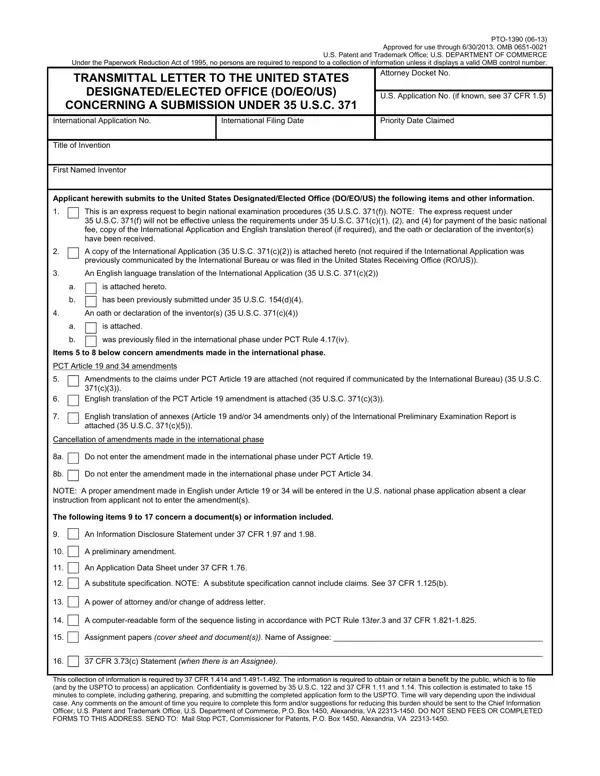
What it is: Form PTO-1390 is the transmittal letter to the United States Designated/Elected Office (DO/EO/US) concerning a submission under 35 U.S.C. 371.
Who signs: Sign on the Signature line, then enter the Date, the Name (Print/Type) and the Registration No. (Attorney/Agent).
The form is especially useful for the initial submission to enter the national stage, to both identify the submission as a national stage application under 35 U.S.C. 371 and to provide additional information relevant to the processing of the application.[2]
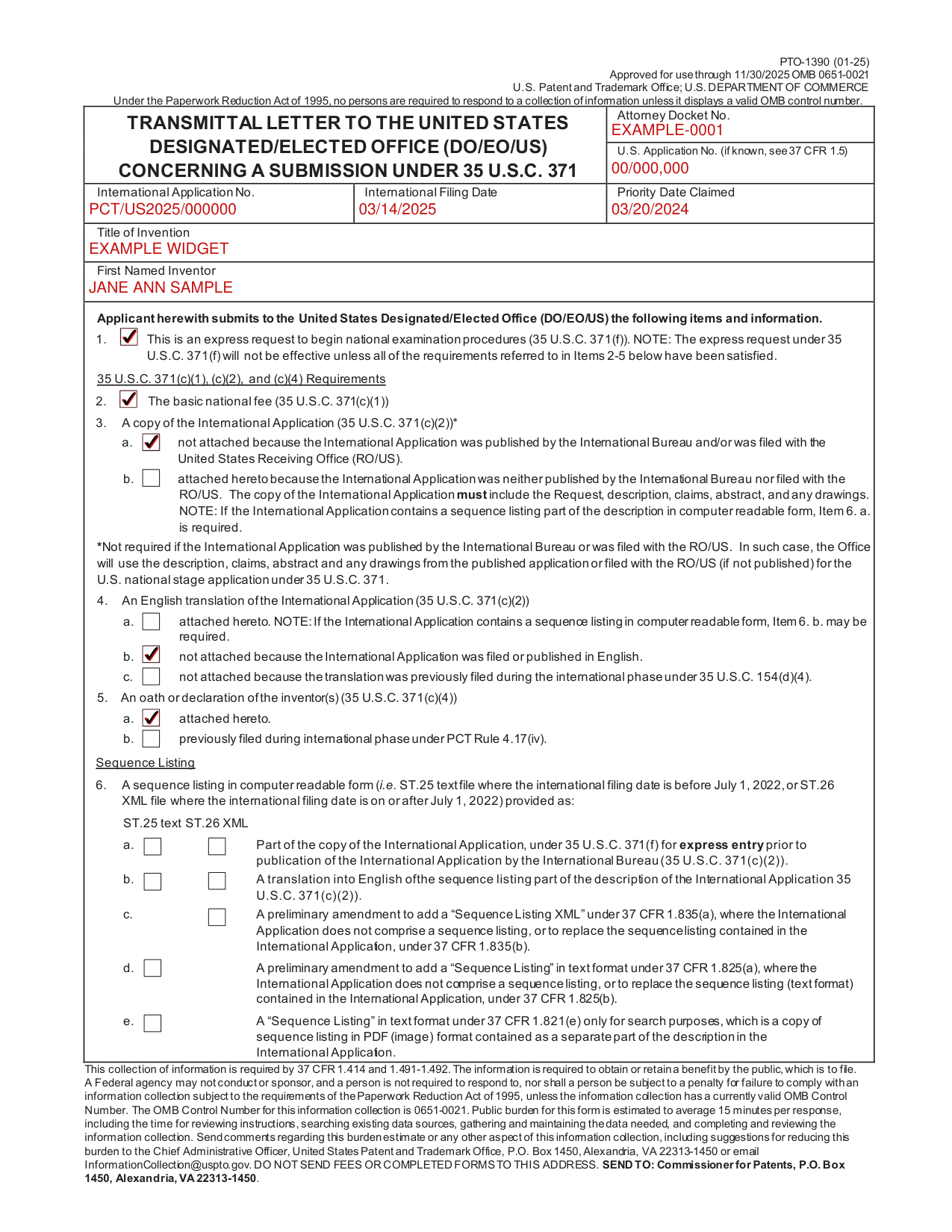
A filled-in Form PTO-1390 example: an application published in English enters the national stage
How to fill out Form PTO-1390, box by box
The application and the invention
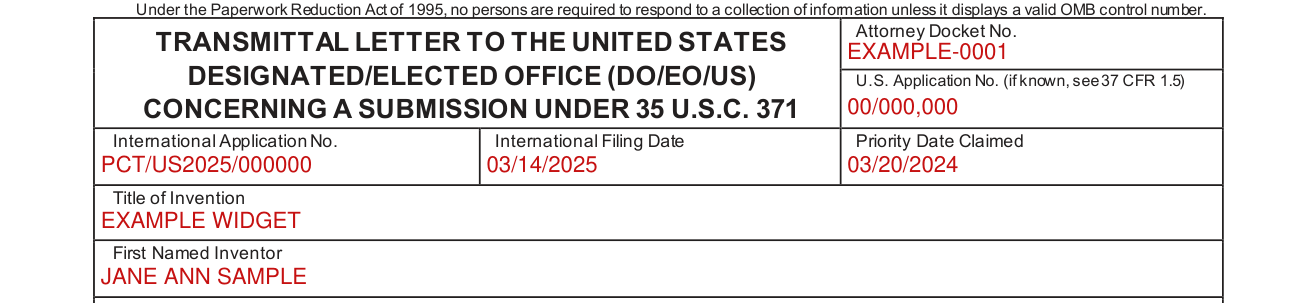
Enter the Attorney Docket No., the U.S. Application No. (if known, see 37 CFR 1.5), the International Application No., the International Filing Date, the Priority Date Claimed, the Title of Invention and the First Named Inventor.
Item 1, the express request

Item 1: Checking box 1 for making an express request enables the USPTO, as a designated/elected office, to begin processing the application prior to 30 months from the priority date, provided that the requirements of 35 U.S.C. 371(c)(1), (c)(2), and (c)(4) are satisfied.
The express request under 35 U.S.C. 371(f) will not be effective unless all of the requirements referred to in Items 2-5 have been satisfied.[2]
Items 2 to 5, the national fee, the copy, the translation and the declaration
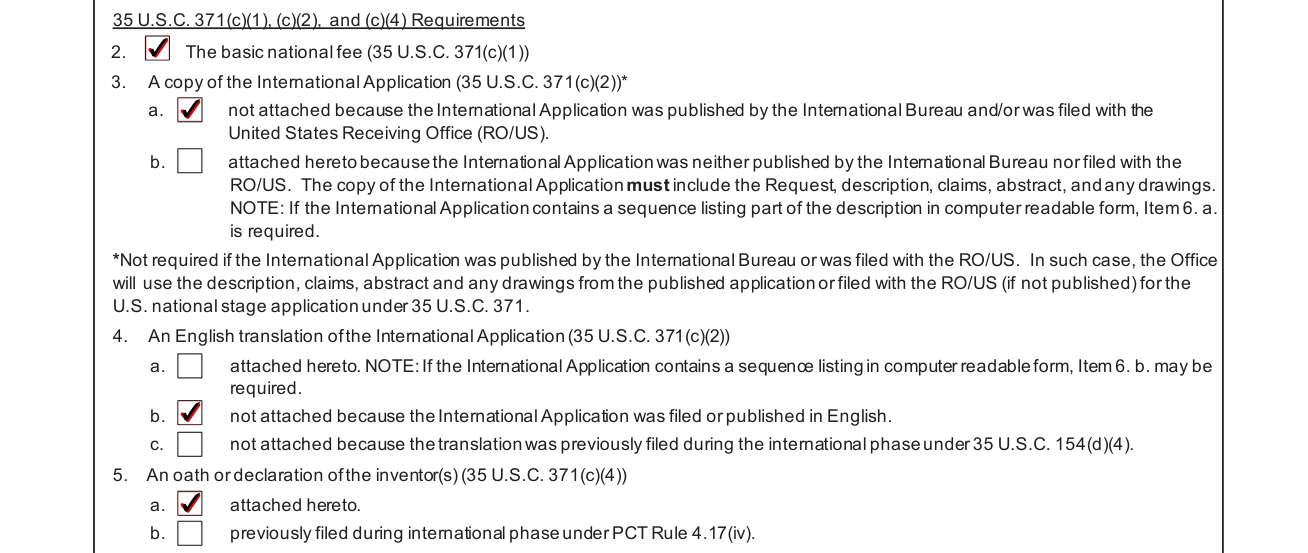
For item 2, the basic national fee (35 U.S.C. 371(c)(1)), see page 4 of the PTO-1390 form for acceptable payment methods.
If the international application is published, it is appropriate to check box 3.a. and not attach a copy of the international application.
Item 3, b. attached hereto because the International Application was neither published by the International Bureau nor filed with the RO/US. The copy of the International Application must include the Request, description, claims, abstract, and any drawings. NOTE: If the International Application contains a sequence listing part of the description in computer readable form, Item 6. a. is required.
Item 4: An accurate translation of the international application into English is required for any application filed in another language and not published in English.
4. An English translation of the International Application (35 U.S.C. 371(c)(2)): b. not attached because the International Application was filed or published in English.
5. An oath or declaration of the inventor(s) (35 U.S.C. 371(c)(4)): a. attached hereto, or b. previously filed during international phase under PCT Rule 4.17(iv).[2]
Item 6, the sequence listing
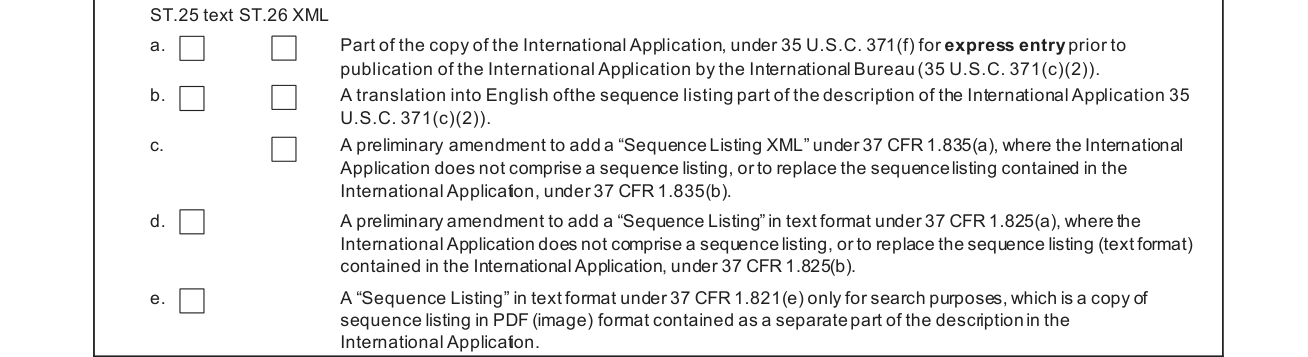
A sequence listing in computer readable form (i.e. ST.25 text file where the international filing date is before July 1, 2022, or ST.26 XML file where the international filing date is on or after July 1, 2022) provided as:
Only if publication has not occurred at the time of entry into national phase should applicant provide the sequence listing part of the description (item 6.a.).[2]
Items 7 to 10, PCT Article 19 and 34 amendments

Items 7-9: If the claims were amended under Article 19 during international phase, a copy (as stamped and published) can optionally be filed in the national stage application.
If Article 19 and/or Article 34 amendments are not in English, a translation will need to be provided; otherwise, they are considered canceled.
Item 10: If it is not desired to have Article 19 and/or Article 34 amendments entered into the U.S. national stage application, applicant should provide clear instructions to cancel such amendment(s).
A proper amendment made in English under Article 19 or 34 will be entered in the U.S. national phase application absent a clear instruction from applicant not to enter the amendment(s).[2]
Additional documents
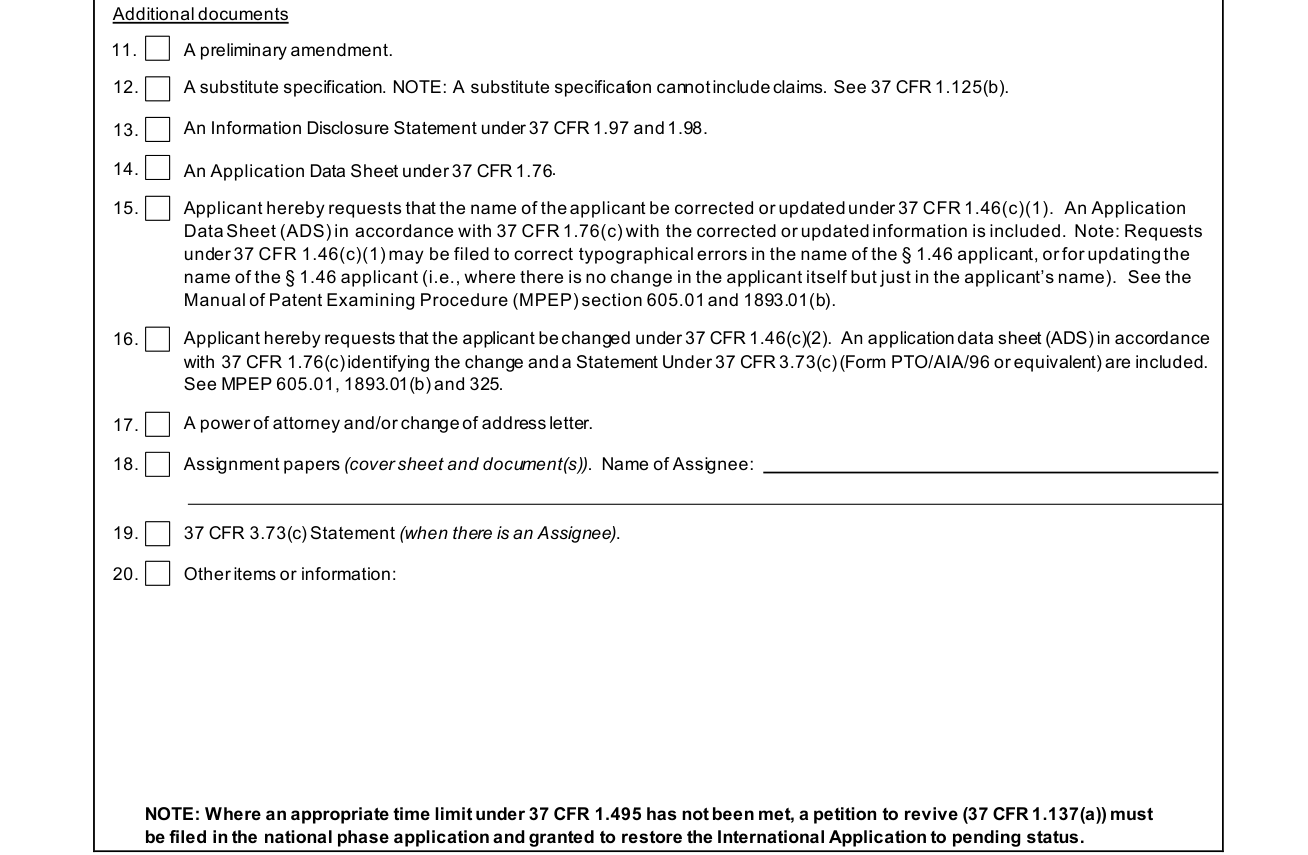
Additional documents, 12. A substitute specification. NOTE: A substitute specification cannot include claims.
19. 37 CFR 3.73(c) Statement (when there is an Assignee).
Fee calculation, items 21 to 30 and entity status
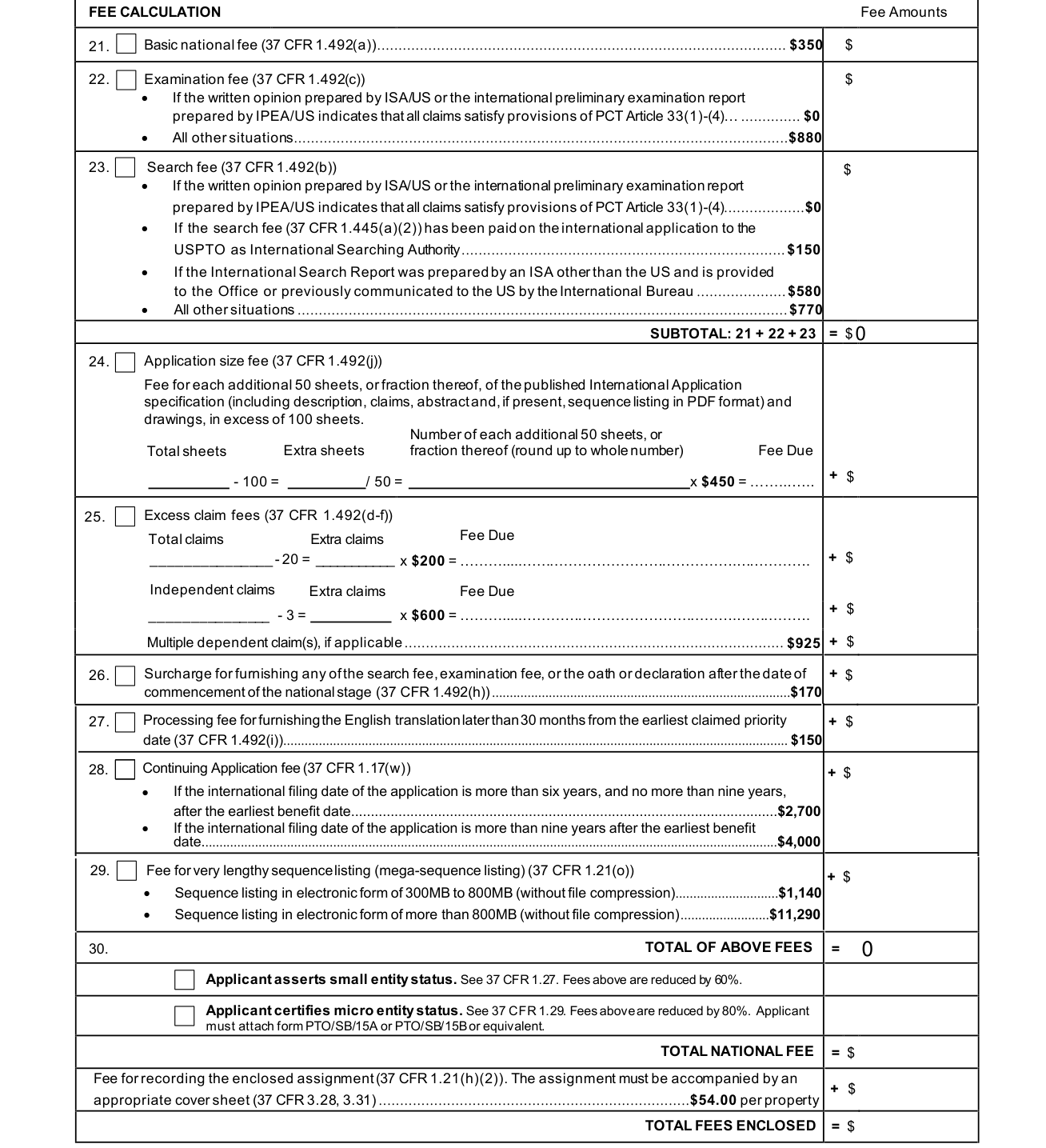
FEE CALCULATION: 21. Basic national fee (37 CFR 1.492(a)): $350 (checked November 2, 2026)
Item 24: If the international application is published, the application size fee is determined based on the publication.
Applicant asserts small entity status. Fees are reduced by 60%.
Applicant certifies micro entity status. Fees are reduced by 80%. Applicant must attach form PTO/SB/15A or PTO/SB/15B or equivalent.[2]
Fee Payment
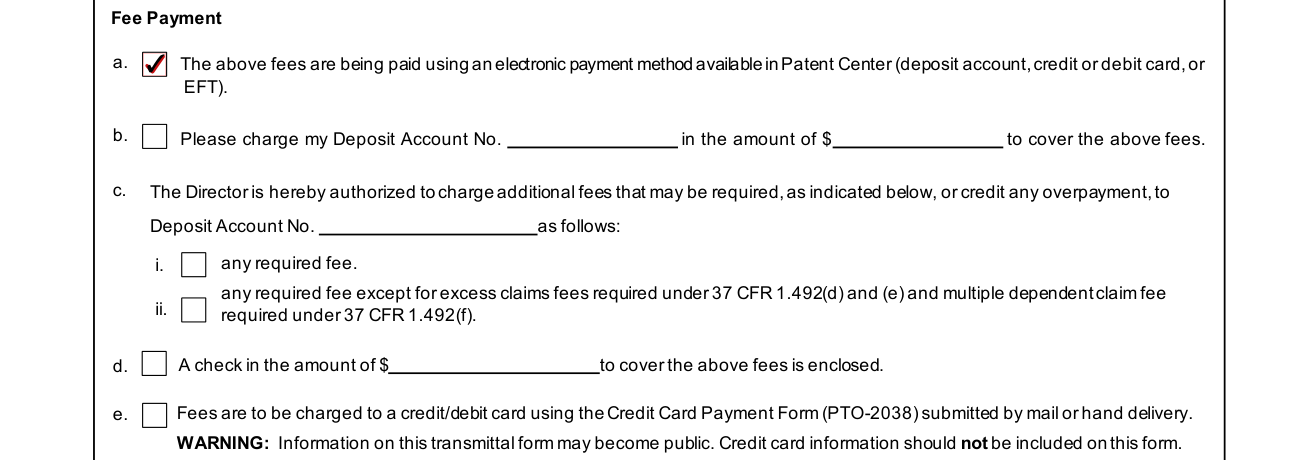
The fees are being paid using an electronic payment method available in Patent Center (deposit account, credit or debit card, or EFT).
Please charge my Deposit Account No. in the amount of $ to cover the fees.
A check in the amount of $ to cover the fees is enclosed.
Fees are to be charged to a credit/debit card using the Credit Card Payment Form (PTO-2038) submitted by mail or hand delivery. Credit card information should not be included on this form. If filing electronically, do NOT attach the PTO-2038 form as a PDF along with your Office Electronic Filing System submission.
Form PTO-2038 should only be mailed, hand-delivered, or faxed to the USPTO. However, when paying the basic national fee, the PTO-2038 may NOT be faxed to the USPTO.
Correspondence Address and signature
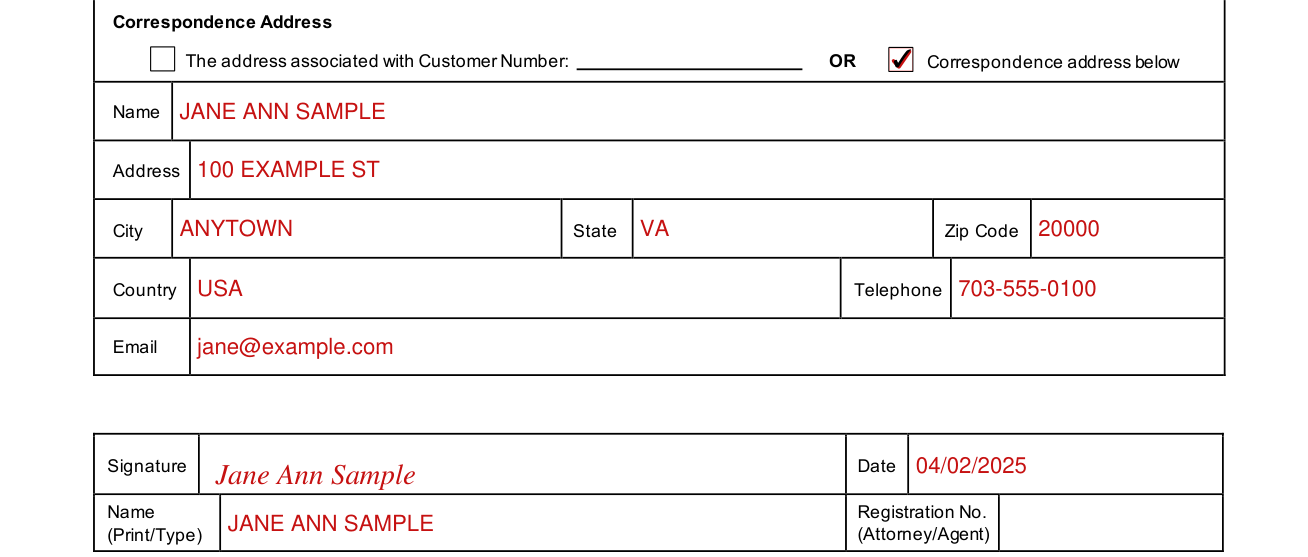
Under Correspondence Address, check The address associated with Customer Number, OR check Correspondence address and enter the Name, Address, City, State, Zip Code, Country, Telephone and Email.
Sign on the Signature line, then enter the Date, the Name (Print/Type) and the Registration No. (Attorney/Agent).
More rules for Form PTO-1390
Where an appropriate time limit under 37 CFR 1.495 has not been met, a petition to revive (37 CFR 1.137(a)) must be filed in the national phase application and granted to restore the International Application to pending status.
If you do not furnish the information requested on this form, the USPTO may not be able to process and/or examine your submission, which may result in termination of proceedings, abandonment of the application, and/or expiration of the patent.
Sources
[1] Form PTO-1390 (01-25), Transmittal Letter to the United States Designated/Elected Office (DO/EO/US) Concerning a Submission under 35 U.S.C. 371, U.S. Patent and Trademark Office (the Official source link on this page).