

Lifestyle Assessment (Adler Graduate School) at a glance
What it is: The Adler Graduate School Lifestyle Assessment is a form for a Client's Name, Date, Therapist and Family Constellation.
A filled-in Lifestyle Assessment (Adler Graduate School) example: a therapist starts a lifestyle assessment
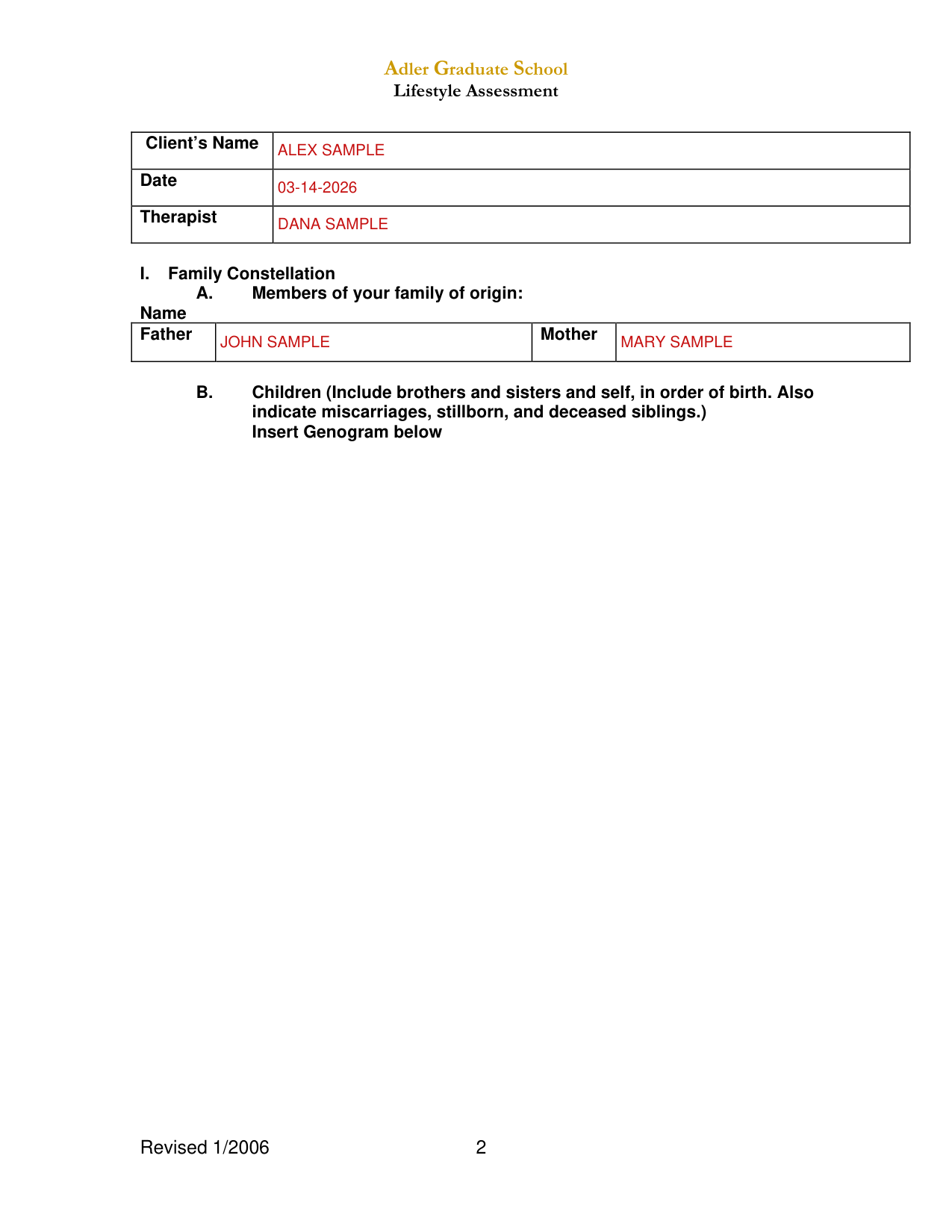
How to fill out Lifestyle Assessment (Adler Graduate School), box by box
Client, date, therapist and family of origin
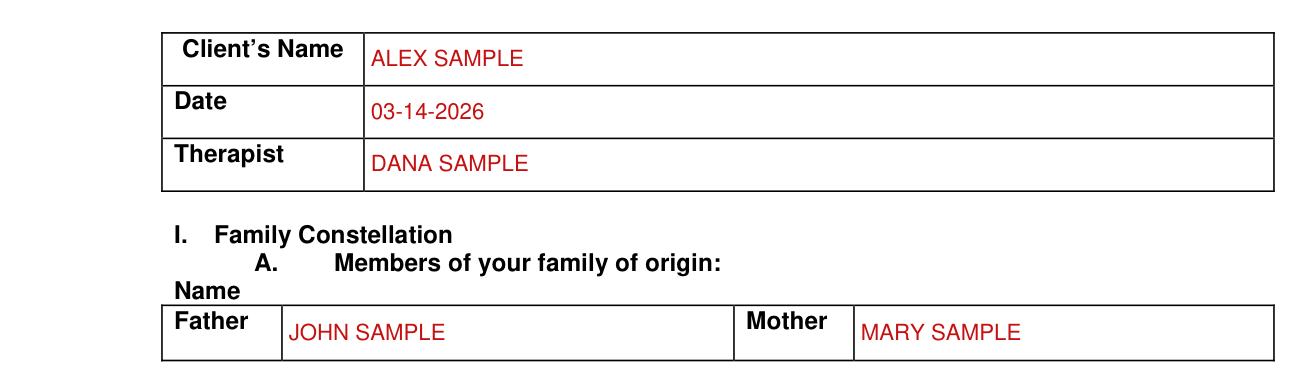
Enter the Client's Name, Date and Therapist.
Under A. Members of your family of origin, enter the Name of your Mother and Father.
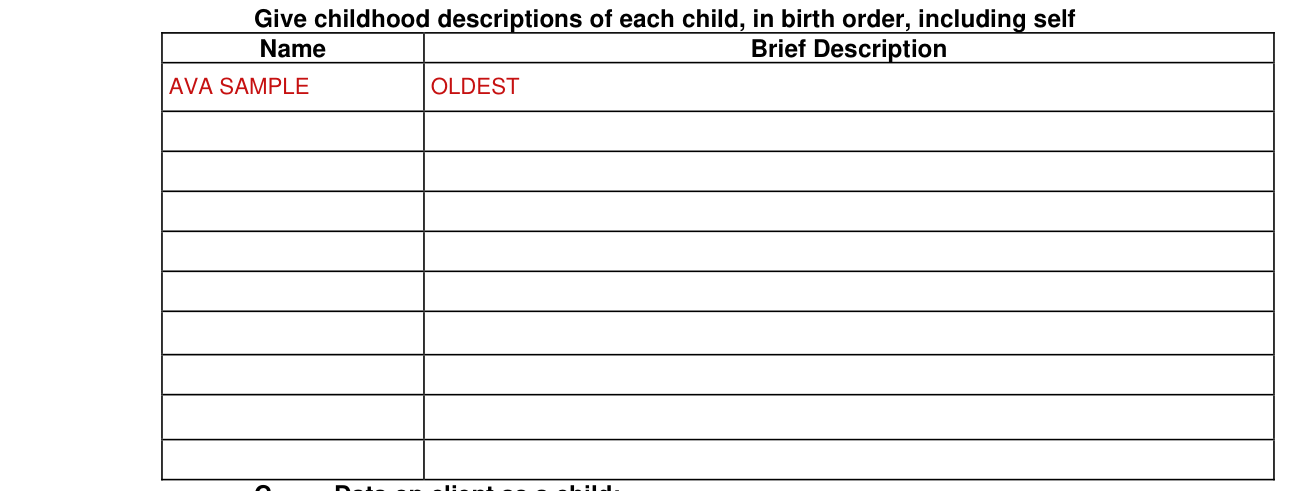
Children in order of birth
Under B. Children, include brothers and sisters and self, in order of birth, and also indicate miscarriages, stillborn, and deceased siblings.
Insert Genogram under B. Children.
Give childhood descriptions of each child, in birth order, including self, with the Name and a Brief Description.
Data on client as a child
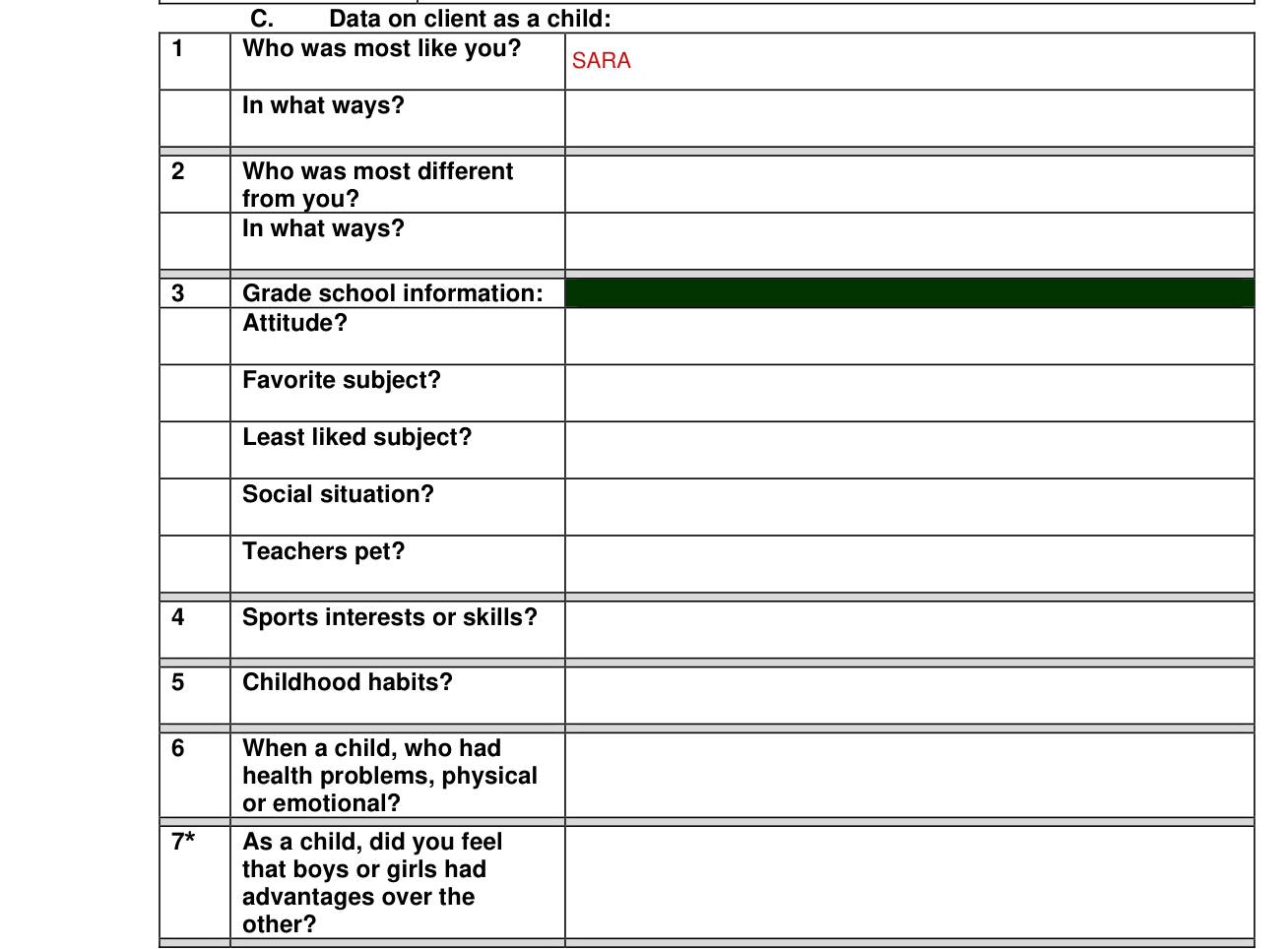
Under C. Data on client as a child, fill in 1 Who was most like you? In what ways? and 2 Who was most different from you? In what ways?
For 3 Grade school information, fill in Attitude? Favorite subject? Least liked subject? Social situation? Teachers pet?
Fill in 4 Sports interests or skills? 5 Childhood habits? 6 When a child, who had health problems, physical or emotional? and 7* As a child, did you feel that boys or girls had advantages over the other?
Tomboy, sissy, religious experiences, abuse, spoiled and punished
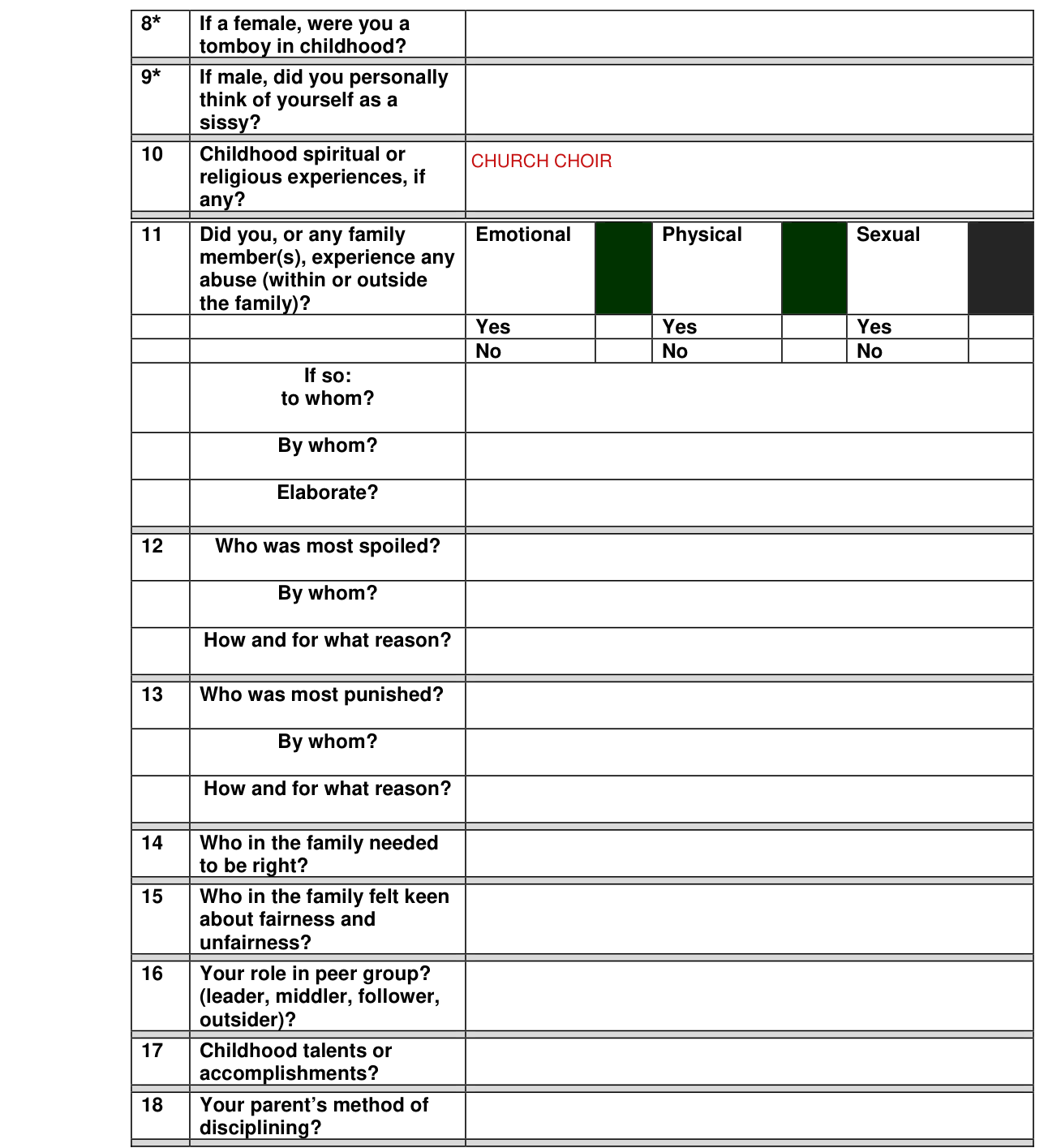
Fill in 8* If a female, were you a tomboy in childhood? and 9* If male, did you personally think of yourself as a sissy?
Fill in 10 Childhood spiritual or religious experiences, if any? For 11 Did you, or any family member(s), experience any abuse (within or outside the family)? enter Yes or No under Emotional, Physical and Sexual. If so: to whom? By whom? Elaborate?
For 12 Who was most spoiled? and 13 Who was most punished? fill in By whom? and How and for what reason?
Fill in 14 Who in the family needed to be right? 15 Who in the family felt keen about fairness and unfairness? 16 Your role in peer group? (leader, middler, follower, outsider)? 17 Childhood talents or accomplishments? and 18 Your parent's method of disciplining?
Sibling interrelationships
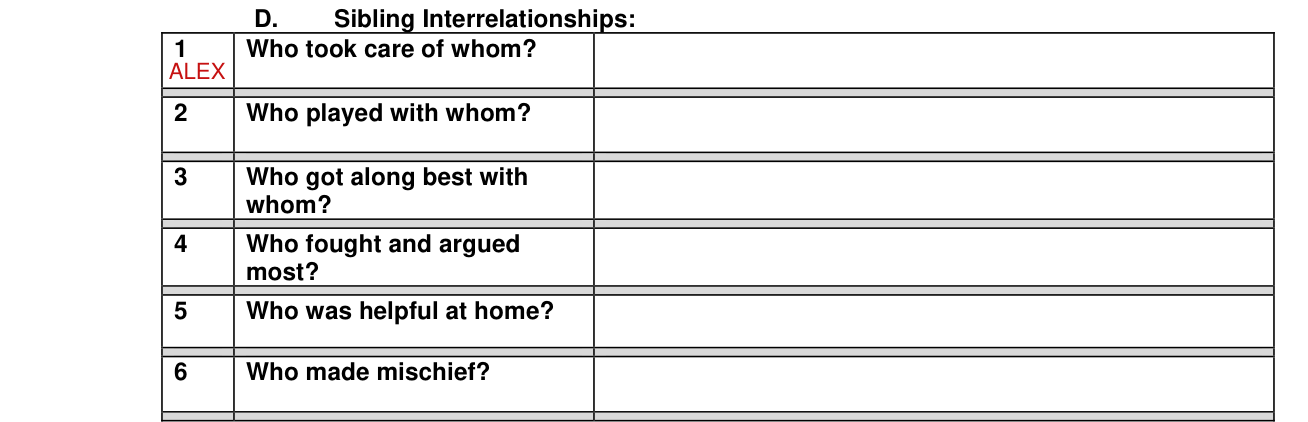
Under D. Sibling Interrelationships, fill in 1 Who took care of whom? 2 Who played with whom? 3 Who got along best with whom? 4 Who fought and argued most? 5 Who was helpful at home? 6 Who made mischief?
Description of your parents
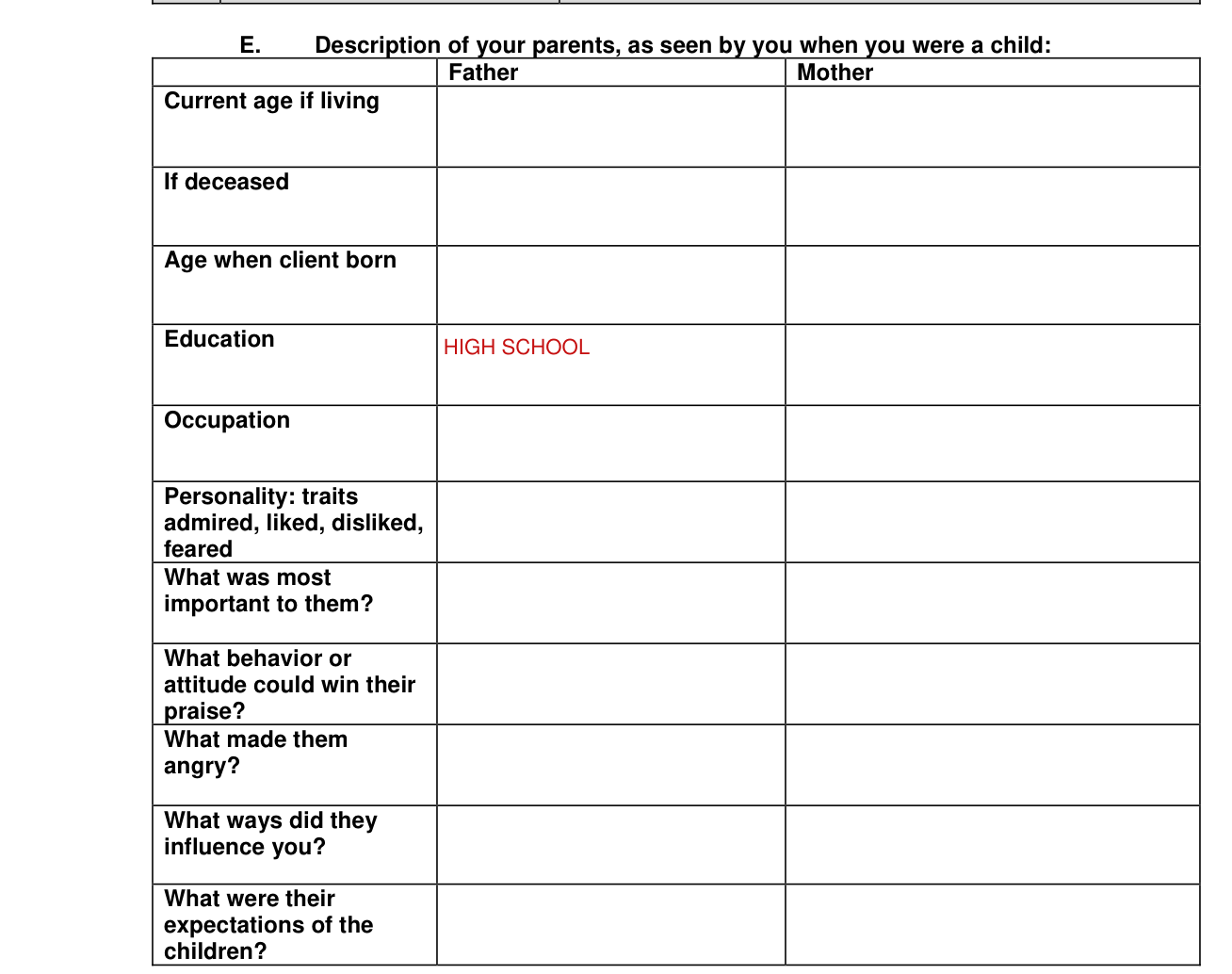
Under E. Description of your parents, as seen by you when you were a child, fill in Father and Mother for Current age if living, If deceased, Age when client born, Education, Occupation, Personality: traits admired, liked, disliked, feared, What was most important to them? What behavior or attitude could win their praise? What made them angry? What ways did they influence you? What were their expectations of the children?
Description of your parents, continued
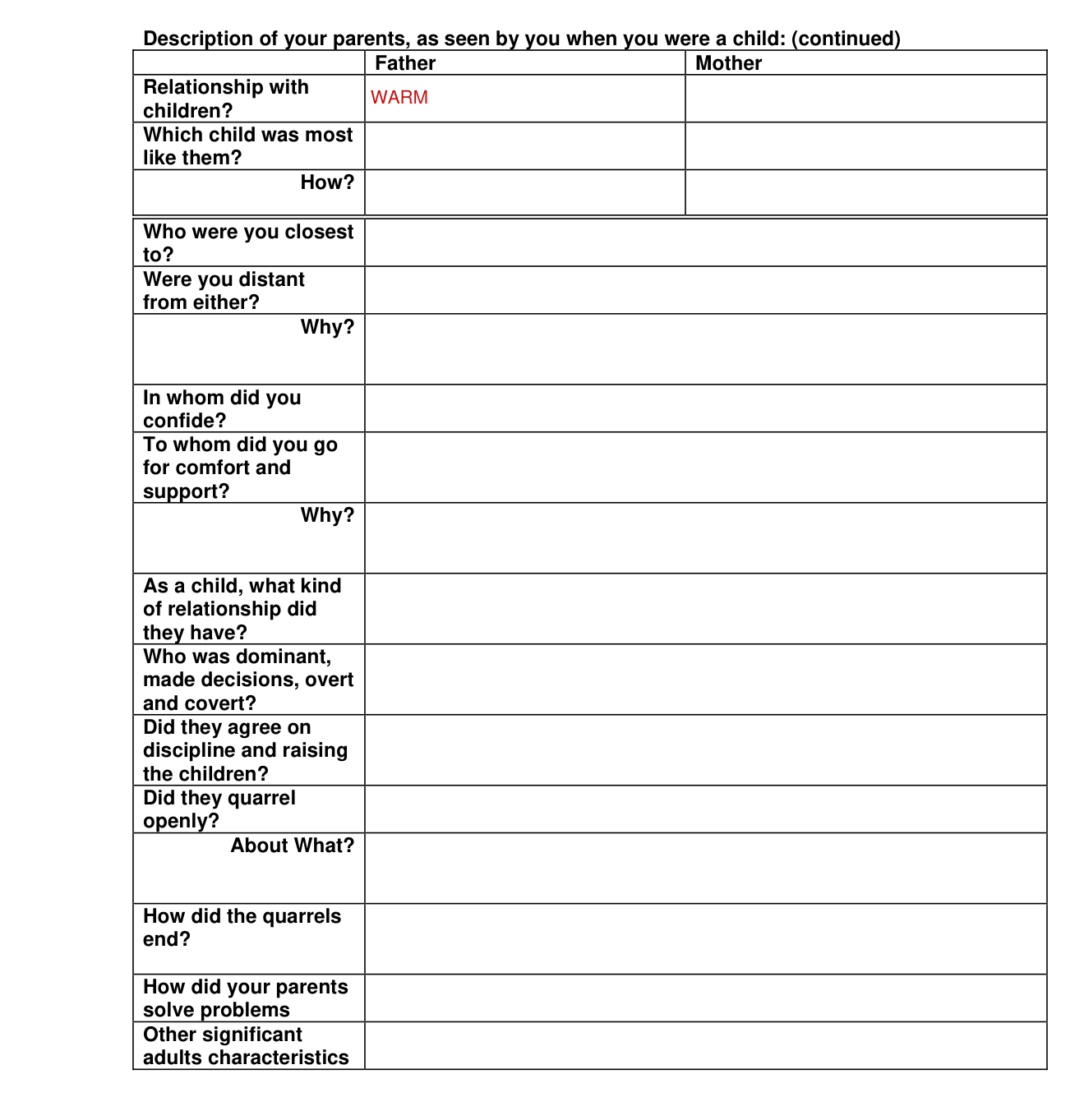
Continue the description of your parents with Father and Mother for Relationship with children? Which child was most like them? How? Who were you closest to? Were you distant from either? Why? In whom did you confide? To whom did you go for comfort and support? Why? As a child, what kind of relationship did they have? Who was dominant, made decisions, overt and covert? Did they agree on discipline and raising the children? Did they quarrel openly? About What? How did the quarrels end? How did your parents solve problems? Other significant adults characteristics.
What you learned from your answers
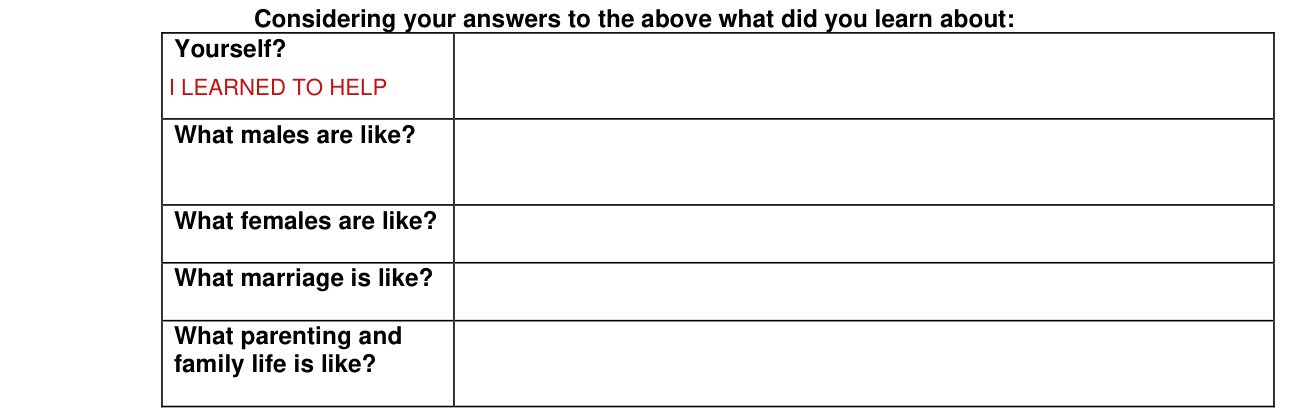
What did you learn about: Yourself? What males are like? What females are like? What marriage is like? What parenting and family life is like?
Childhood attributes
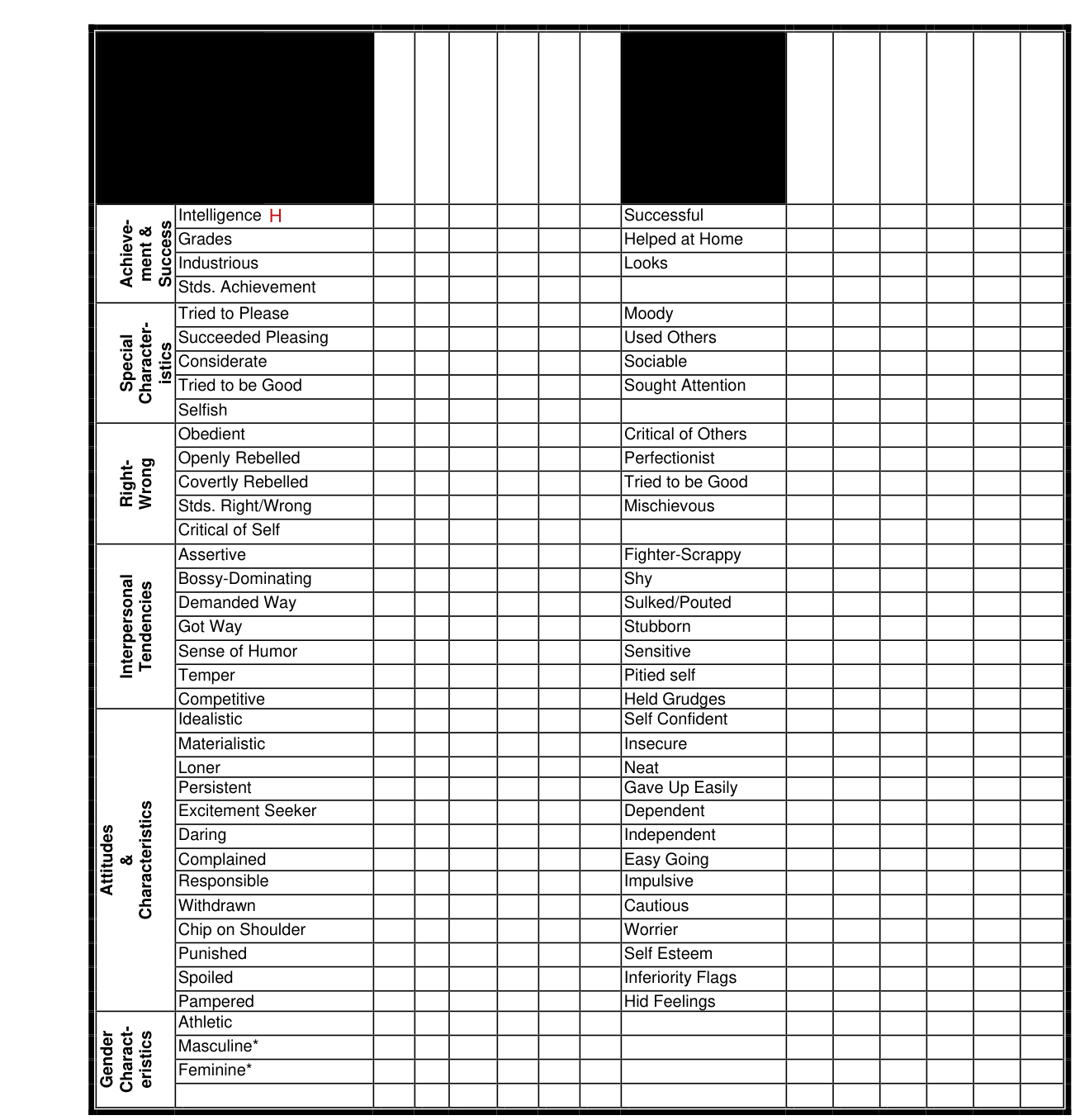
Under Childhood Attributes, rate (not rank) you and your siblings from your perspective as a child. Rate those who are (H) High or (L) Low.
Rank only yourself and siblings who are within 5 years older or younger than yourself. Put the name of each child including yourself (in birth order) in the box over the column.
Additional adult figures
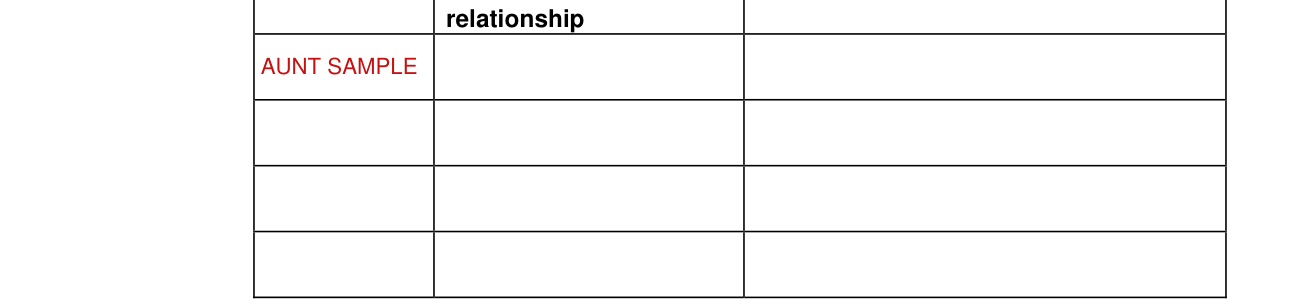
Under F. Additional adult figures who had a significant influence on your childhood, fill in Who, Describe the relationship and How did it influence you?
Early recollections
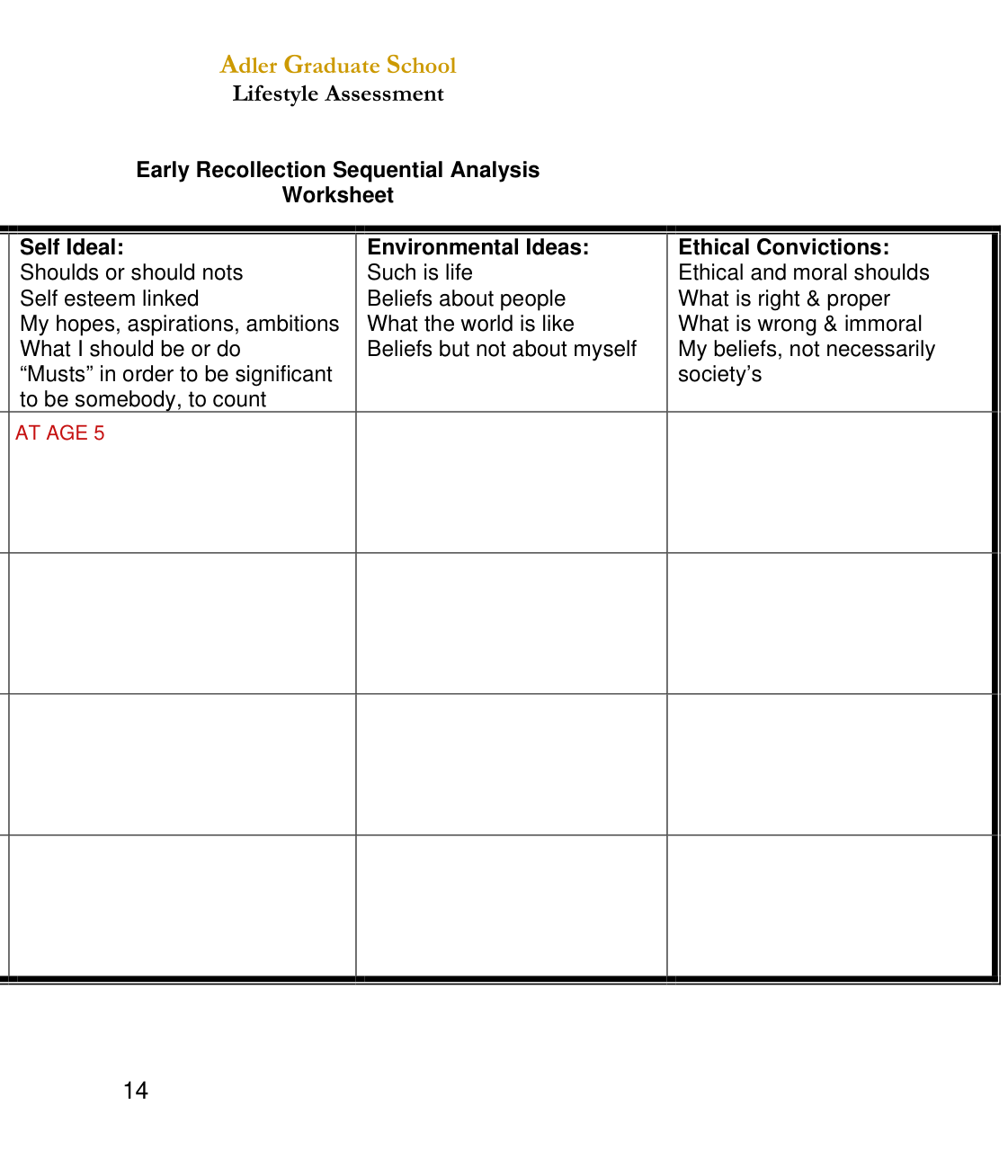
Under Early Recollections, on a separate sheet of paper collect three or more early recollections and for each incident collect feelings, reason for feelings, most vivid moment, feelings at that moment and reason for the feelings. Write down specific incidents or happenings, no matter how inconsequential it seems. Recall the earliest recollection you can, preferably before age 8. Most people can recall incidents around ages 4, 5, and 6; some earlier.
Additional space for ER's #1 to #6 analysis
Use Additional space for ER's #1 to #6 analysis, if needed.
Sources
[1] Adler Graduate School Lifestyle Assessment, revised 1/2006 (the served file; no issuer file found).
