
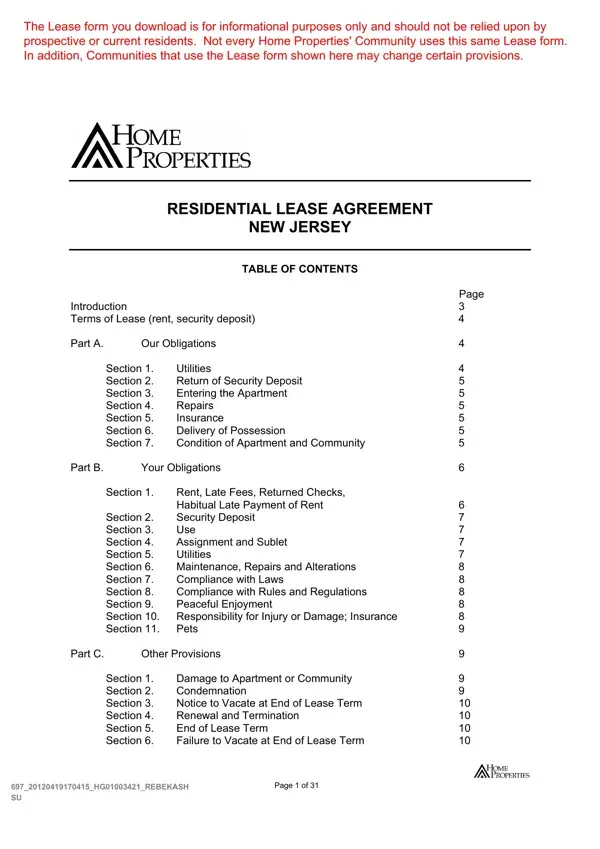
In New Jersey, navigating the intricacies of residential leases is a crucial task for both landlords and tenants, a task made navigable with forms like the New Jersey Residential Lease Agreement. This document is more than just a simple contract; it is a detailed agreement that outlines the rights and responsibilities of both the tenant (referred to as the "Resident") and the landlord or property manager (referred to as the "Manager"). It encompasses key details such as the identities of the contracting parties, pertinent address information, and essential terms regarding rent, deposits, utilities, repair obligations, insurance, and conditions of the apartment and community. Notably, the form cautions users that it serves as an informational guide and may not be directly applicable to all Home Properties' Communities, with a potential for variation in lease provisions. The document underscores the importance of understanding one's specific lease agreement, the associated financial commitments including rent, security deposits, and additional fees, as well as the division of responsibility for utilities and maintenance. It also highlights the critical role of insurance for personal property, a nuance that residents might overlook. Furthermore, the lease addresses permissions and procedures for entering the apartment, a provision that builds a framework for respecting tenant privacy while allowing necessary access for maintenance or inspection by the manager or landlord. Through specifying these terms, the New Jersey Residential Lease Agreement helps in fostering a clear and mutual understanding between landlords and tenants, aiming to prevent conflicts and ensure a harmonious residential community.
| Question | Answer |
|---|---|
| Form Name | Nj Residential Form |
| Form Length | 24 pages |
| Fillable? | No |
| Fillable fields | 0 |
| Avg. time to fill out | 6 min |
| Other names | nj residential lease agreement form, home properties lease, form residential nj, residential agreement nj |