
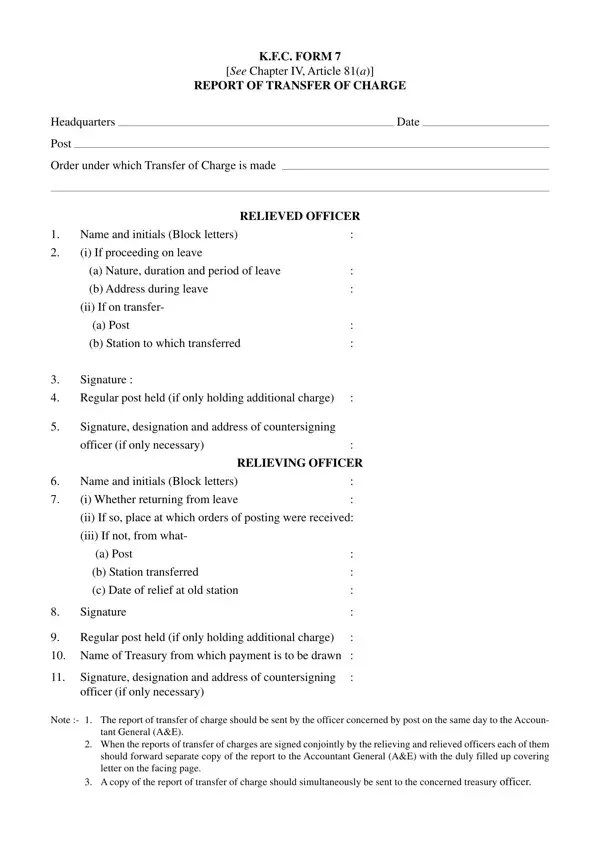
The continuity and integrity of administrative functions, particularly in governmental or institutional settings, are preserved through meticulous documentation, a shining example of which is the Report of Transfer of Charge, often encapsulated in forms like the K.F.C. Form 7. This document, guided by the procedures outlined in Chapter IV, Article 81(a), serves as an essential record whenever there's a transition of duties from one officer to another—be it due to leave, transfer, or other administrative reasons. It meticulously records the outgoing officer's details, including name, period, and nature of leave, or the new post and station to which they're transferred, ensuring there's a clear account of the shift in responsibilities. The form also captures the incoming officer's data, including whether they are returning from leave or being transferred from another post, along with their signatures, further solidifying the transition's legitimacy. Such practices, albeit seemingly bureaucratic, are vital for the seamless operation of services. They aid not just in the accountability and traceability of administrative actions but also in upholding the principles of effective governance. The stipulation that each officer involved must send a copy of the report to the Accountant General underscores the importance of transparency and diligence in public administration. Moreover, the inclusion of a simultaneous notification to the concerned treasury officer demonstrates an integrated approach to administrative transitions, ensuring all financial and operational aspects are promptly and accurately updated.
| Question | Answer |
|---|---|
| Form Name | RTC Form |
| Form Length | 2 pages |
| Fillable? | No |
| Fillable fields | 0 |
| Avg. time to fill out | 30 sec |
| Other names | report of transfer of charge editable, rtc form editable, rtc form 7, rtc form online 2021 |