
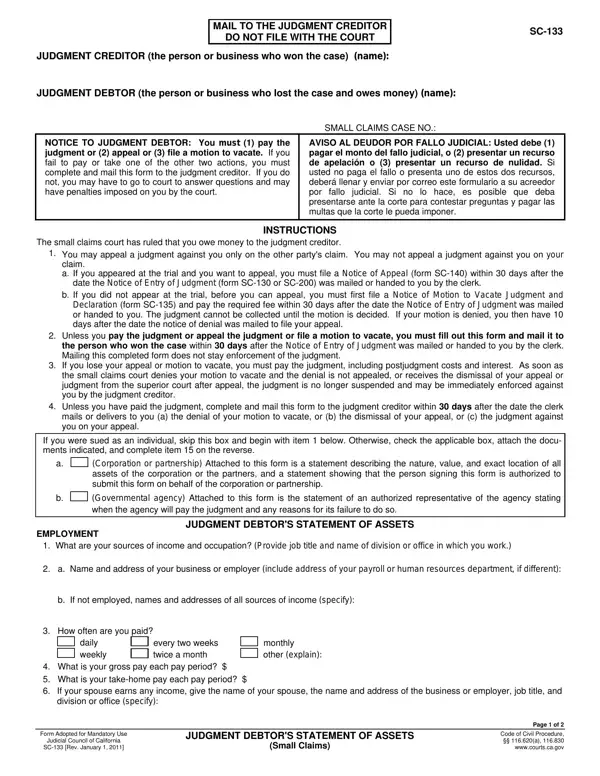
Understanding the SC-133 form is crucial for those navigating the aftermath of a small claims court decision. Often referred to as the Judgment Debtor's Statement of Assets, this document serves a fundamental role in the post-judgment process, aimed at facilitating the collection of money as ruled by the court. Once a judgment has been made, if the debtor does not pay the amount due, file an appeal, or motion to vacate the judgment, the SC-133 form must be completed and mailed to the judgment creditor within a specific timeframe, usually 30 days after the Notice of Entry of Judgment has been received. This form requires the debtor to disclose significant details about their financial situation, including employment, income sources, property, and other valuable assets. Importally, mailing the completed SC-133 does not halt the enforcement of the judgment. Filling out this form correctly and on time could potentially avoid additional court appearances and penalties imposed by the court for non-compliance. It also offers a structured way for the debtor to propose installment payments, if paying the judgment in full immediately is not feasible. Detailed yet straightforward, the SC-133 form exemplifies how the legal system attempts to balance the enforcement of judgments with the realities of debtors' financial capabilities.
| Question | Answer |
|---|---|
| Form Name | Sc 133 Form |
| Form Length | 2 pages |
| Fillable? | No |
| Fillable fields | 0 |
| Avg. time to fill out | 30 sec |
| Other names | sc 133 pdf, how to judgment statement, debtor statement, form sc 133 |
Sc 133 Form isn’t the one you’re looking for?