
The Delaware motor vehicle power of attorney (Form MV386) lets a vehicle owner (the principal) name another person (the agent) to handle vehicle matters on their behalf. This power of attorney template covers tasks such as title paperwork, registration and a sale, and you can fill it in online or download the PDF.
Last Updated: October 2026. This guide is reviewed and updated regularly to reflect current law. If you notice an error or outdated information, please contact us.
Build Your Document
Answer a few simple questions to make your document in minutes
Save and Print
Save progress and finish on any device, download and print anytime
Sign and Use
Your valid, lawyer-approved document is ready
A motor vehicle power of attorney lets you hand vehicle paperwork to someone you trust. You name one person as your agent, and the document spells out the transactions your agent takes care of for you. Your agent then deals with the Delaware Division of Motor Vehicles (DMV) on your behalf for the vehicle you describe on the form.
These transactions can include:
Using Form MV386 can be especially helpful for individuals who cannot personally handle their vehicle-related matters for various reasons, such as being out of state or incapacitated.
The template is a PDF with three form pages. Page 1 names the principal and the agent and describes the vehicle. Page 2 adds a successor agent, the signing date, the signature and the printed name. Page 3 is an acknowledgment page for the notary. The table below sums up the key facts, and you can download the PDF from the top of this page.
| Document Name | Delaware Motor Vehicle Power of Attorney Form |
| State Form Name | Form MV386 |
| Relevant Link | Delaware Division of Motor Vehicles |
| Avg. Time to Fill Out | 10-15 minutes |
| # of Fillable Fields | 21 |
| Available Formats | Adobe PDF |
When completing the Delaware motor vehicle POA Form MV386, follow each step so the document is executed correctly.[1]
The steps below follow the FormsPal template that you can download from this page. Work through it from page 1 to page 3, in the order of the steps. Use the same spelling that appears on your ID and on the vehicle's title or registration paperwork, and keep the screenshots next to you to see where each answer goes.
The screenshots under each step show the FormsPal Delaware Delaware Motor Vehicle Power of Attorney template filled with sample entries in blue, so you can see where each answer goes. The names, addresses, dates and amounts are examples only.
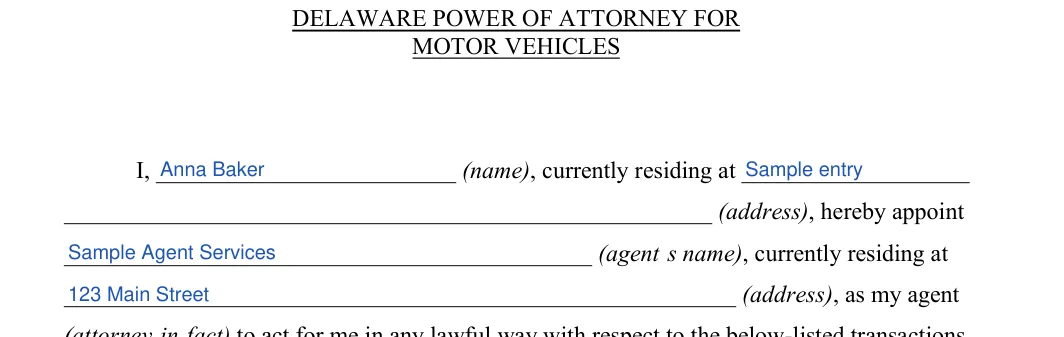
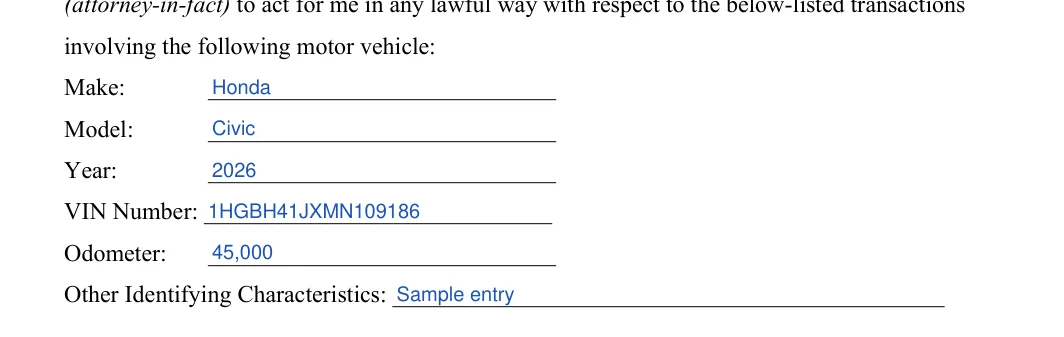


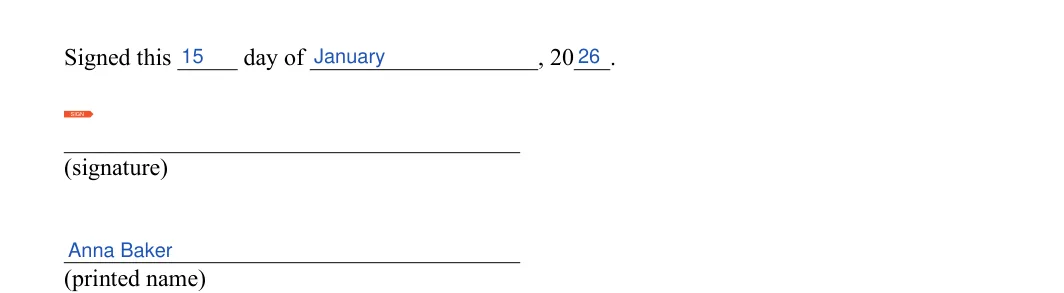
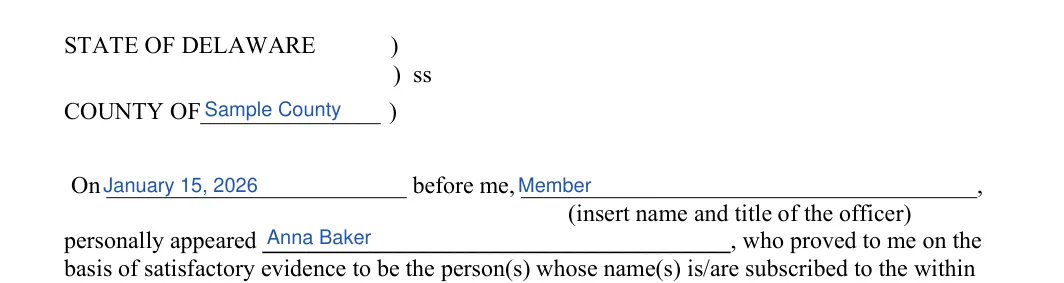

Under the Delaware Code, the power of attorney form must comply with specific legal requirements for validity. The principal must sign the form in the presence of a notary public.[1] This notarization process confirms the principal’s identity and willingness to grant the specified powers to the agent. The FormsPal template you create with Create My Document is a different document. Delaware's Durable Personal Powers of Attorney Act covers only durable powers of attorney, and the template is a limited power for one vehicle that is not durable, so the act sets no signing formality for it.[2] Having the template notarized is still common, and its page 3 is a notary acknowledgment. Here are all the steps to properly execute a Delaware motor vehicle POA:
Failure to follow these steps may result in the POA being deemed invalid, complicating the execution of vehicle-related transactions. The principal and agent should also retain copies of the completed and notarized Delaware POA forms for their records.
Tip: Take a photo or scan of every signed page before you hand the original to anyone. Store the copy with your other vehicle papers.
These are the questions that come up most often when people fill in a vehicle POA for a car, a truck or a motorcycle. Each answer points back to the steps above, so you can check the template as you read.
The principal is the vehicle owner who names a helper. The agent, also called the attorney-in-fact, is the helper. On this template, the principal's details come first and the agent's come right after.
Have these details ready before you start:
The sample entries in the screenshots show where each detail goes.
Yes. Download the PDF, then fill in, edit and sign it with the FormsPal PDF editor, or print it and write in the details by hand.
The successor attorney-in-fact block is at the top of page 2. It names a backup agent and gives that person's address.
General information, not legal or tax advice.
