
The South Carolina limited power of attorney is a legal document that lets you (the “principal”) give another person (your “agent” or “attorney-in-fact”) the power to act for you on specific tasks. It is narrower than a general power of attorney and can cover a single transaction or a set period. You fill out other South Carolina power of attorney forms to legally appoint someone to manage your affairs in the state.
Last Updated: October 2026. This guide is reviewed and updated regularly to reflect current law. If you notice an error or outdated information, please contact us.
Build Your Document
Answer a few simple questions to make your document in minutes
Save and Print
Save progress and finish on any device, download and print anytime
Sign and Use
Your valid, lawyer-approved document is ready
Unlike a general power of attorney, which covers a broad range of actions, a limited one is narrowly tailored to specific tasks. These tasks could be as narrow as handling a particular transaction or as broad as managing all financial affairs, but only during a specified period. The limited power of attorney needs to be written, outlining the precise powers of the agent. This document is especially handy in South Carolina when the principal cannot carry out specific tasks in person.
| Document Name | South Carolina Limited Power of Attorney Form |
| Other Name | South Carolina Special Power of Attorney |
| Relevant Laws | South Carolina Code of Laws, Title 62, Article 8 |
| Avg. Time to Fill Out | 8 minutes |
| # of Fillable Fields | 32 |
| Available Formats | Adobe PDF |
The laws surrounding signing a limited power of attorney in this state are laid out under the South Carolina Code of Laws, Title 62, Article 8. This legislation defines an “agent” as someone authorized to act on behalf of a principal, with duties that could range from financial decisions to legal actions. Other important points include:
According to Section 62-8-105 of the South Carolina Code of Laws, the document must be signed in the presence of a notary. Additionally, two credible witnesses must be present to sign, ensuring further validation and adherence to legal standards.
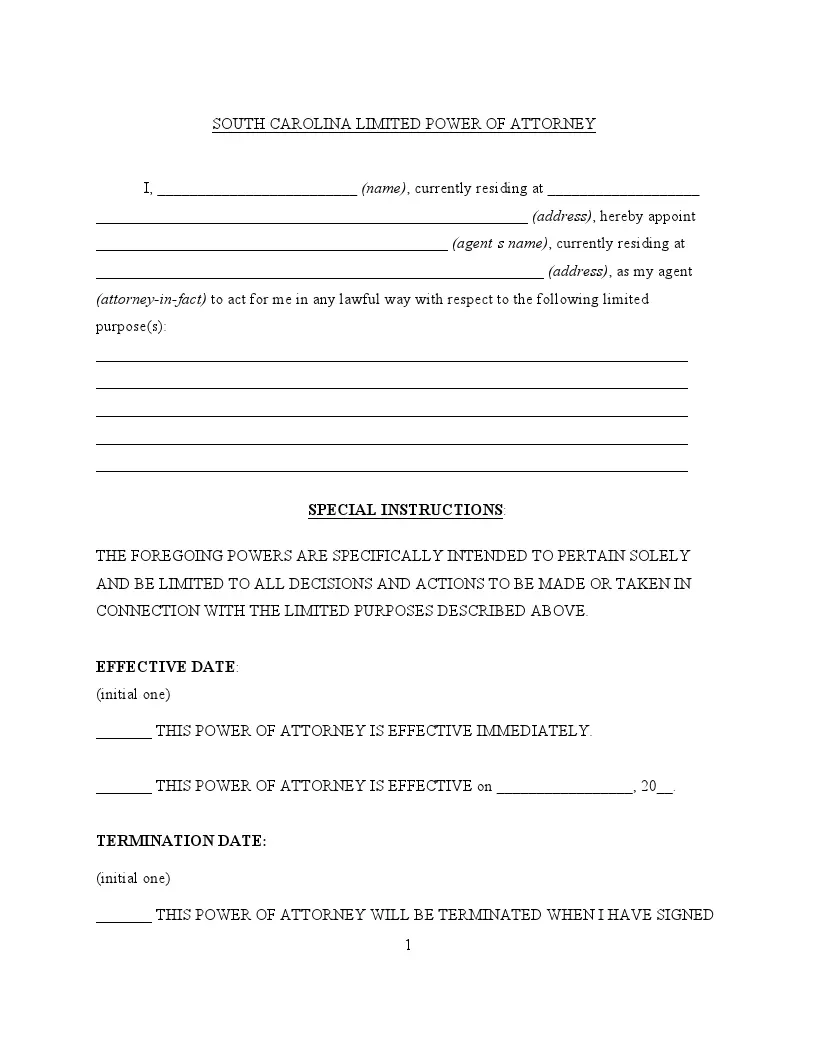
These steps follow the FormsPal template this page hands out, in the order the parts appear on the form. Keep the PDF open as you read and enter each answer in the matching blank.
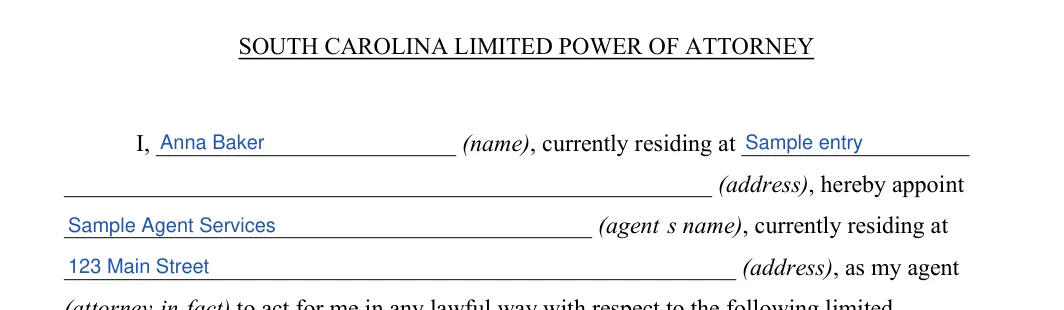
The screenshots under each step show the FormsPal South Carolina limited power of attorney template filled with sample entries in blue, so you can see where each answer goes. The names, addresses, dates and amounts are examples only.
Write your name and address in the opening sentence, since you are the principal. Then enter your agent’s name and address on the lines that follow.
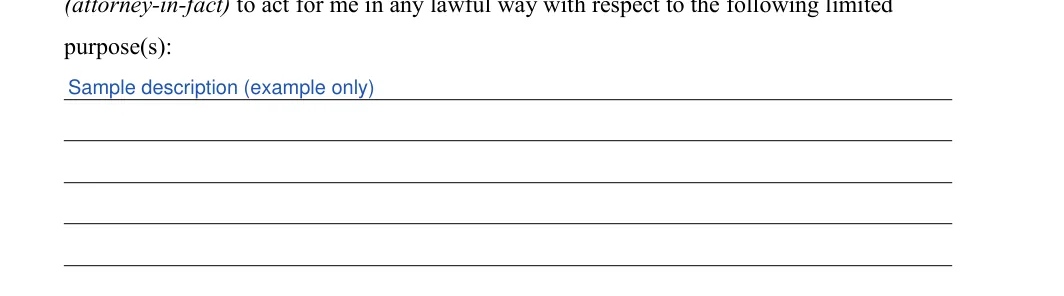
Use the ruled lines to describe the tasks you authorize your agent to handle for you. Be concise and clear so there is no doubt about the extent of the authority you give, and add any special instructions there.
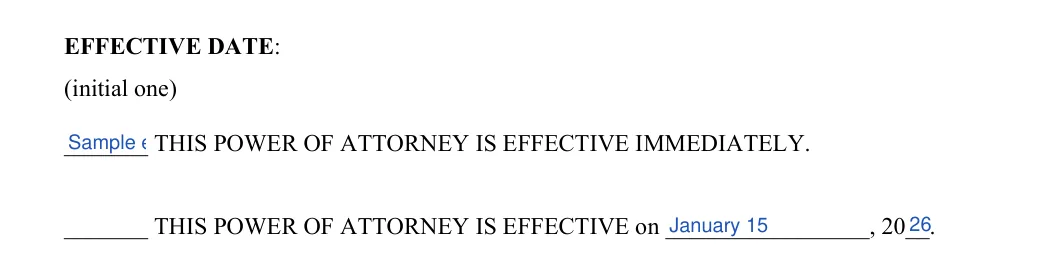
Initial one option. Choose “effective immediately”, or choose the dated option and write the date the powers begin.
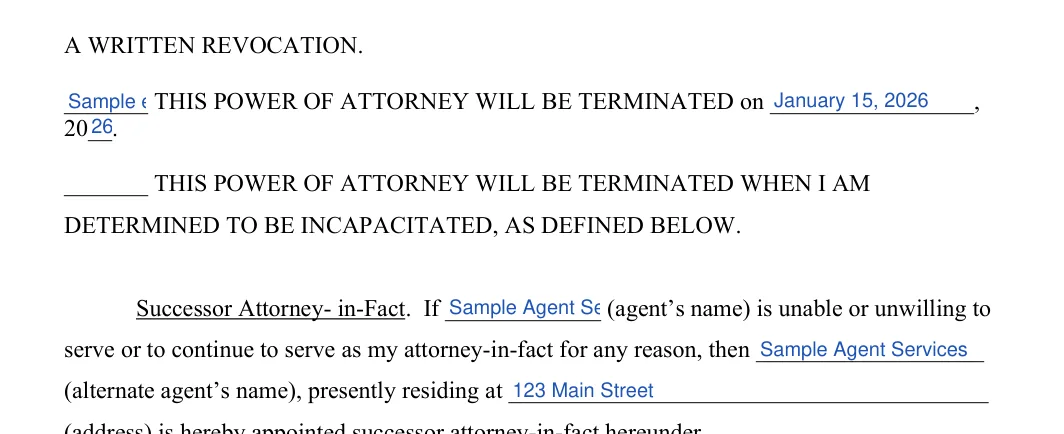
Initial this line if the powers should end when you sign a written revocation. The other termination options continue on page 2.

Initial the set-date option or the incapacity option instead if one of those fits, and write in any date. Then fill in the name and address of your successor attorney-in-fact.
Fill in the day, month and year. Then sign the form and print your name below your signature.

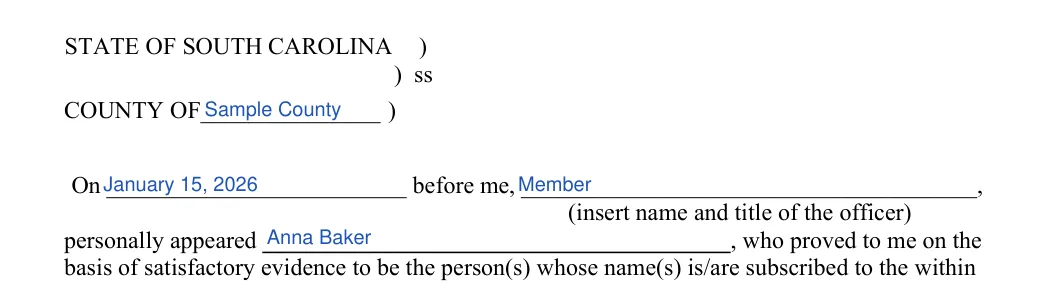
Page 3 holds the acknowledgment section. The county, the date, the officer’s name and title, and your own name go in its blanks.
The signature line at the bottom of page 3 belongs to the notary. Leave it blank until the notary signs.

Once the blanks are filled in, a few last steps turn the template into a finished document. Work through them in order, then keep the signed original in a safe place. Make a copy for your agent and a copy for your own files.
Read the filled-in form once more. Check that both names and addresses match the IDs and that each initialed option is the one you want.
The final step involves the notarization of the document. This should be done in the presence of a notary public who will verify your identity and witness your signature. The notary will then complete the acknowledgment section, affirming that you understand and consent to the contents of the limited power of attorney.
A limited power of attorney gives your agent authority to act for you on the specific tasks you list, such as helping to close a sale while you are away. You choose when the powers begin and how they end, and the agent’s role stays limited to those tasks.
The details table above lists about 8 minutes. The form has 32 fillable fields, so having your agent’s name and address and your list of tasks ready makes it quicker.
The template includes a line for a successor attorney-in-fact. Enter the name and address of the person who would step in if your first agent cannot serve.
The form offers three termination options to initial:
Initial the one that fits and add any date. Your choice sets when the power of attorney expires.
Yes. Use the Create My Document button at the top of the page to answer a few questions, then save, print and sign. You can also download the blank PDF and fill it in with the FormsPal PDF editor.
General information, not legal or tax advice.
