
A rental application form is a document where a prospective tenant gives a landlord the details needed to screen them. These include contact information, employment, income, rental history and references. The landlord or property manager uses it for tenant screening, usually before a lease agreement form is signed. Download the free template below as a PDF or create your own online in a few minutes.
Last Updated: October 2026. This guide is reviewed and updated regularly to reflect current law. If you notice an error or outdated information, please contact us.

Build Your Document
Answer a few simple questions to make your document in minutes
Save and Print
Save progress and finish on any device, download and print anytime
Sign and Use
Your valid, lawyer-approved document is ready
Using a rental application is helpful for both the landlord and the tenant. The landlord gets a clear picture of who is applying, and the tenant gets an organized way to present their history. The advantages of using the form, and the problems that come from skipping it, are listed below.
While much of the potential tenant’s information can be accessed online, most of the crucial information can only be obtained once they give their detailed disclosure.
Application fees and security deposits are handled differently from one state to the next, so the same form can come with different costs depending on where the rental is. Find your state in the table below for its figures and a link to the source.
Rental applications should be detailed enough to encompass all crucial information about the prospective tenant. A complete form saves the landlord from chasing missing details later and gives the tenant a clear checklist to work through. These would be the following:
The above information is further detailed in the actual rental application form below.
Once the potential tenant submits the rental application and its attachments, the landlord, broker, or property manager then goes through the tedious process of verifying the information. Don’t worry, though it involves a lot of talking and researching, the reward is in finding a good future renter.
Secure original copies of the paperwork.
Upon submission, landlords must check if the rental application is complete and if it bears the original signature.
In exchange for the application form, landlords will then give their prospective tenants a copy of rights as stipulated in the Fair Credit Reporting Act (FCRA). It is also best to let the potential sign a copy of the FCRA disclosure and attach this to the rental application. If the prospective renter is currently residing in another location, he or she can also fill out an online rental application instead of sending over a hardcopy.
Get the rental application fee.
Processing papers and conducting background checks not only take time and effort but a certain amount of money as well. It is therefore standard to ask the potential clients for a rental application fee, which falls anywhere between $18 and $100. Landlords may also choose to reimburse the excess rental application fee.
Check their credit scores.
Popular companies like RentPrep.com or E-Renter.com can do a credit check for landlords. While they charge a fee between $18 and $32, this significantly cuts the application screening time.
A good credit score would be 620 and above, but you can set a higher standard for lengthier and more expensive lease contracts (e.g. commercial lease or long-term residential lease). If their credit scores do not meet your desired figures, you may also combine scores of the primary tenant and his/her co-applicant.
Verify other details and character references.
Now, it’s time to sit down and make calls. Landlords or brokers may then call the potential tenant’s current employer, previous employers, previous landlords, and other character references, to verify the details contained in the application. It is best to ask about the applicant’s income, spending behavior, integrity, rental history, employment history, and so on.
Check criminal records.
While most of these are confidential, a quick Google search can help you find news articles that match some details of the renter’s application. This would be easier, of course, if the applicant discloses this in the form. Aside from this, you may also check your state’s sex offender registry. However, do note that landlords cannot reject the application solely based on this.
Compare with other rental applications.
Usually, a rental property will receive several applications. Once all the potential clients are shortlisted based on the results of the rental application screening, you may then pick someone that best matches the profile you are looking for.
Download a rental application template in PDF format or start filling it out in your browser. You can also try our document builder that will guide you through the process step by step and allow you to customize the application better for your needs. The 15 steps below follow the form from the first page to the last.
The screenshots under each step show the FormsPal Rental Application template filled with sample entries in blue, so you can see where each answer goes. The names, addresses, dates and amounts are examples only.
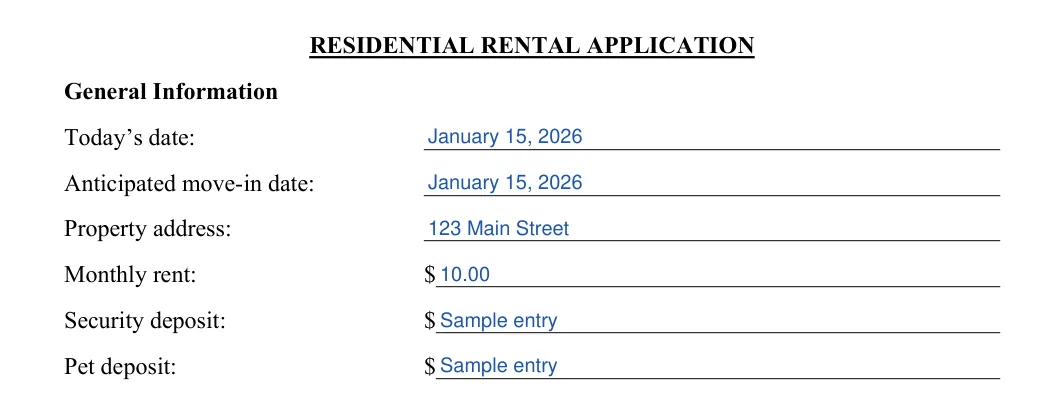
General Information
The landlord can fill out this part for the prospective tenant before printing the form.
Before supplying more detailed information regarding financial capacity, employment details, and character references, the lease application must contain the most relevant information—the basic rental information.
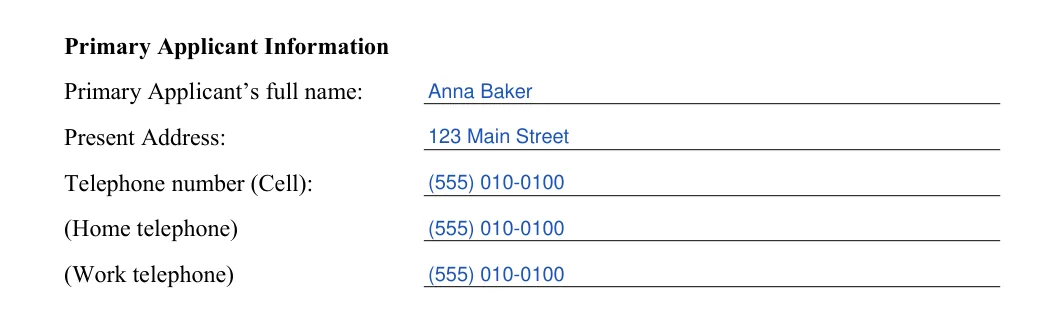
Primary Applicant Information
The prospective tenant must then provide general personal information as follows:
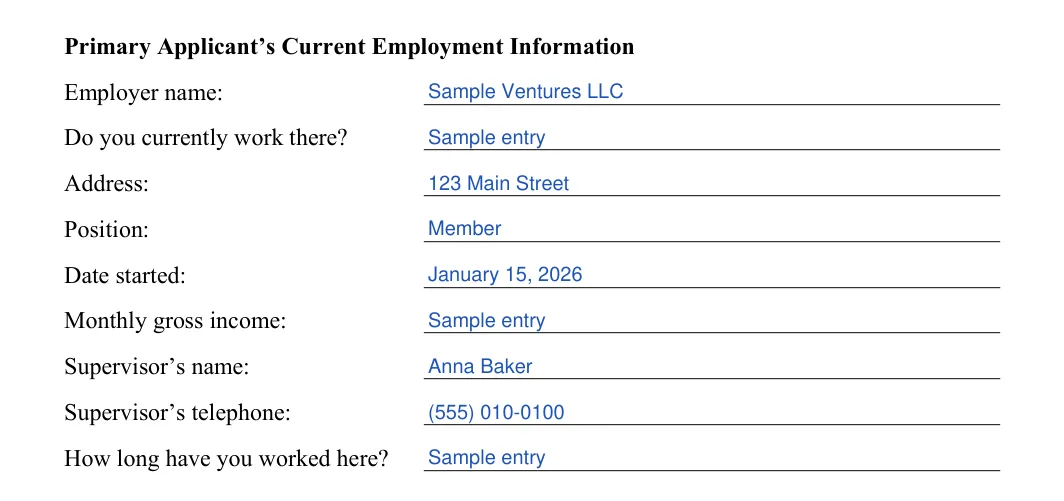
Primary Applicant's Current Employment Information
The landlord will want to contact the current employer to confirm the tenant’s source of income as well as the tenant’s character references. For tenants who own businesses, they may provide details about their company. Otherwise, they must provide the following information:
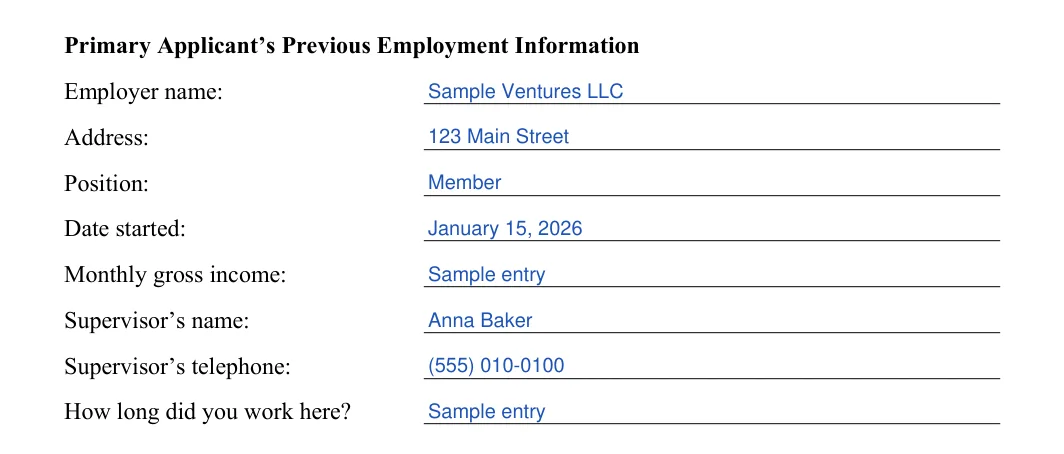
Primary Applicant's Previous Employment Information
Similar to the format above, provide your previous employer’s details: employer name, address, position, date started, monthly gross income, supervisor’s name and telephone, and how long you worked there. Make sure the contact information is updated and will direct the landlord to the employer right before your current company.
Primary Applicant's Other Sources of Income
To assure the landlord about your capacity to sustain the rental, you may provide the following:
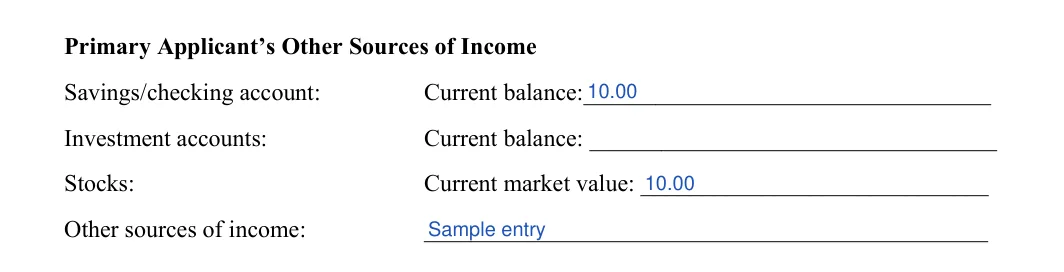
Spouse or Co-Applicant's Information
If your credit score is not enough to secure the lease, you may want to add a co-applicant. However, if you are married, you will normally be obligated to add your spouse’s details.
Enter the full name of the spouse, then the co-applicant’s full name, present address, and cell, home and work telephone numbers. You may simply follow STEP 2 for these personal details.
Then start the current employment section with the employer name, whether they currently work there, and the address. It continues on page 3.
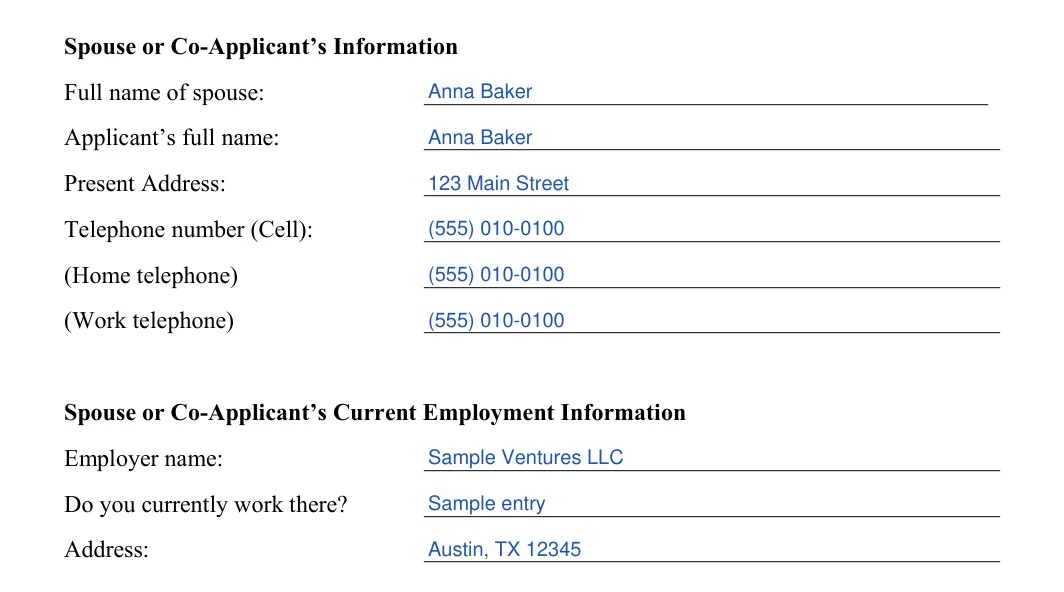
Spouse or Co-Applicant's Current Employment Information (continued)
On page 3, finish the current employment lines: position, date started, monthly gross income, supervisor’s name and telephone, and how long they have worked there. You may follow STEP 3 for each line.
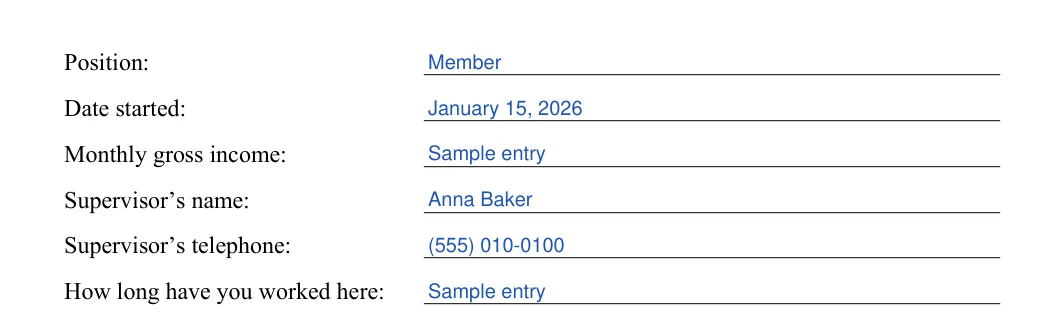
Spouse or Co-Applicant's Previous Employment Information
Your co-applicant’s or spouse’s previous work information will also be asked. Then, go back to STEP 4 and fill out the next section in the same manner.
Fill in the previous employer’s name, address, position, date started, monthly gross income, supervisor’s name and telephone, and how long they worked there.
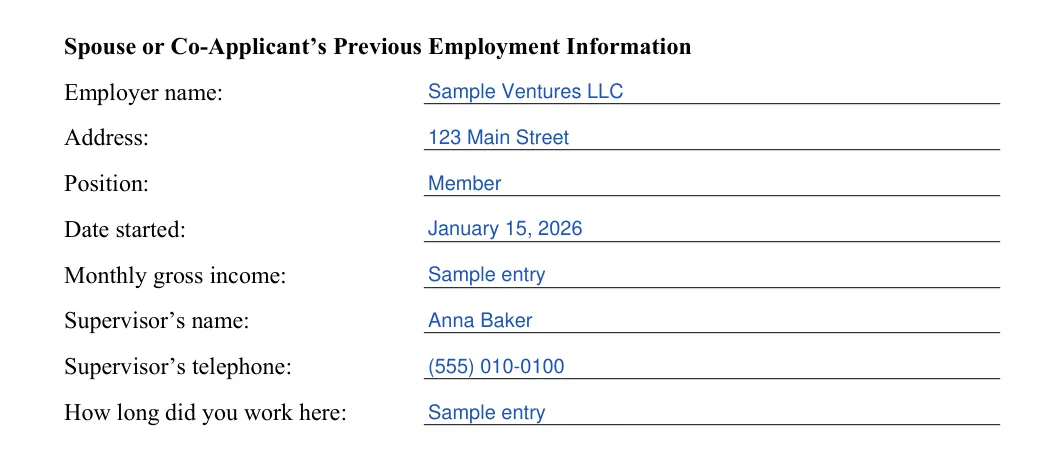
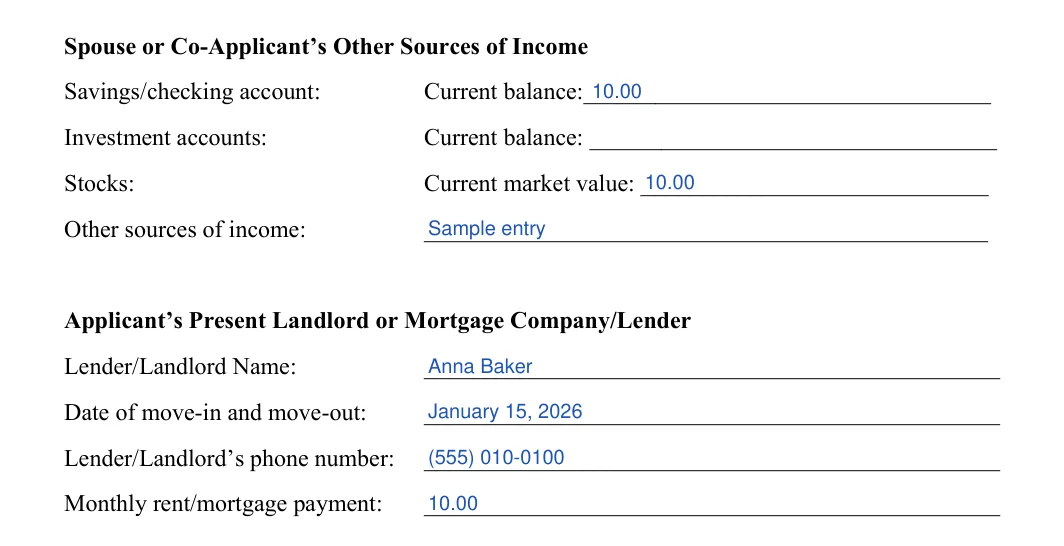
Spouse or Co-Applicant's Other Sources of Income and Present Landlord or Lender
Write your co-applicant’s financial information: current balances, the stock market value and any other income. You may refer to STEP 5.
The next part of the form is for the applicant’s present landlord or mortgage company or lender.
If you are currently renting, write the following in the section above:
Now, if you are more comfortable providing details of any existing mortgage, write the following:
Two (2) Personal References
The landlord will want to confirm your credibility through your references. You will have to provide both financial and personal references.
Ask two friends or colleagues to be your character references and enter the following for each one:
The second reference’s phone number is shown in the next picture.
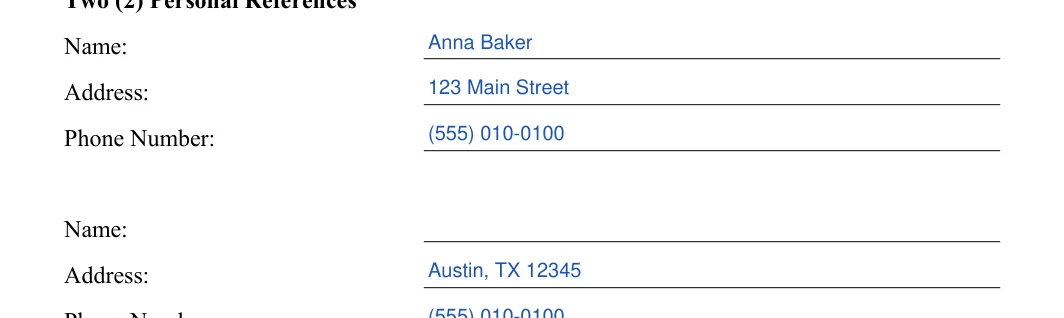
Phone Number, Occupant List, Pet List and Vehicle List
Finish the second reference’s phone number first.
Fill out this section as follows:
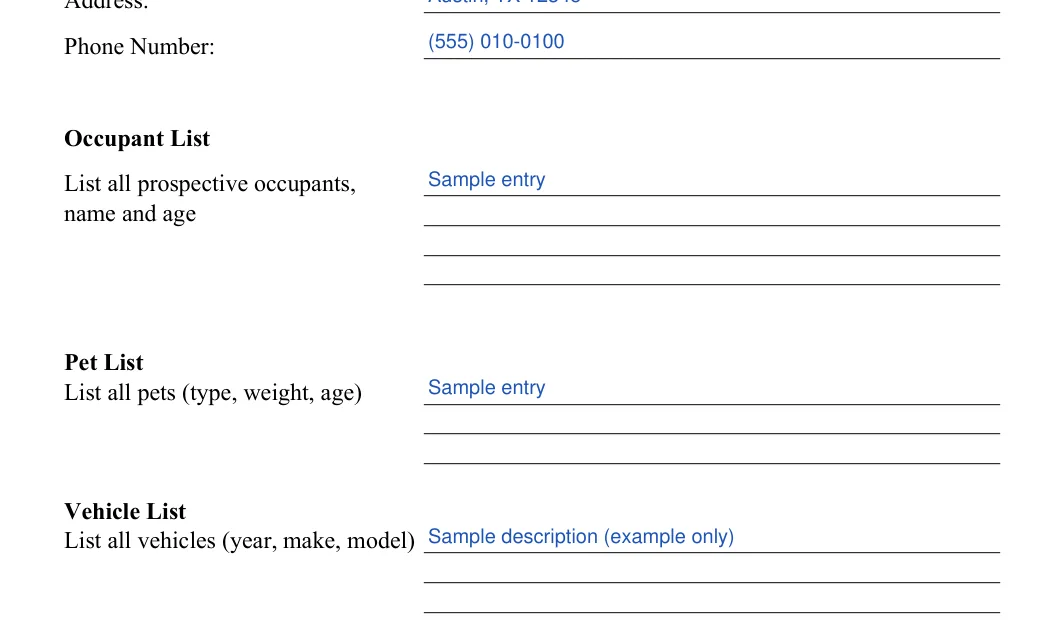
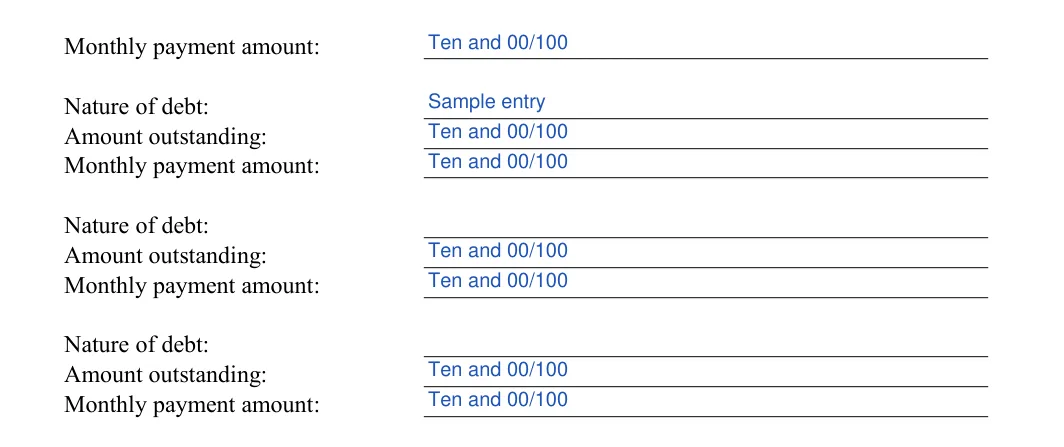
List all Credit Obligations
The landlord will also do a background check on your current financial obligations, so it is best to include these in your rental application. By being transparent about these early on, the tenant will gain the landlord’s trust. Simply supply these three details for each of your existing loans or debt on the application form.
Page 4 holds the first rows, and the third row’s monthly payment is on page 5.
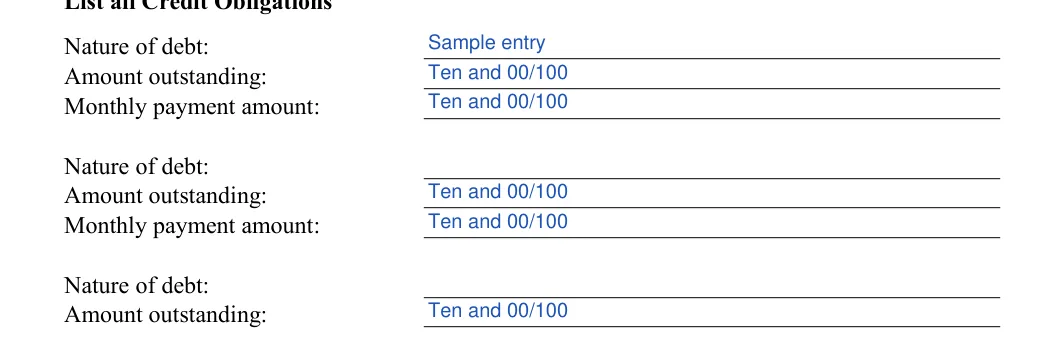
Credit Obligations (continued)
On page 5, finish the third row’s monthly payment amount and fill in the remaining rows the same way: nature of debt, amount outstanding and monthly payment amount.
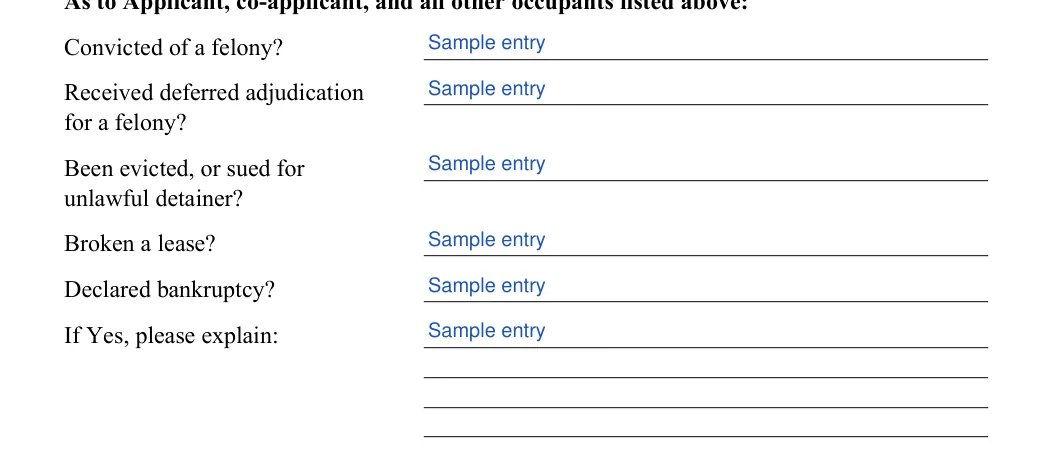
As to Applicant, co-applicant, and all other occupants listed above
It is best to disclose criminal history through the application form. By doing so, tenants will have a chance to explain their story. Write “NO” on the blank if you have never experienced the following cases, and write “YES” if:
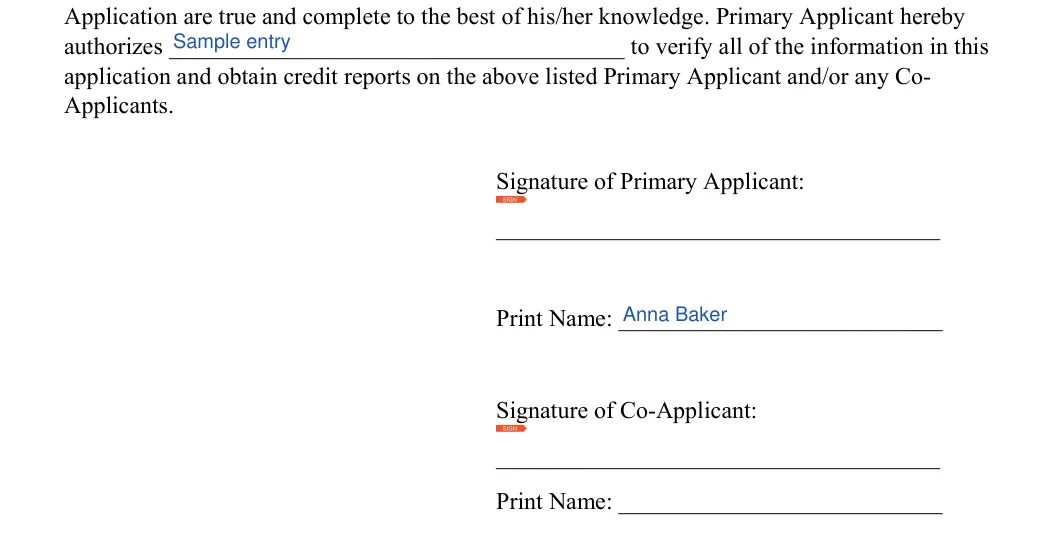
Authorization and Signatures
To complete your rental application, you must provide the following:
A rental application takes work from both the landlord and the tenant, and it pays off. A complete form saves time during the background check and helps keep a rental property away from unreliable renters. You can use FormsPal’s free rental application template to put it all together.
Renting for the first time brings plenty of questions about the application. The answers below cover what the form asks for, whether it is needed and how long processing takes. They also explain who to list as a reference, what landlords should avoid asking, what to do about a Social Security Number and how to fill out the form online.
The FormsPal rental application template has a part for each of the following:
No, a rental application can be done without a form. However, using one is advantageous to the landlord, especially for background checking.
Typically, tenant screening can be done within 24 hours, but since the landlord or broker will be handling several applications, a week’s processing is standard.
Avoid choosing family members as they may hold some strong biases. Landlords are aware of this, so it’s best to cite an officer from your homeowner’s association, another parent from your child’s school, or anyone else that holds a position in your community. This will make your application stronger.
Landlords should refrain from discriminatory questions, such as those touching on gender, LGBT families, race, language, and political stand. They must also be careful when phrasing questions and replies about sensitive topics like criminal records and socio-economic status. It is best to prepare a scripted list of questions during the interview stage of the rental application.
No, tenants are not required to provide their Social Security Number (SSN), but it would be helpful for their landlord when conducting background checks.
Yes. Select Create My Document at the top of the page and answer a few simple questions. You can also download the PDF template and complete it by hand.
General information, not legal or tax advice.
