
A Virginia small estate affidavit is a written statement made by all of the known successors of a person who has died. It lets a person holding a small asset pay or deliver it to the decedent's designated successor. It applies when the decedent's entire personal probate estate does not exceed $75,000.[1] Download the court's free Form CC-1685 below, or fill in a small estate affidavit online with FormsPal.
Last Updated: October 2026. This guide is reviewed and updated regularly to reflect current Virginia law. If you notice an error or outdated information, please contact us.
Build Your Document
Answer a few simple questions to make your document in minutes
Save and Print
Save progress and finish on any device, download and print anytime
Sign and Use
Your valid, lawyer-approved document is ready
A Virginia small estate affidavit is a written statement made by all of the known successors of a person who has died. It is presented to the person who holds a small asset, who must then pay or deliver it to the decedent's designated successor. It can be used when the decedent's entire personal probate estate does not exceed $75,000 and at least 60 days have passed since the death.[1]
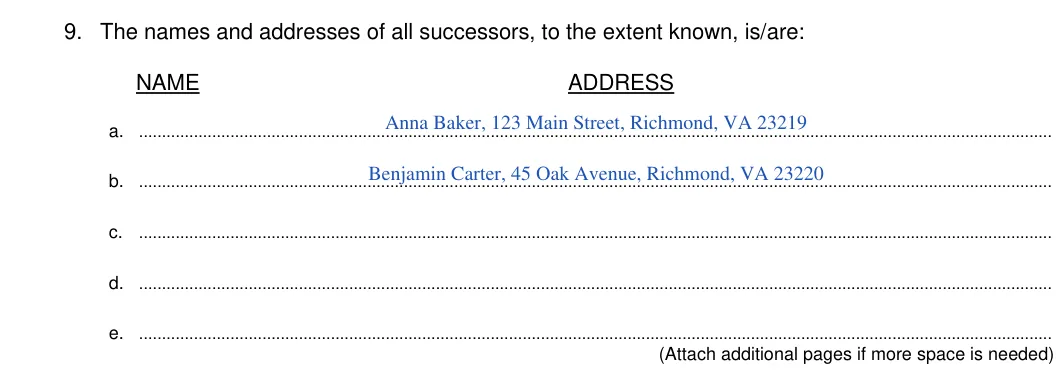
Virginia's small estate rule is in Va. Code § 64.2-601, part of the Virginia Small Estate Act (Sections 64.2-600 to 64.2-605 of the Code of Virginia).[2] It lets a person who holds a small asset pay or deliver it to the decedent's designated successor when presented with an affidavit made by all of the known successors. The affidavit must state each of the following.[1]
Under Va. Code § 64.2-601(A)(5), the affidavit must also state that the claiming successor is entitled to payment or delivery of the small asset, and the basis of that entitlement.[1]
Under Va. Code § 64.2-601(D), a transfer agent of a security must change the registered ownership on the corporation's books from the decedent to the designated successor when presented with the affidavit, once any certificates for the security are surrendered.[1]
| Max. Estate | $75,000 (the decedent's entire personal probate estate)[1] |
| Min. Time to Wait After Death | 60 days[1] |
| Who Makes the Affidavit | All of the known successors[1] |
| State Laws | Va. Code Ann. § 64.2-601 |
The affidavit is made by all of the known successors together. The person holding the small asset must then pay or deliver it to the decedent's designated successor once the affidavit is presented. The statute words the rule this way.[1]
Any person having possession of a small asset shall pay or deliver the small asset to the designated successor of the decedent upon being presented an affidavit made by all of the known successors stating:
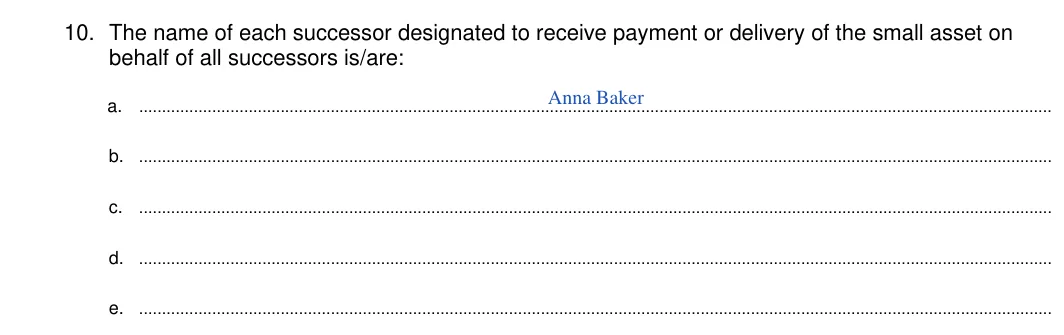
On the form, the designated successor is the person named in item 10 to receive payment or delivery of the small asset on behalf of all successors. The affidavit also states that this person has a fiduciary duty to safeguard the small asset and to pay or deliver it promptly.[1]
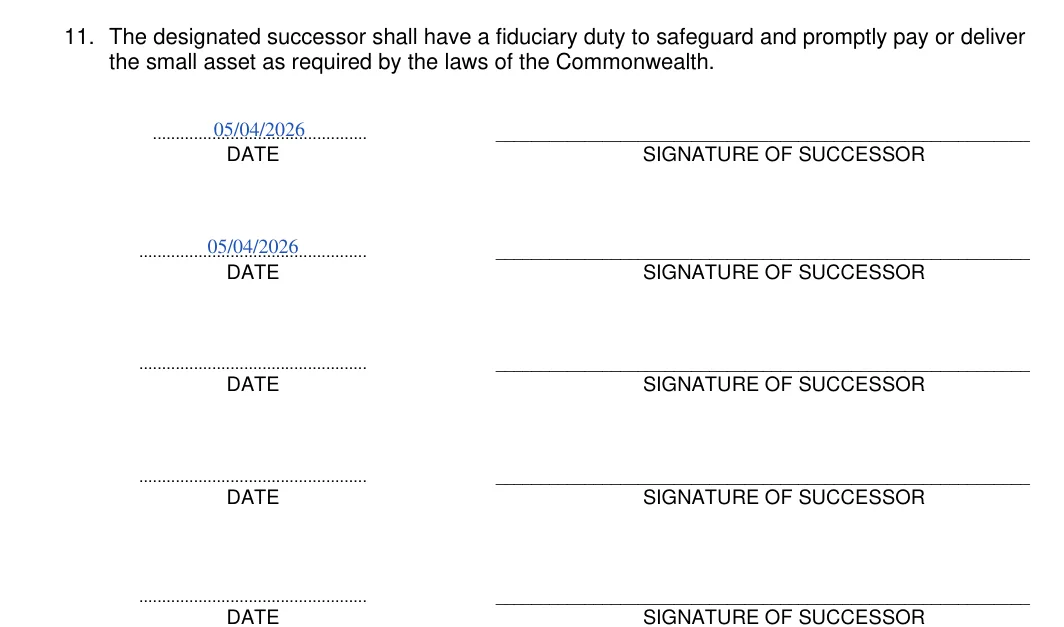
The affidavit must be made by all of the known successors, so every one of them signs it.[1]
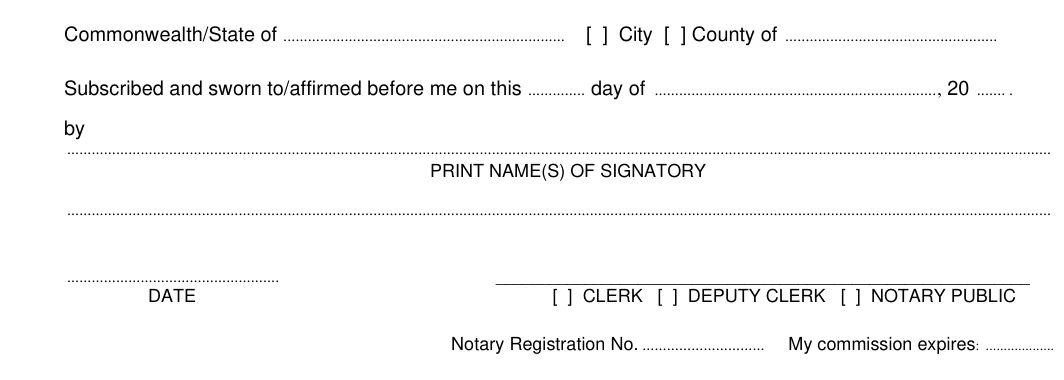
Each successor signs the affidavit under oath before a notary public or a circuit court clerk or deputy clerk, as the Supreme Court of Virginia's small estate affidavit form, Form CC-1685, provides.[3]
Under Va. Code § 64.2-601(B), if a successor is, or is reasonably believed to be, incapacitated or under a legal disability, the designated successor may pay the asset to that successor's conservator or, if there is no conservator, guardian. The section lists other options too, such as a custodian.[1]
If a person presented with the affidavit refuses to pay or deliver a small asset, the person entitled to it can bring a proceeding to recover the asset or compel its payment or delivery, and can also recover damages, on proof of a rightful claim (Va. Code § 64.2-603).[4]
Gather these details first, so you can complete the form without stopping to look things up.

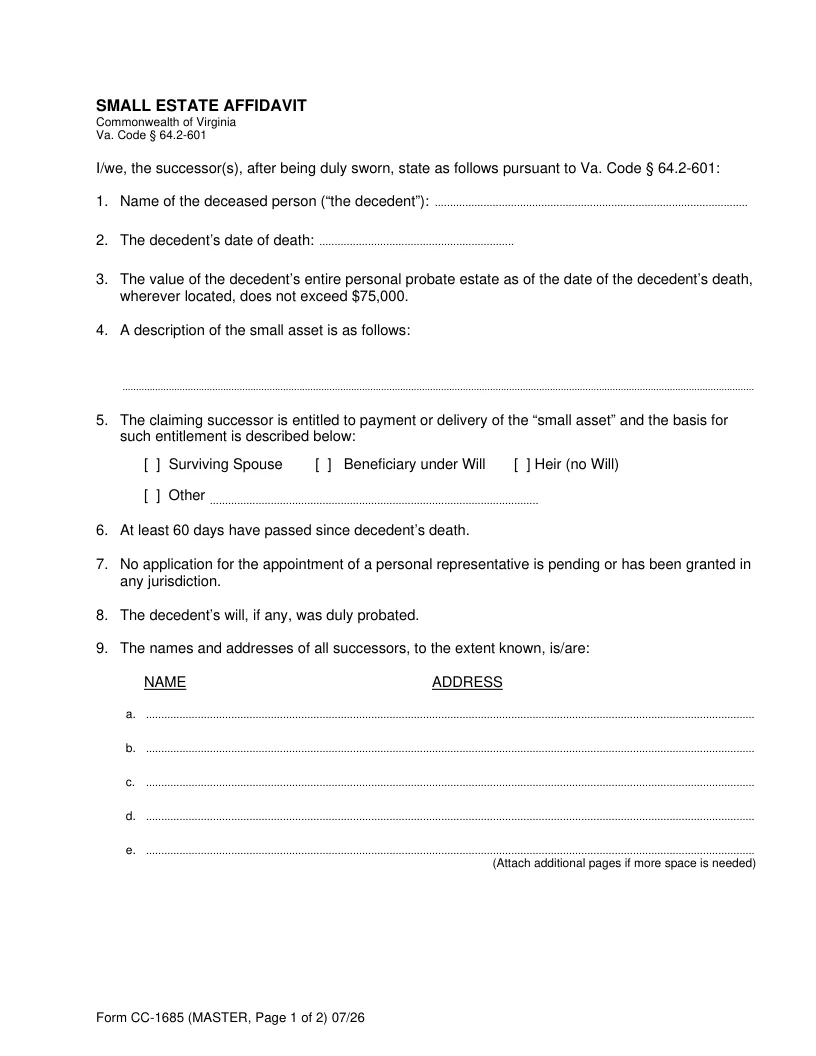
These Virginia small estate affidavit instructions follow the order of the form. The PDF on this page is the court's current form, Form CC-1685 (07/26), from the Supreme Court of Virginia.[3] Fill it in with our online PDF editor, or print it and write the answers by hand. Each step names the part of the form it covers.
The screenshots under each step show Form CC-1685, the official Virginia form, filled with sample entries in blue, so you can see where each answer goes. The names, addresses, dates and amounts are examples only.



These answers come from Va. Code § 64.2-601, the section cited on this page. They cover how the affidavit works, the $75,000 dollar limit and the rule for the person who holds the asset.
All of the known successors make the affidavit and present it to the person holding the small asset. That person must pay or deliver the asset to the designated successor.[1] The affidavit states these points.
Virginia has a small estate procedure for an estate whose entire personal probate estate does not exceed $75,000. When the conditions on this page are met, a person holding a small asset must pay or deliver it to the designated successor on presentation of the affidavit.[1]
The limit is $75,000. It is measured against the decedent's entire personal probate estate as of the date of death.[1]
The maximum is $75,000 for the decedent's entire personal probate estate, wherever located.[1]
The small estate affidavit covers an estate of up to $75,000.[1] This page does not cover larger estates.
General information, not legal or tax advice.
