
A Georgia lease agreement is a written contract between a landlord and a tenant that sets the terms for renting a home in the state, including the rent amount, the length of the tenancy, and each party's responsibilities. It becomes legally binding once both parties sign it, under Title 44, Chapter 7 of the Georgia Code. FormsPal offers several lease templates for Georgia, including month-to-month, standard fixed-term, and commercial leases.
Last Updated: September 2026. This guide is reviewed and updated regularly to reflect current Georgia law. If you notice an error or outdated information, please contact us.
Build Your Document
Answer a few simple questions to make your document in minutes
Save and Print
Save progress and finish on any device, download and print anytime
Sign and Use
Your valid, lawyer-approved document is ready
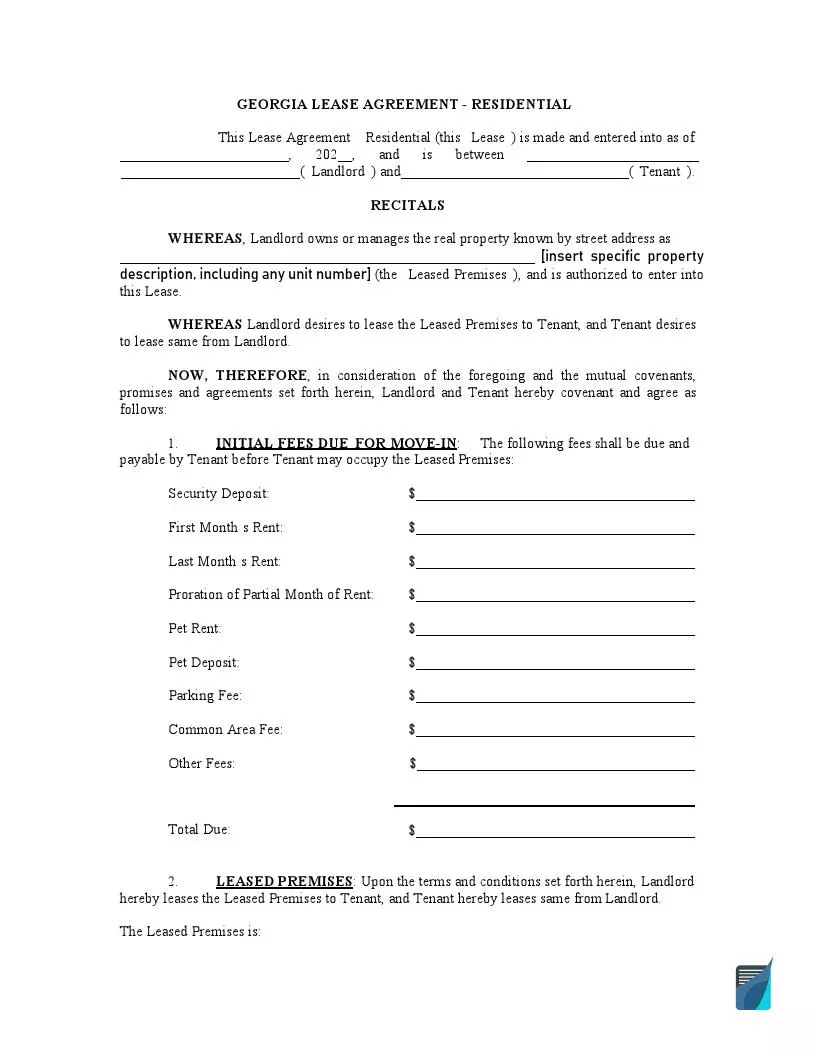
A Georgia lease agreement usually covers several core elements: the names of both parties, the property address, the monthly rent and due date, the length of the tenancy, and the security deposit amount. Many leases also set rules on pets, guests, and who pays for utilities, so everyone knows what to expect before signing.
Georgia recognizes several types of lease agreements, each suited to a different rental situation. The list below covers the most common arrangements FormsPal offers Georgia landlords and tenants, from month-to-month rentals to fixed-term and commercial leases.
| Document Name | Georgia Rental Lease Agreement Form |
| Other Names | GA Rental Lease, Georgia Residential Lease Agreement |
| Relevant Laws | Georgia Code, Title 44, Chapter 7 |
| Security Deposit Return | Within 30 days after the landlord regains possession of the property |
| Avg. Time to Fill Out | 18 minutes |
| # of Fillable Fields | 119 |
| Available Formats | Adobe PDF, Word (.docx), OpenDocument (.odt) |
Georgia law sets several requirements for a residential lease, covering the security deposit process, notice to end a month-to-month tenancy, and common landlord disclosures. The sections below explain each rule in plain terms and name the Georgia Code section it comes from.
Many landlords use a rental application to screen a potential tenant before signing a lease. A typical application asks about income, the ability to pay rent, employment history, and personal references. This information helps the landlord judge whether an applicant can likely keep up with the lease.
A security deposit is meant to protect the landlord against damage to the property beyond normal wear and tear. Georgia law sets a specific process for handling that deposit under the lease, from the move-in inspection to its return.
This process gives both sides a documented record of the property's condition, which can help prevent a dispute over what the security deposit covers.
Use FormsPal’s deadline calculator to count the 30-day window for returning a security deposit, so neither side loses track of the date.
When a lease sets no fixed end date, Georgia law treats it as a tenancy at will that either side can end with proper notice.[1] Ending a month-to-month lease takes sixty days' notice from the landlord, or 30 days' notice from the tenant.[2.1]
Many landlords give tenants advance notice before entering the home, often using a notice-to-enter form. This helps avoid a surprise visit or a later dispute.
Under O.C.G.A. 44-7-11, a tenant may not cut or destroy growing trees, remove permanent fixtures, or otherwise injure the property.[1.1]
Before the tenancy starts, the landlord must give the tenant, in writing, the names and addresses of the owner of record (or the owner's agent for notices) and of the person who manages the property, and must report any change within 30 days (O.C.G.A. 44-7-3). Naming these people up front helps the tenant know who to contact and reduces confusion later.[1.2]
It is good practice to disclose to a tenant any issue that could affect their decision to rent, such as a death on the property or a serious hazard. Being upfront about these issues can help avoid a dispute or a claim after the tenant moves in.
For a home built before 1978, federal law (42 U.S.C. 4852d and 40 CFR 745.113) requires the landlord to include a lead-based paint disclosure and warning statement in or attached to the lease, and to give the tenant the EPA lead hazard pamphlet before the tenant is bound.[3.1] Check the age of the property before you finalize the lease so you know whether this disclosure applies.
Georgia law requires the owner to notify a prospective tenant in writing, before the lease, if flooding has damaged the living space at least three times in the five years before the lease (O.C.G.A. 44-7-20).[1.3] If flooding history matters to you, ask the landlord directly before you sign.
Georgia law protects tenants through the security deposit process. Before you pay a deposit, the landlord must give you a list of existing damage and let you inspect the property.[2.4] The deposit must sit in an escrow account or a surety bond,[2.2][2.3] and it must come back within 30 days of the landlord regaining possession.[2.5]
A Georgia landlord cannot just hold your deposit in a general account. It must sit in a dedicated escrow account, and the landlord must tell you in writing where that account is,[2.2] or instead post a surety bond capped at $50,000.[2.3]
A Georgia landlord must return your full security deposit within 30 days after regaining possession of the rental property.[2.5] If the landlord withholds part of the deposit, a copy of the signed move-in damage list makes it easier to resolve a disagreement.[2.4]

General information, not legal or tax advice.
