
Updated:
Get Form Now
A facial consent form is a client questionnaire signed before a facial. It collects contact details, skin type, allergies, past treatments and goals, then ends with a signature. Estheticians and salon owners use it to plan safer, more personal facials.
This guide explains each part of the form, how a client fills it out, and how a salon uses the answers before and after the treatment.
Key facts
A facial consent form gives the specialist the client's skin history before the treatment starts, so the choice of products and methods rests on facts the client provided rather than guesswork.
A facial can irritate the skin, or make it look worse, when the treatment does not fit the client's skin type. The form lowers that chance by putting skin type, allergies and past reactions in front of the specialist.
The completed form serves both sides:
The form also supports a salon's reputation. A treatment planned around a client's own answers tends to give a better result, and clients return to the salon that took the time to ask.
A facial consent form is the written agreement between the client and the specialist to a treatment, while a client intake form gathers background such as skin type, allergies and past treatments.
Many salons combine both documents on one page, and this template works that way: the intake questions come first, and the consent statement with the signature comes last.
Salons use several names for the same paperwork:
| Name | What it covers | When it is used |
|---|---|---|
| Consent form | The client's agreement to a treatment, signed and dated | Before the treatment starts |
| Client intake form | Contact details, skin type, routine and goals | At the first visit |
| Health history form | Allergies, medical conditions, medication and injections | At the first visit and when health changes |
| Consultation form | The client's concerns and the specialist's plan | During the first meeting |
| Service record | What the specialist did at each visit and the products used | After every treatment |
Contraindications belong on the health history part of the form, the section that asks about allergies, conditions and medication. The name of the document matters less than its content.
A facial consent form includes client details, goals, skin history, home routine, allergies, injections, women's health and a signed consent statement, each asking only what the specialist needs to plan the treatment.
The questions work best in plain language without medical jargon, with space after each one for the client's own notes.
| Section | What it asks | Why it helps |
|---|---|---|
| Personal details | Name, address, phone, email, occupation, and how the client found you | Lets you contact the client and see where new clients come from |
| Expectations | What the client wants to achieve | Helps you set the right goals for the treatment |
| Skin history | Past treatments and results, skin type, and regular skin problems | Helps you avoid repeating treatments that did not work |
| Home care routine | Cosmetic and medical items the client uses at home | Shows which items could clash with the treatment |
| Allergies | Known allergies, medical conditions, and past reactions | Helps you avoid products that could irritate the skin |
| Injections | Past injections and medical treatments that affect the face | Gives you a fuller picture of the client's skin |
| Women's health | Hormonal treatment, pregnancy, and menopause | These factors can change how the skin reacts to a treatment |
| Signature | The client's signature and the date | Shows that the client read the form and stands behind the answers |
The skin type section asks the client to pick the description that fits their skin best, with room for notes. Common options include:
The allergy section lists known allergies, skin conditions and reactions to past products or treatments. A contraindication is any of these that rules out a product or a method for this client, such as a known reaction to an ingredient.
The same section asks about medication and active skin care ingredients the client uses, since some of them make the skin more reactive to a treatment.
The injections question covers past injections and medical treatments that affect the face. The women's health question covers hormonal treatment, pregnancy and menopause, which can change how the skin responds to a facial.
The consent statement is the part that turns a questionnaire into a consent form. In it, the client agrees to the salon's conditions and confirms that the answers are accurate, then signs and dates the page.
Some salons add optional permissions here, such as consent to before and after photos, kept separate from the treatment consent so the client can say yes to one and no to the other.
The form is filled out in nine short steps, intake questions first and signature last; the sample screenshots under each step show where that part appears on the form.
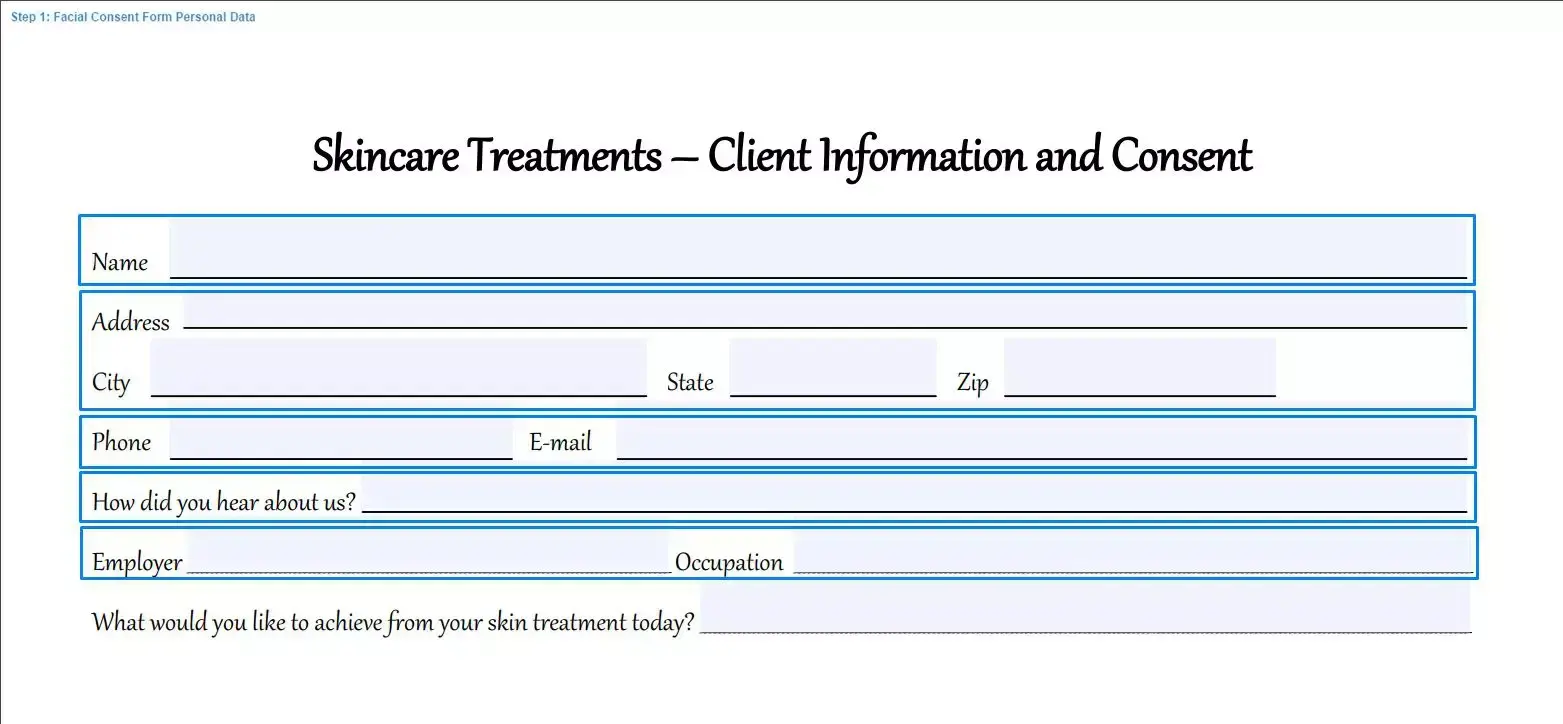
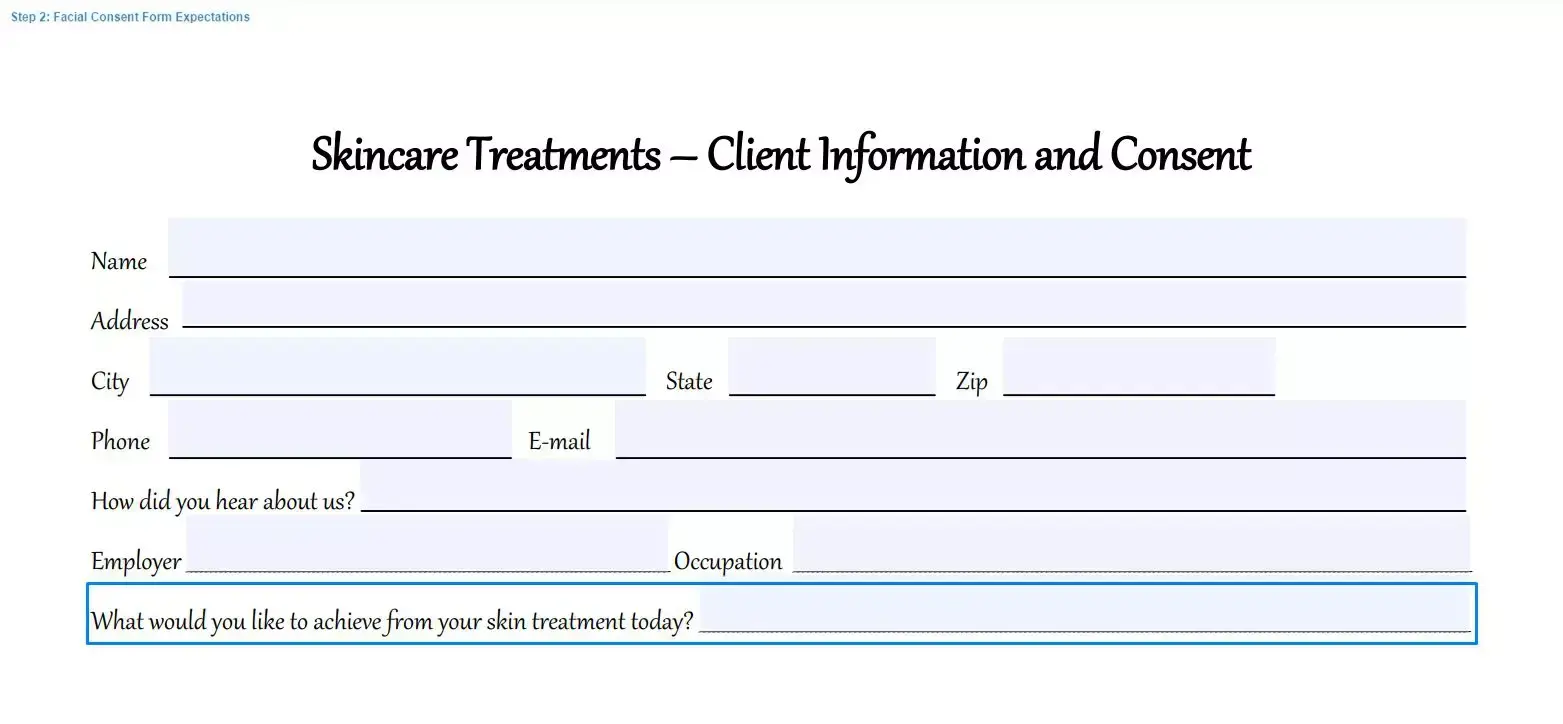
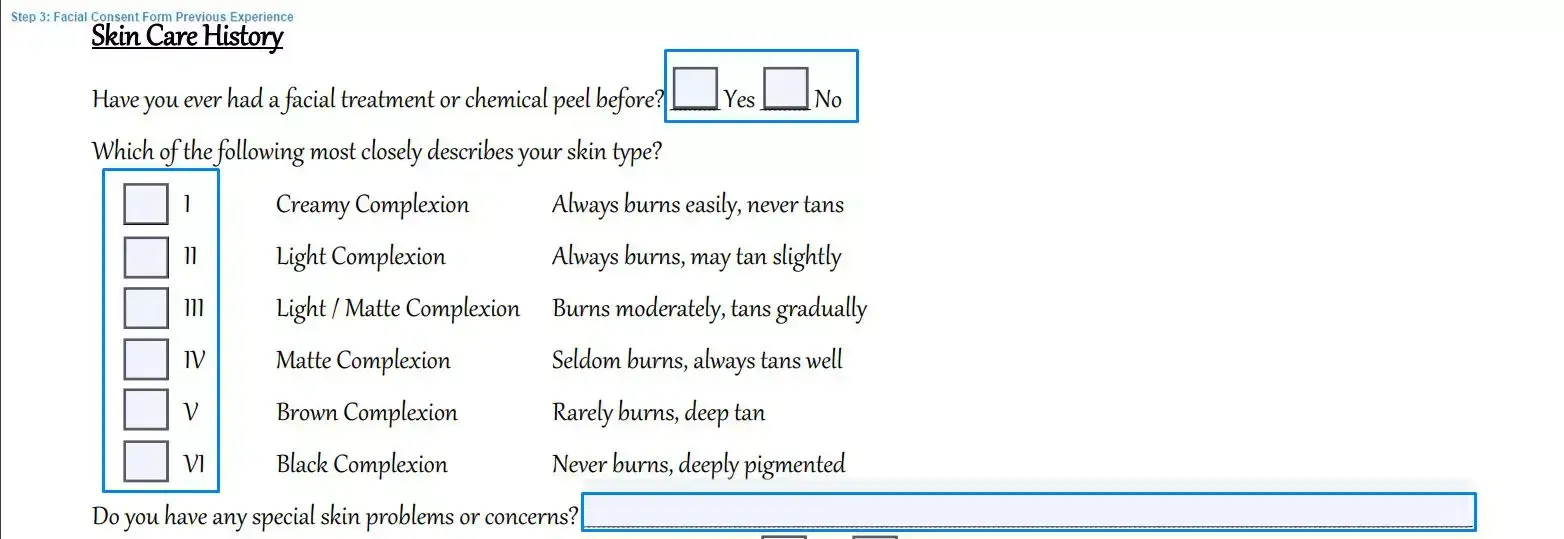
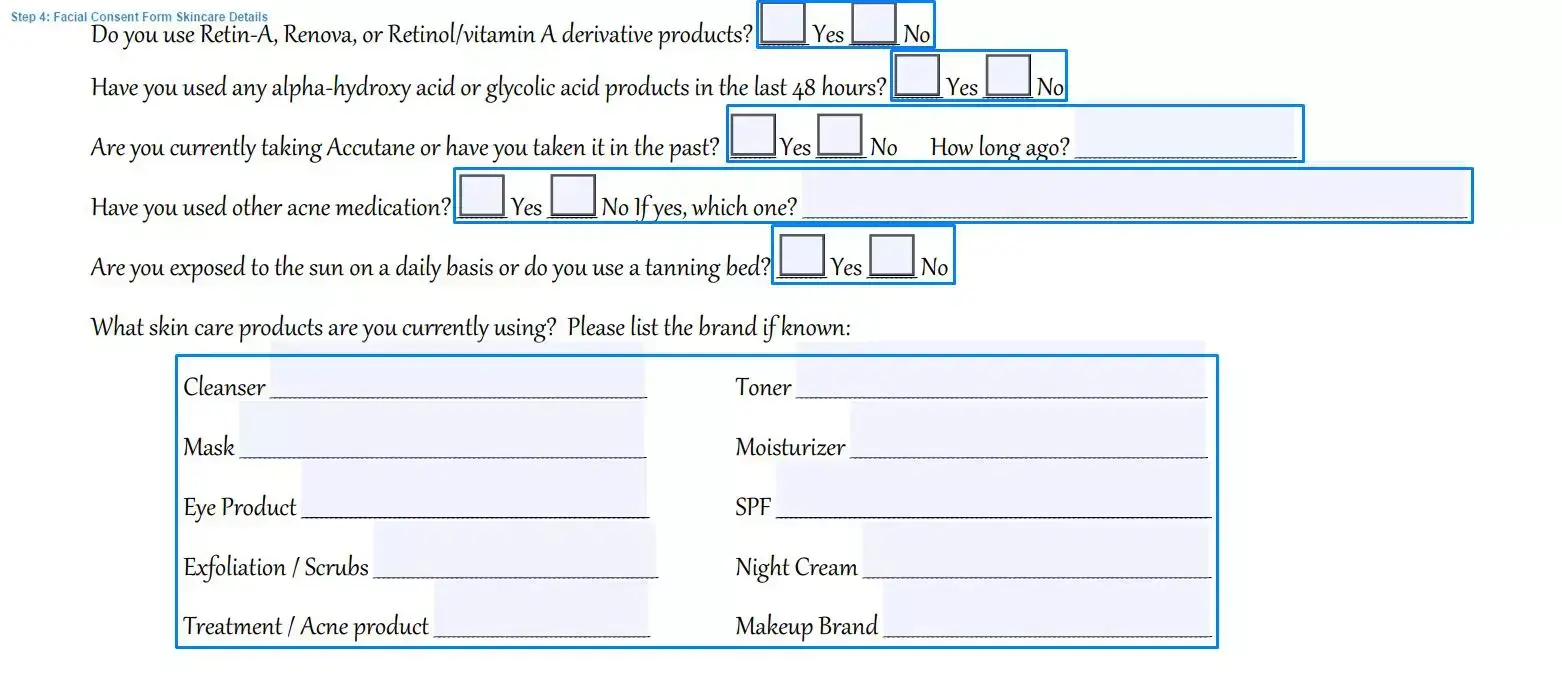
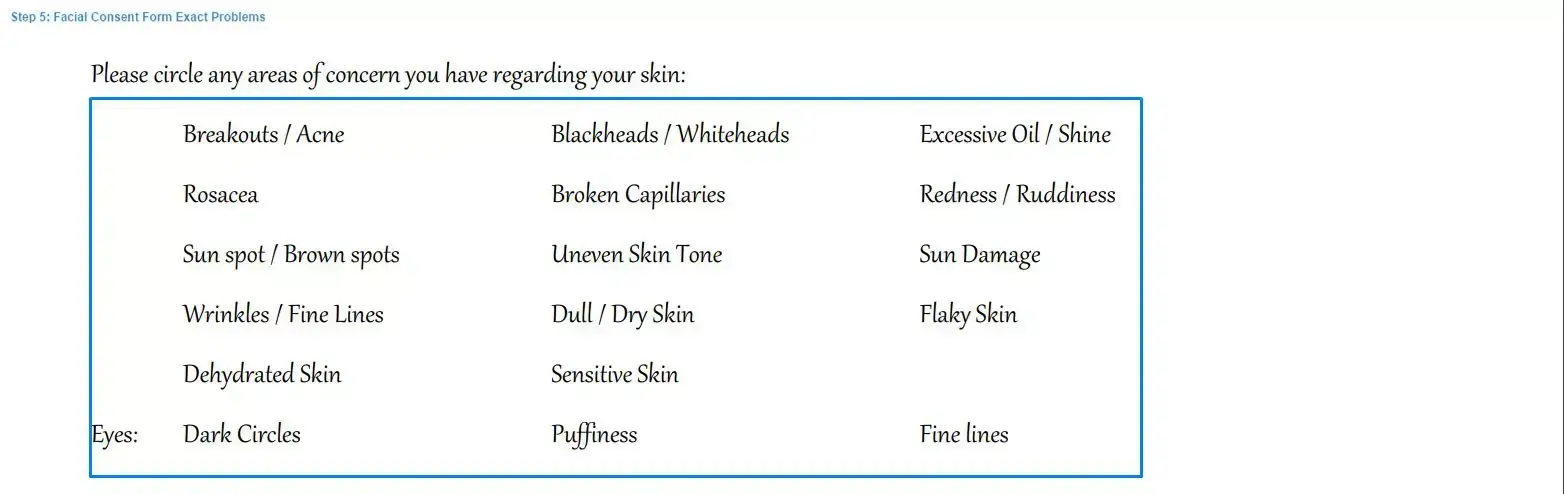



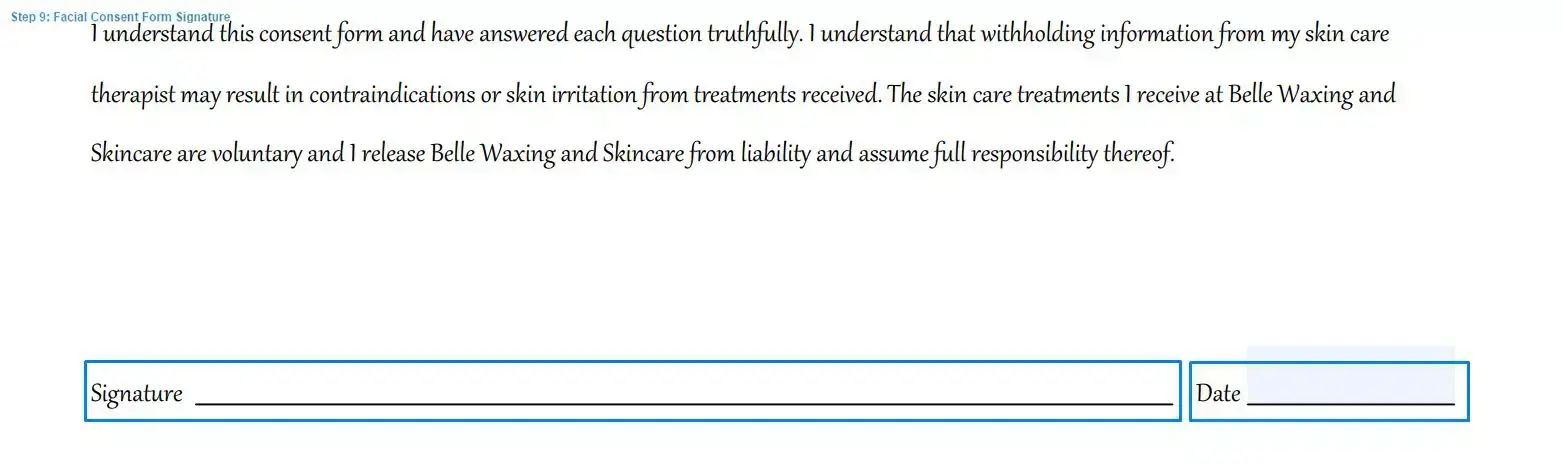
A completed form gives the client and the specialist a clear account of the client's answers and the same expectations for the treatment.
A facial consent form works best when the client completes it before the visit, so the specialist has time to read the answers and choose the treatment, products and equipment in advance.
Before offering the form to clients, read it through and adapt the questions to the treatments your salon performs. Use the same form for every client so answers stay easy to compare between visits.
The form can also be completed at the front desk before the treatment starts. This suits walk-in clients, but it leaves less time to read the answers and select the products.
The consent form works on paper or in digital form, and the better choice depends on how your salon runs, how many clients you see and where you keep signed forms.
Whichever format you choose, tell clients who will read their answers and where the form is kept.
Whether one general consent form is enough depends on the salon's own policy and its insurer, so the salon checks which services need their own signed form. Many salons add a separate form for treatments with more risk to the skin, such as chemical peels or microdermabrasion, so the client sees the questions and risks that apply to that treatment.
Returning clients should review and update their answers at each visit. Skin, health and products change over time, and a quick update helps the specialist choose a safe treatment.
A blank answer is worth a short conversation before the treatment starts. Ask the question in person, note the answer on the form, and choose a gentler treatment when an allergy or health question stays unanswered.
The form can be signed on a screen or on paper. Ask your insurer or your licensing board which signature format they expect for client paperwork in your state.
Yes. Add or remove intake questions to match the treatments you offer, for example by asking about sun exposure or the skin care products a client uses at home. Keep the form short so clients finish it.
Yes. The form is available as a printable PDF, and you can fill it in on a screen with the online PDF editor before printing it for a signature.
Read every answer before the treatment, then keep the signed form where only your team can reach it:
General information, not legal or tax advice.
