
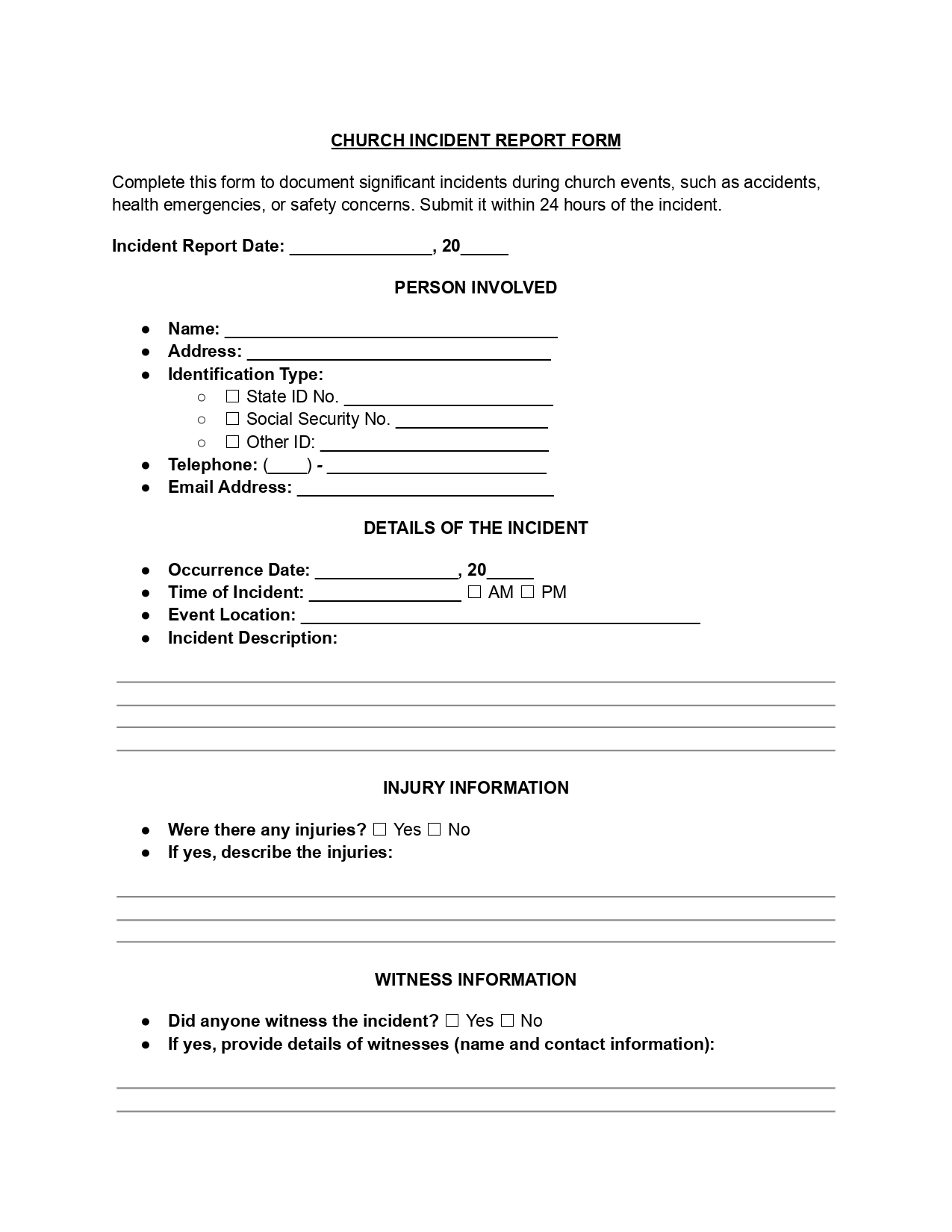
A church incident report form is a written account of an injury, accident, theft, or other event that happens on church property. Pastors, ministry leaders, and church staff use it to keep one clear account of what happened, who was there, and what was done next. A finished copy goes to a pastor or another appointed leader, following your church policy.
Last Updated: October 2026. This guide is reviewed and updated regularly to reflect current law. If you notice an error or outdated information, please contact us.
Use a report any time something happens on church property that affects someone's safety or health, or that damages property. It gives your team a written account of injuries, thefts, property damage, and safety hazards. Common situations include:
A written account helps church leaders respond to the situation and spot risks before they cause harm. It can also support an insurance claim and helps keep members, volunteers, and visitors safe.
Filling it out takes a few minutes once you have the facts in front of you. Work through the sections in order and use plain, neutral words. Describe what you saw or heard instead of what you think caused it. The ten steps below match the sections you will see.
Have these details ready before you start:
Write the day you are filling this out in the first field. This is not the day of the event. Together with the time of the event in step 5, it shows how long you waited before writing it down.
Write the full name and address of the main person in the event. If that person is not the one filling out the form, get their consent before you add their details.
Mark the type of ID the person used and enter the matching number. Options typically include a State ID, Social Security Number, or an alternate form of ID. Check the box that fits and copy the number exactly as it appears on the ID. Keep the finished report in a private place, since it can hold sensitive details.
Write the phone number and email address of the person from step 2. If someone needs more details later, the church can use this information to follow up.
Write the day, time, and exact location of the event. Then describe what happened in as much detail as you can, so a reader who was not there can picture the event. Stick to facts, such as “the child slipped on the wet entry mat,” and leave out guesses about why it happened.
Check whether anyone was injured. If someone was, describe what kind of injury it was and how serious it looked. Name the part of the body, for example “scraped left elbow.”
If there were any witnesses to the incident, note this by checking the appropriate box. Additionally, provide the names and contact information of any witnesses. Church leaders can use these details to check the facts and hear other points of view.
Document whether law enforcement was notified and if a police report was filed. Then mark whether help was given at the scene, or whether the injured person declined treatment. If treatment was given, write down where it took place.
Sign at the bottom and add the day you signed it, to confirm that the information is accurate and complete. Print your name as well, so there is a clear record of who wrote it. Read it all once more before you sign.
Church administrators who receive the incident report typically fill out this section. The administrator writes down who received it and the day it arrived. They also note any follow-up steps taken in response to the event.
A clear account is easy to read and easy to check. Ministry workers and volunteers do best when they write down the facts soon after the event and leave out guesses.
Jot down a few words at the scene. Notes written right away help you recall names, times, and what people said. Share them with the church leader who reviews the paperwork, so everyone has the same safe, accurate picture of what happened.
The same template works across many church activities, but each setting has its own details worth noting.
Whatever the setting, keep the same neutral tone and the same order of events. Many churches also keep written safety procedures for incidents like these, so ask a pastor or administrator which procedures your congregation uses.
These answers cover the questions people ask most, from who fills it out to what happens next.
It is a written record of an injury, accident, theft, or other event on church property. It lists who was there, what happened, where and when, any injuries, and who saw it.
Usually the person who saw the incident or handled it first, such as a pastor, usher, ministry leader, or volunteer. The church administrator completes the last section.
As soon as you can after the event, while the details are fresh. Short jottings made at the scene make the full report faster to write.
Gather these before you sit down to write:
Ask the witness to write their own account. A witness incident report form works well for that.
Read it once more, check that names and times match, then sign it. Hand the original to the pastor or appointed leader and keep a copy for your records.
Yes. FormsPal has many types of incident reports. Browse all of them on the incident report forms page.
General information, not legal or tax advice.
