
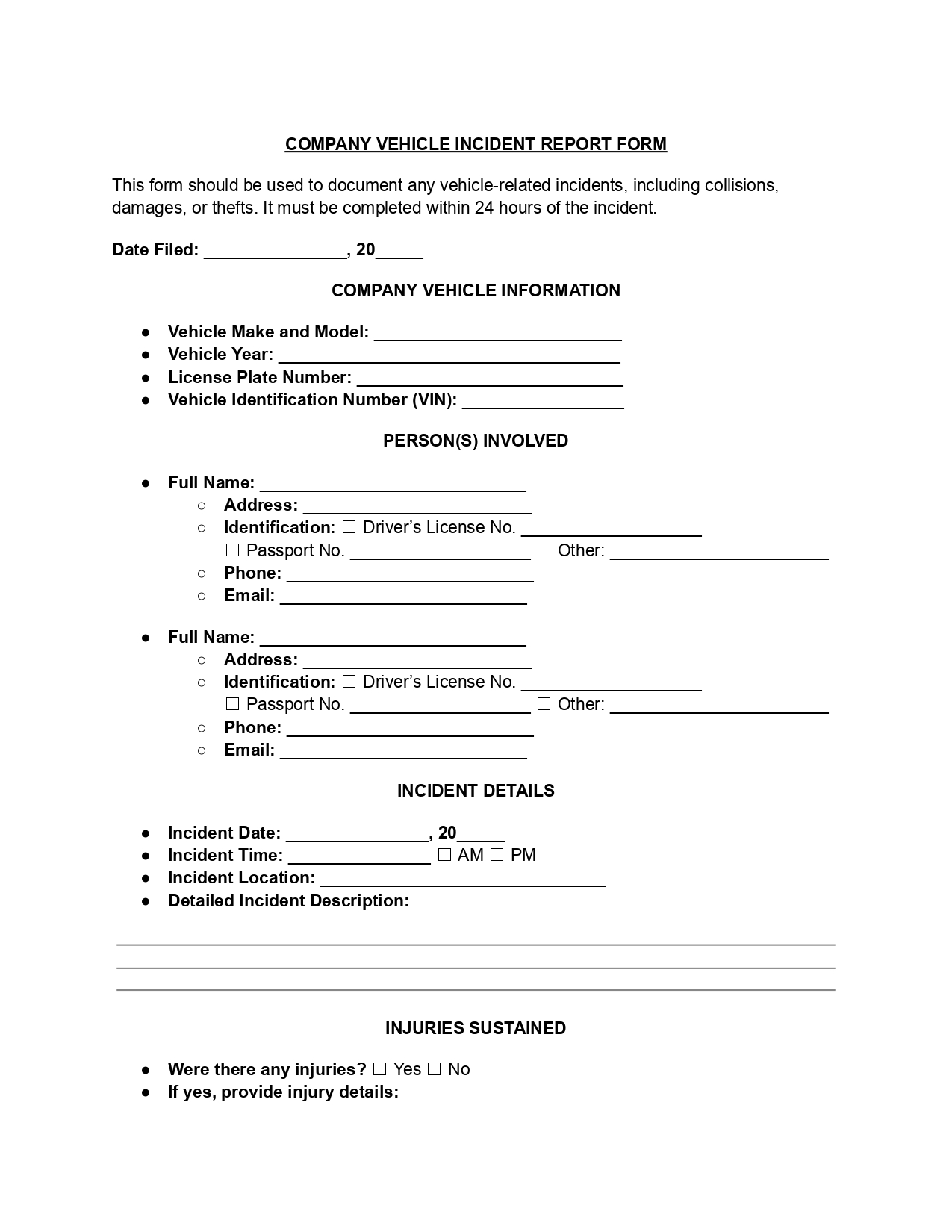
A company vehicle incident report is a written record of a collision, theft, damage or other accident involving a car, van or truck that a business owns or leases. It lists who took part, what happened, where and when it happened, whether anyone was hurt and who saw it. Use the free template below, then keep a copy with your insurance and fleet records.
Last Updated: October 2026. This guide is reviewed and updated regularly to reflect current law. If you notice an error or outdated information, please contact us.
A shared template gives your team one standard way to record what happened after a crash, a theft or harm to a company car. This standardized format assists businesses in effectively collecting all required information regarding the case, simplifying the procedure for administrative and legal needs.
Main benefits of using this template:
Using the same template for every incident encourages faster, more structured responses, and it makes driver and fleet records easier to track across the whole company. Some teams call it a company vehicle accident report, and the form works the same way under either name.
The words incident, accident and near miss sound alike, but they are not the same thing. Knowing the difference helps you pick the right words when you describe what happened.
Many company fleets also write up near misses, because these reports take only a few minutes to complete and they show workers and managers where the next accident could happen.
The report comes after the scene is safe, so take care of people first and then collect the facts while they are still fresh. These quick steps fit a collision, a theft or harm to a parked company car, and they apply to nearly every accident.
Tip: Describe only what you saw and heard. Stick to facts such as times and places, and leave out guesses about who was at fault.
Having the facts close at hand makes the report faster and more accurate, because you will not have to stop and look anything up halfway through. Gather these items before you open the template, and keep them within reach while you write, especially when the driver is still on the job.
The template has eight parts, from the date filed to the signature, and it works best when you go through them in order. Write plain facts that anyone at the company could follow, and if a part does not apply to your situation, write N/A so the report looks complete. The same steps fit collisions, damage and thefts.
Start by entering the current date in the “Date Filed” field at the top of the form. This is the date you complete the form, not the date the incident occurred.
Write the company vehicle’s make and model in the designated field. Then add these details:
Record the full name, home address, and contact information (phone number and email) of the person involved in the incident. Choose the appropriate identification type (Driver’s License, State ID, or other) and provide the corresponding number or details.
Fill in the exact date and time of the incident, specifying AM or PM. Indicate where the incident took place, noting street names or nearby landmarks, and provide a clear, detailed description of what happened during the incident.
Check the appropriate box to indicate whether any injuries occurred. If there were injuries, describe them in detail in the provided space to give a clear picture of the circumstances and the extent of any harm done.
Note if there were witnesses to the incident and include their names and contact details for potential follow-up or legal documentation. This information helps resolve disputes or claims related to the incident.
Indicate whether the police were notified and if an official report was filed. State whether any medical assistance was provided, declined, or if it took place on-site, at a hospital, or elsewhere.
The person filling out the report should sign at the bottom to authenticate the information, including the date the form was completed, and print their name.
The description in Step 4 is the part people read first, so it pays to get it right. Managers, insurers and safety teams may all read it later, and three simple habits keep it clear for every one of them:
Sample description (all details are made up):
On Tuesday at 2:15 PM, Anna Baker was driving the white company van north on Main Street. A delivery truck backed out of the driveway at 123 Main Street and hit the rear passenger side of the van. Anna stopped at once, checked that no one was hurt and took photos of both cars.
The sample gives the day, the time, the street and the order of events. It does not guess why the truck backed out or who was to blame, which keeps the report factual.
A few small slips can make a report hard to use later, even when the person who wrote it meant well. Most of them are easy to avoid when you slow down and check each part against your notes before you sign.
A final read-through takes only a few minutes and catches most errors, so go through the report from top to bottom before you sign, and use the points below as a quick checklist after any accident or incident.
Finishing the form is not the last step. A few quick follow-ups help your team close the loop, protect other workers on the road and keep the accident record complete for later reviews.
Fleet and safety managers read completed reports to see where, when and how accidents happen, and repeated entries for the same route, car or time of day point to the next fix. Keeping every report in one place also makes it simple to compare incidents and share the facts with insurers, drivers and other workers.
Common safety steps that come out of these reports:
A person who saw the incident can write their own account on a witness incident report. If something other than the car was harmed, such as a fence or a building, a property damage incident report can sit alongside this one.
Drivers and fleet managers often ask the same few questions about this template, so the short answers below point back to the steps above and help you find the right part of the form quickly.
It is a written record of a collision, theft, damage or other event involving a car, van or truck that a business owns or leases. It captures the people, the place, the time and the facts in one document.
The driver, or the person in charge of the car at the time, usually fills it out, and a manager or fleet supervisor can add notes afterward. Workers who drive a company car for their job should know where to find the template.
Fill it out as soon as it is safe to do so. Details are easiest to remember on the same day, and your photos and notes will still be fresh.
The template works for these events and more:
Photos are not a field on the form, but they back up your description. Take pictures of both cars, the scene, the road and the area around it, and keep them with the signed report.
Check the injuries box in Step 5 and describe the injuries in detail. Then note any medical help in Step 7.
Use short, clear sentences and tell the story in order. Say where you were going, what you saw, what happened next and who took part. Two to four short paragraphs are usually enough.
Yes. Companies often adjust the template to fit their own needs, such as adding fields for a fleet number or a job site, and the core details about the accident can stay the same.
Keep a signed copy with your fleet or insurance records. Store a digital copy where your safety team can find it when they review incidents.
General information, not legal or tax advice.
