
Adversary Proceeding Complaint Form PDF Details

The Adversary Proceeding Complaint Form is a critical legal instrument in federal bankruptcy cases. When a dispute arises that cannot be resolved through the standard bankruptcy process, a party must file this form to initiate a formal adversary proceeding. The proceeding operates as a separate civil lawsuit embedded within the larger bankruptcy case and is governed by the Federal Rules of Bankruptcy Procedure, Part VII.

This form is typically filed by a creditor, the bankruptcy trustee, or the debtor to address specific legal disputes involving the bankruptcy estate. Common reasons for filing include challenging the dischargeability of a debt (such as debts arising from fraud or willful misconduct), objecting to the debtor's overall discharge, recovering fraudulently transferred assets, or determining the validity of a lien. Each type of dispute requires the complaint to cite the appropriate legal basis under Title 11 of the United States Code.

The adversary proceeding complaint must name a plaintiff and defendant clearly, describe the nature of the dispute, and specify the relief requested from the court. The court assigns a separate adversary case number, and the case follows procedural rules similar to those in federal civil litigation, including discovery, motions, and a potential trial. A completed adversary complaint form must also be accompanied by a summons issued by the clerk of court.

Understanding when and how to use this form is essential for any party involved in a contested bankruptcy matter. Related documents often filed alongside or in response to an adversary proceeding include the answer to complaint form, the bankruptcy proof of claim form, and the notice to debtors and creditors. Consulting a bankruptcy attorney before filing is strongly recommended, as procedural errors can delay or dismiss an otherwise valid claim.

QuestionAnswer
Form NameAdversary Proceeding Complaint Form
Form Length2 pages
Fillable?No
Fillable fields0
Avg. time to fill out30 sec
Other namesBankruptcy Adversary Complaint, Form B1040, Adversary Proceeding Cover Sheet
Filing partyCreditor, debtor, or bankruptcy trustee
Court jurisdictionUnited States Bankruptcy Court
Governing rulesFederal Rules of Bankruptcy Procedure, Part VII
Related formsAdversary Proceeding Cover Sheet, Proof of Claim, Answer to Complaint

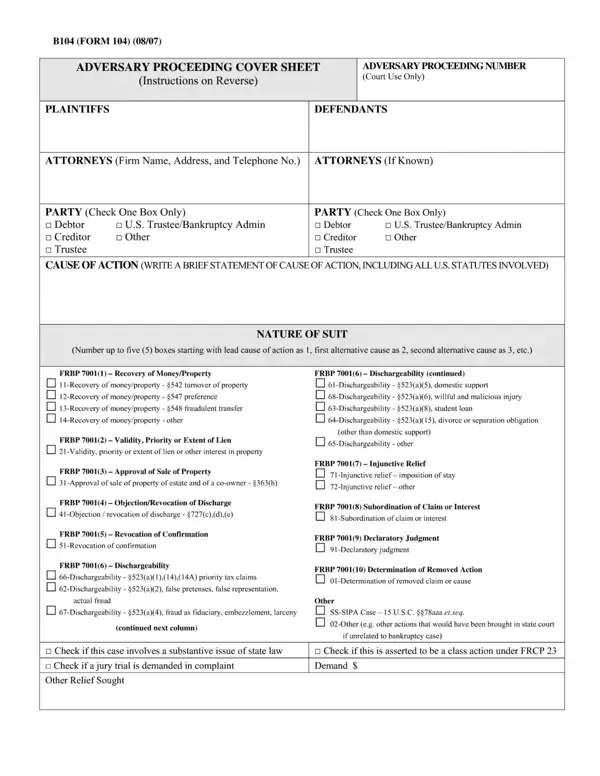
Form Preview Example

How to Edit Adversary Proceeding Complaint Form Online for Free

To access the Adversary Proceeding Complaint Form, use FormsPal's free online PDF tool - no software download required. Follow these steps to review and complete the form.

Step 1: Click the "Get Form" button at the top of this page to open the form in our online PDF editor.

Step 2: Review the form's structure. The adversary proceeding complaint captures the plaintiff and defendant names, the adversary case number, and the legal basis for the complaint.

Complete the required fields in the form's first section:

How to fill out the adversary proceeding complaint form - part 1

Step 3: Use the checkboxes on the form to identify the nature of your suit. Common options include challenges to debt dischargeability under Section 523 and objections to discharge under Section 727.

Adversary proceeding complaint form completion process - part 2

Step 4: Complete the cause of action section. This requires a plain statement of facts explaining why you are filing the adversary proceeding.

Adversary proceeding complaint form - cause of action section, part 3

Step 5: Review the relief requested section and complete the final portion of the form before saving or printing.

Adversary proceeding complaint form - final section, part 4

Step 6: Save or download the completed form, then file it with the appropriate United States Bankruptcy Court along with any required filing fee and a summons issued by the court clerk.

What is an adversary proceeding?

An adversary proceeding is a lawsuit filed within a bankruptcy case. It follows rules similar to those in regular federal civil cases. An adversary proceeding is required when a party wants to challenge whether a specific debt is dischargeable, recover property transferred before the bankruptcy filing, or object to the debtor's right to receive a discharge entirely. The adversary proceeding complaint form begins this formal process.

Who needs to file this form?

A creditor files an adversary proceeding to challenge a debt discharge, for example if the debt arose from fraud, embezzlement, or willful injury. The bankruptcy trustee files one to recover assets that were transferred or hidden before the bankruptcy. A debtor may also file an adversary proceeding to confirm that a debt is dischargeable or to challenge a creditor's secured claim. Any party filing must be prepared to participate in a full litigation process, including discovery and possible trial.

Common mistakes to avoid

  • Filing in the wrong court district - adversary proceedings must be filed in the same district as the main bankruptcy case
  • Missing the statute of limitations - most dischargeability complaints must be filed within 60 days after the first meeting of creditors
  • Incomplete nature of suit checkboxes - failing to check the correct legal basis can result in dismissal
  • Not serving the defendant - the complaint must be formally served along with a court-issued summons

Related forms you may need