


Universal Application for Residency at a glance
What it is: The Universal Application for Residency is designed to provide information generally required for consideration by program directors and to facilitate the residency application process.
Who signs: Under 28, sign on the SIGNATURE OF APPLICANT line and enter the DATE: the signature and date on each application must be original.
Applicants are encouraged to submit copies to all programs in which they would like to be considered.
A filled-in Universal Application for Residency example: a medical student fills in page 1
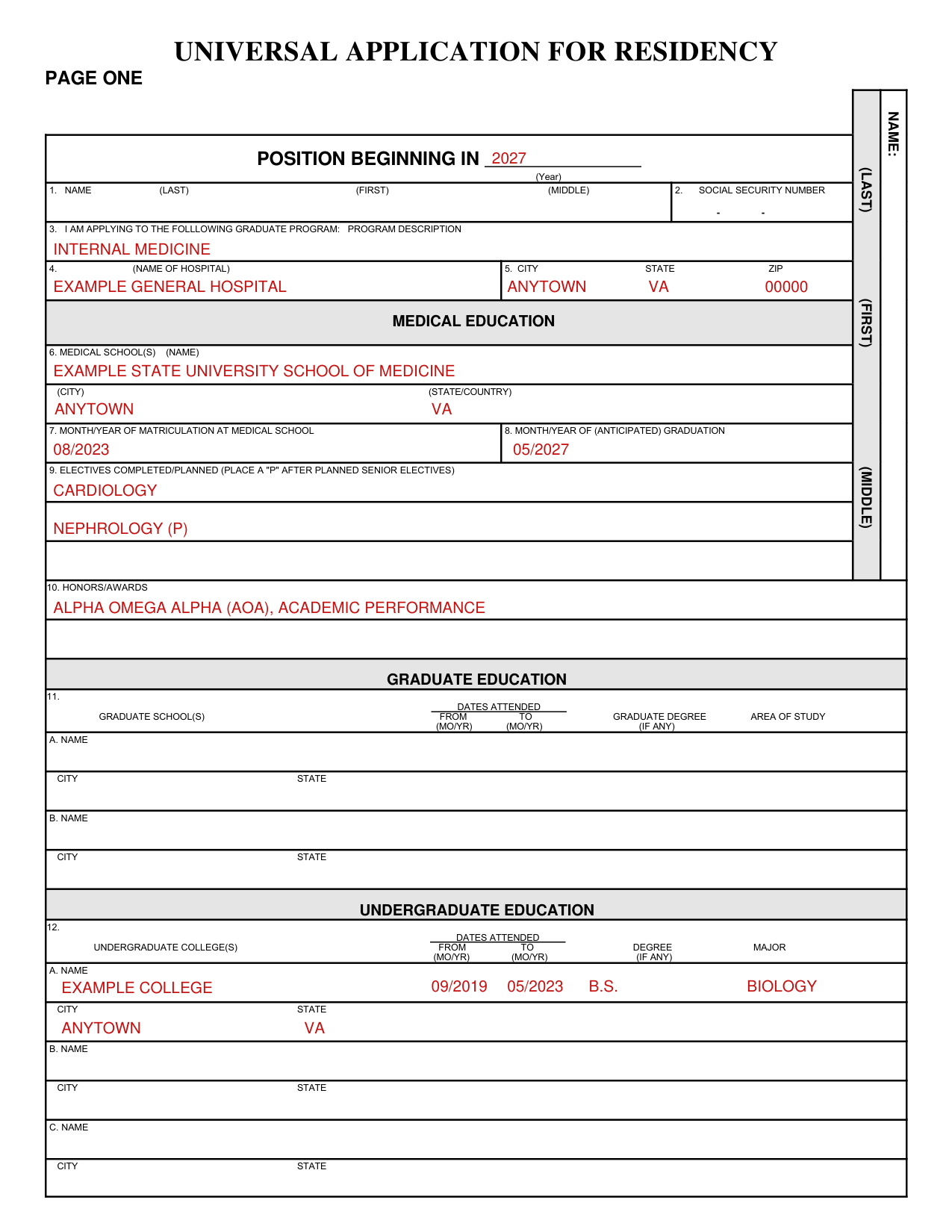
How to fill out Universal Application for Residency, box by box
Program and position
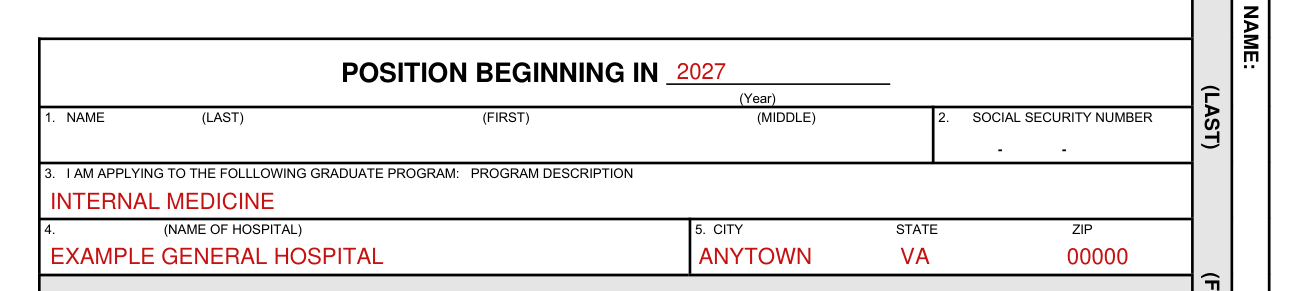
Under POSITION BEGINNING IN, enter the Year.
Enter your NAME (LAST) (FIRST) (MIDDLE) under 1 and your SOCIAL SECURITY NUMBER.
Under 3, enter the PROGRAM DESCRIPTION; under 4, the NAME OF HOSPITAL; under 5, the CITY STATE ZIP.
Program Designation Card, Side 1: Information on the card should correspond exactly to information listed in Items 3, 4, and 5 of this application.
Be sure to designate the year in which you expect to begin your residency.
An applicant may elect to complete Page 1, with the exception of Item 3 (Program Description), Item 4 (Name of Hospital), and Item 5 (City/State), and enter the missing information specific to each program on copies.
Medical education
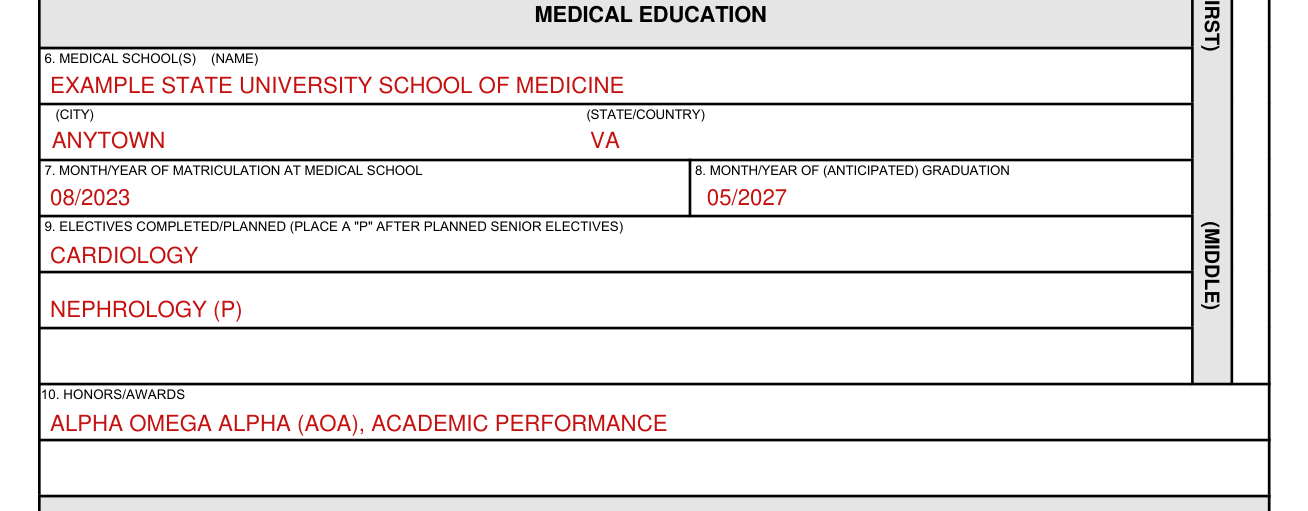
Under 6, enter the MEDICAL SCHOOL(S) (NAME), (CITY) and (STATE/COUNTRY).
Under 7, enter the MONTH/YEAR OF MATRICULATION AT MEDICAL SCHOOL, and under 8 the MONTH/YEAR OF (ANTICIPATED) GRADUATION.
Under Electives Completed/Planned (Page 1, Item 9), list all electives completed and all senior electives planned. Planned electives should be designated by a "P" following the course title [i.e., Cardiology (P)].
Under 10, list all honors/awards, including membership in honor societies such as AOA.
Graduate education
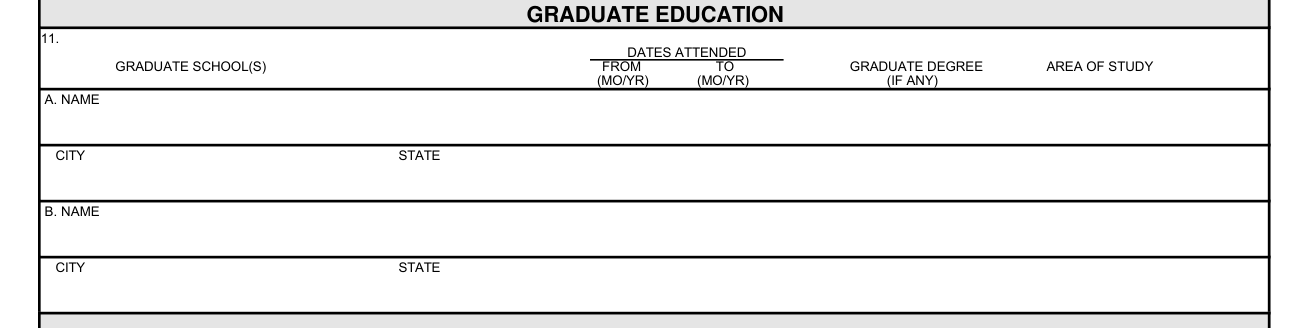
Under 11, for each graduate school (A. and B.), enter the name, city, state, dates attended from and to (MO/YR), graduate degree (if any) and area of study.
Undergraduate education
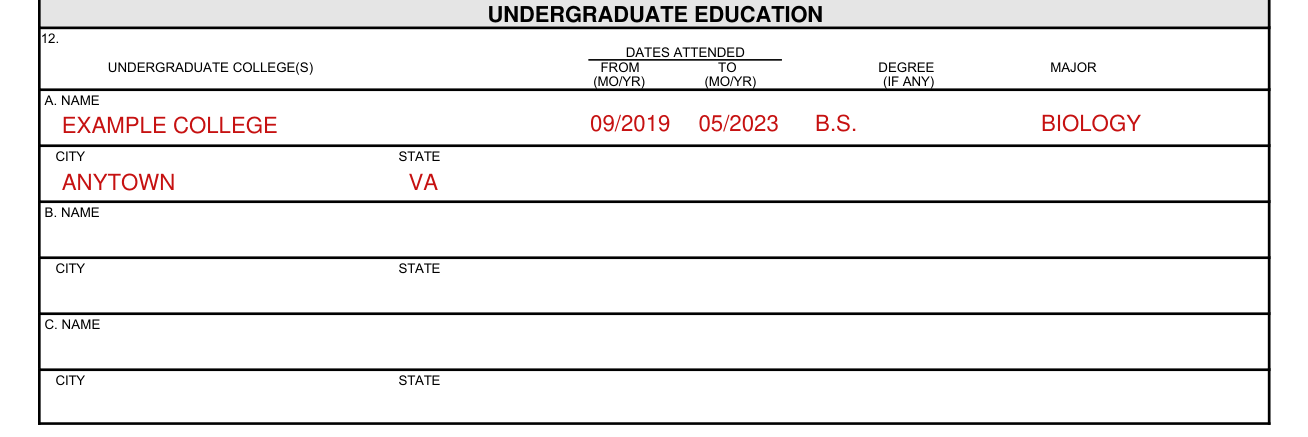
Under 12, for each undergraduate college (A., B. and C.), enter the name, city, state, dates attended from and to (MO/YR), degree (if any) and major.
Personal statement

Under 13, write the PERSONAL STATEMENT (see instructions, use additional sheet, if necessary).
Personal Statement (Item 13, Page 2): The Personal Statement provides you with the opportunity to communicate your professional interests and achievements with regard to research experience and training, special projects, and professional accomplishments.
Bibliographic references should be provided for all published papers. As transcripts of your academic accomplishments are most likely to be required, any interruption in your medical education should be explained in the Personal Statement.
Service obligations

Under 14, SERVICE OBLIGATIONS, check I AM NOT REQUIRED TO FULFILL ANY SERVICE OBLIGATIONS, or check I AM COMMITTED TO FULFILL A SERVICE OBLIGATION BEGINNING (MO./YR.) and enter the NUMBER OF YEARS COMMITTED.
ECFMG, NRMP match and NRMP code

Enter the ECFMG Registration (if applicable) under 17. Under 18, SHALL PARTICIPATE IN NRMP MATCH, mark YES or NO.
Under 19, enter the NRMP CODE (enter "pending" if unknown).
Present address, phone and photograph
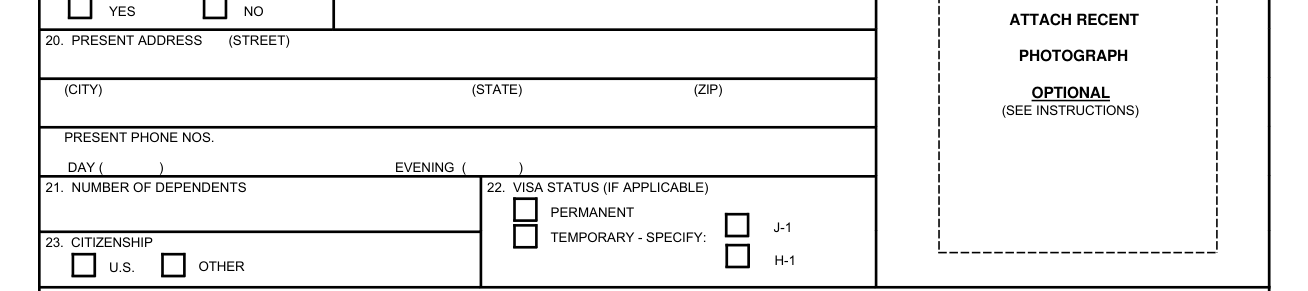
Under 20, enter the PRESENT ADDRESS (STREET), (CITY), (STATE) and (ZIP).
Enter the PRESENT PHONE NOS., DAY and EVENING, and under 21 the NUMBER OF DEPENDENTS.
Under 22, VISA STATUS (IF APPLICABLE), mark PERMANENT or TEMPORARY - SPECIFY: J-1 or H-1.
Under 23, CITIZENSHIP, mark U.S. or OTHER.
ATTACH RECENT PHOTOGRAPH: OPTIONAL (SEE INSTRUCTIONS).
If you do not submit one at this time, you should be prepared to provide one when you are interviewed.
Permanent address

Under 24, PERMANENT ADDRESS: enter C/O (NAME OF PERSON THROUGH WHOM I CAN ALWAYS BE CONTACTED), (STREET), (CITY), (STATE), (ZIP) and PERMANENT PHONE NO.
Permanent Address and Telephone Number (Items 24, Page 3): Enter the name, address, and telephone number of an individual through whom you can always be contacted (i.e, parent, relative, close friend, etc.).
Examinations
Under 25, check the examinations you plan to take before you begin the Graduate Medical Education program for which you are now applying: USMLE, STEP I, USMLE, STEP II, USMLE, STEP III.
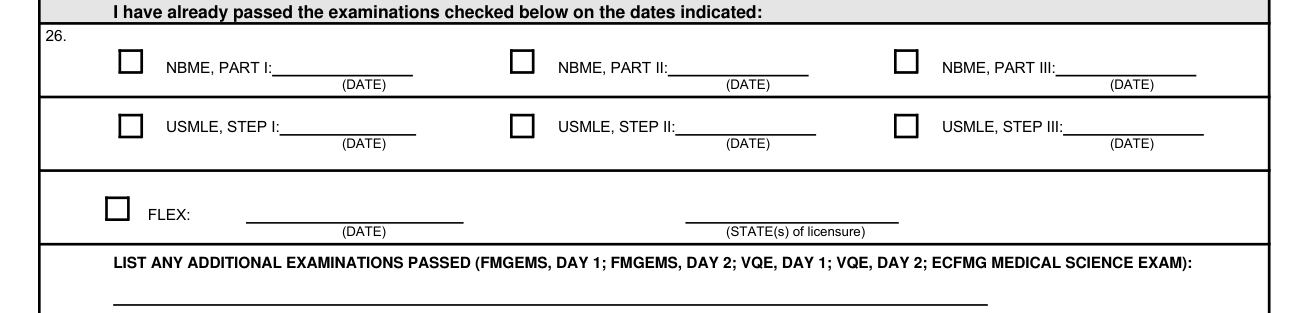
Under 26, check the examinations you have already passed and enter the dates indicated: NBME, PART I, PART II, PART III; USMLE, STEP I, STEP II, STEP III; FLEX with the (STATE(s) of licensure).
List any additional examinations passed (FMGEMS, DAY 1; FMGEMS, DAY 2; VQE, DAY 1; VQE, DAY 2; ECFMG MEDICAL SCIENCE EXAM).
Interview scheduling

27. INTERVIEW SCHEDULING lists: THE FOLLOWING GENERAL TIME PERIOD IS MOST CONVENIENT FOR ME: FROM: TO:; I AM ABLE TO SCHEDULE AN INTERVIEW ON THE FOLLOWING SPECIFIC DATE(s); and I AM NOT ABLE TO COME FOR AN INTERVIEW.
Interview Scheduling (Item 27, Page 3): Indicate the specific date(s) or general time period that you are available for interviews.
Signature of applicant

Signing under 28 certifies that the information submitted on these application materials is complete and correct to the best of your knowledge, and that any false or missing information may disqualify you for this position.
Letters of reference
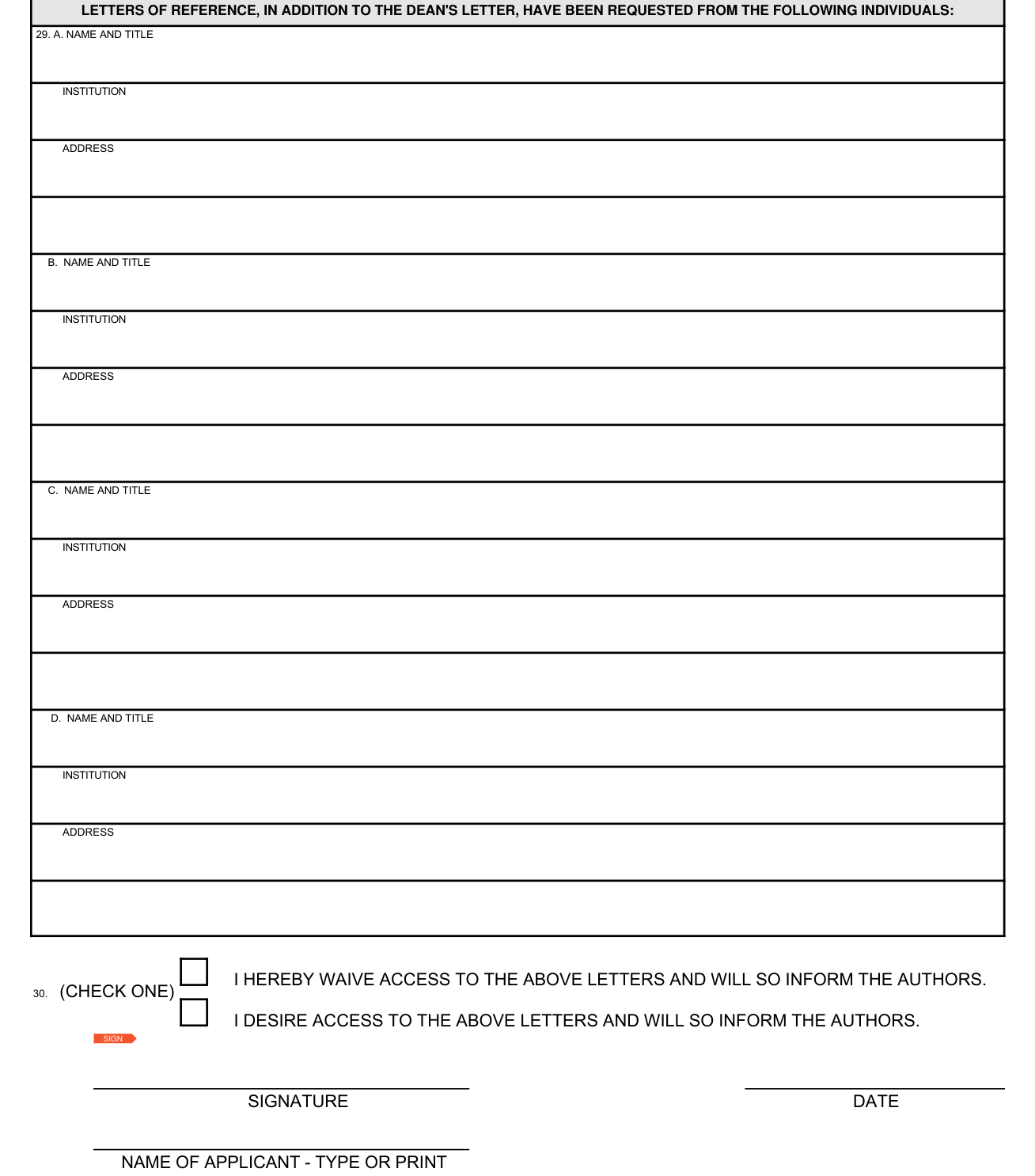
Under 29, for each individual from whom letters of reference, in addition to the Dean's letter, have been requested (A. to D.), enter the NAME AND TITLE, INSTITUTION and ADDRESS.
Under 30, check one: I hereby waive access to the letters and will so inform the authors, or I desire access to the letters and will so inform the authors.
Under 30, enter the SIGNATURE, DATE and NAME OF APPLICANT - TYPE OR PRINT: THE SIGNATURE AND DATE ON THIS STATEMENT MUST BE ORIGINAL.
References (Item 29, Page 4): Virtually all hospital programs require the Dean's Letter for U.S. seniors as a standard reference. Non-U.S. seniors should attempt to provide evaluations from faculty members at their medical degree-granting institution. Most programs require a minimum of three additional evaluations.
More rules for Universal Application for Residency
Do not return the Universal Application to the NRMP.
Please type or print legibly in black ink.
Common questions about Universal Application for Residency
Is there a deadline?
It is the applicant's responsibility to arrange to submit required supplementary materials (transcripts, letters of evaluation, etc.) by the designated program's stated deadline.
Where do I file it?
You should submit all four pages of the Universal Application for Residency, with original signatures, to each program to which you wish to apply.
Sources
[1] Universal Application for Residency, No. N-1020 4/97, National Resident Matching Program (the Official source link on this page).