
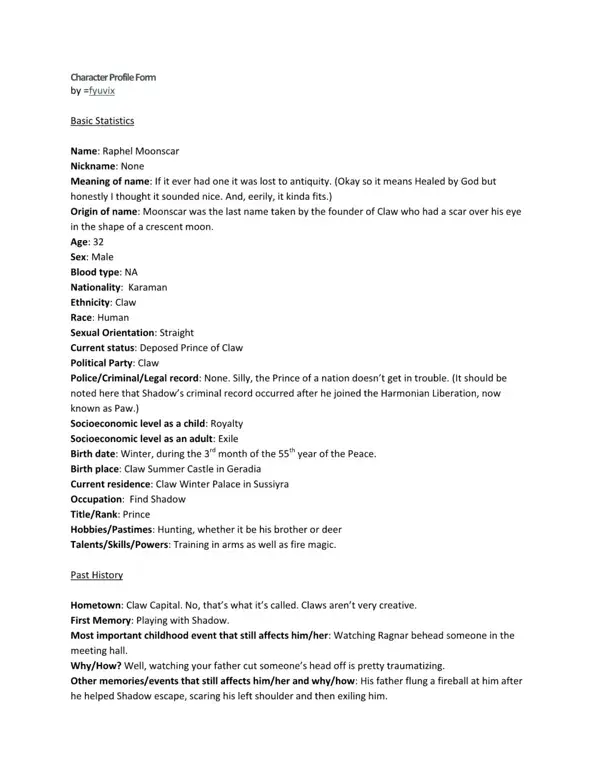
Character Profile Form PDF Details

A complete character sheet captures every dimension of who your character is, making it easier for fiction authors, game designers, and screenwriters to build believable stories. By documenting a character's physical appearance, personality type, emotional history, and relationships in one place, this fillable PDF becomes your creative reference throughout the entire project.

The form covers key sections that shape how readers perceive your character. Physical details such as eye color, hair color, height, and build anchor the character in reality. Personality traits, fears, goals, and flaws add psychological depth. Background details, including formative events and family relationships, explain why a character behaves the way they do and what role they play in the narrative.

Authors, tabletop game masters, and screenwriters use this document throughout the creative process to maintain continuity. If you describe a character's favorite food in chapter one, the form keeps that detail on record so it appears correctly in chapter ten. The same applies to speech patterns, recurring habits, and emotional responses that make each character feel authentic to readers.

QuestionAnswer
Form NameCharacter Profile Form
Form Length3 pages
Fillable?Yes
Fillable fields51
Avg. time to fill out10 min 57 sec
Other namesblank character profile, character form, character profile template doc, character profile template online

How to Edit Character Profile Form Online for Free

A character profile form works best when you fill it out before you begin writing. Having detailed records of each character's name, appearance, personality type, and backstory on hand prevents continuity errors and helps you write more consistently from scene to scene.

What Information to Include in Your Character Profile

A complete profile captures four main categories of detail. Start with basic identity: the character's full name, age, gender, and their role in the story (protagonist, antagonist, mentor, or supporting figure). Then document physical appearance, including eye color, hair color, height, body type, and any distinguishing features that readers will remember.

The next category covers personality: character type, key strengths, notable flaws, favorite activities, fears, and motivations. Knowing your character's core drive shapes every scene they appear in. The fourth category is backstory: formative events, family background, and past relationships that explain why the character behaves as they do in the present story.

How to Fill Out the Form Step by Step

  1. Enter the character's name and basic identity. Write the full name, any nicknames, age, and the character's role in the story.
  2. Describe physical appearance. Note hair color, eye color, height, build, and any distinguishing features such as scars or a favorite style of dress.
  3. List personality traits. Include the character type (introvert or extrovert, optimist or pessimist), their top strengths, and at least two meaningful flaws. Flaws drive story conflict and character growth.
  4. Write the backstory. Summarize the key events that shaped the character before the story begins. Note family relationships, formative experiences, and any past event that still influences their decisions.
  5. Record motivations and goals. State what the character wants most and what stands in their way. This section guides how the character responds to plot challenges.
  6. Add favorite details and quirks. Favorite color, food, hobby, or speech habit adds texture that makes readers remember the character long after the story ends.

Tips for Using Your Character Sheet Effectively

Fill out a separate profile for every major character in your story before you begin drafting. Keep the document open as a reference while writing scenes so details stay consistent. If a character detail changes during the story, update the form right away. Authors who maintain accurate character sheets report fewer continuity errors and spend less time searching earlier chapters for forgotten details.

For tabletop role-playing games, this form complements standard stat sheets by recording backstory, personality, and relationships that mechanical sheets leave out. Game masters find it especially useful for non-player characters whose histories need to feel realistic to players.

Related Character Forms

If you are building characters for a specific game system or narrative format, the following forms may also be helpful: