
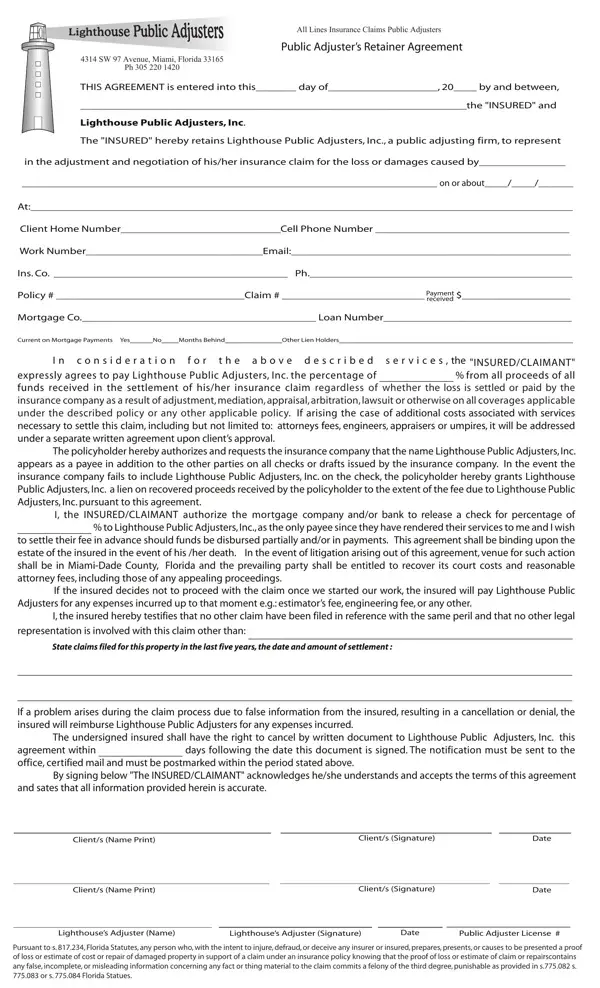
How to Fill Out the Clearwater Public Adjuster Form
Completing this retainer form is a straightforward process. Follow each step below to prepare and submit the document correctly.
Step 1: Download the Form PDF
Click the download button at the top of this page. Open the file using Adobe Acrobat or any PDF reader on your computer or mobile device. Save the file before you begin making changes.
Step 2: Enter Your Personal and Policy Information
Fill in your full legal name and current home address. Enter your telephone number and email address. Include your insurance policy number and the name of your insurance company. Confirm that all information matches your current insurance documents.
Step 3: Describe the Property Damage
Write a clear description of the property damage or loss. Include the date it occurred and the cause, such as fire, water, hurricane, wind, or theft. List the types of property affected. Attach any photographs or documentation that support your claim.
Step 4: Review the Adjuster Fee Section
The retainer agreement specifies a fee percentage that Lighthouse Public Adjusters will receive from your insurance claim settlement. Read this section carefully. Make sure you understand what percentage the adjuster charges and when this payment becomes due.
Step 5: Review the Authorization and Cancellation Terms
The form authorizes the adjuster to act on your behalf in all insurance claim communications. Read the section on cancellation rights. Florida law gives you the right to cancel this retainer by sending written notice within a specific time window.
Step 6: Sign and Date the Document
Sign the form in the designated area and add the current date. By signing, you formally retain Lighthouse Public Adjusters as your authorized representative for all insurance claim adjustments and negotiations related to your property damage or loss.
What Is a Public Adjuster?
A public adjuster is a licensed insurance professional who works for the policyholder, not the insurance company. Their job is to evaluate property damage, document all losses, and negotiate a fair settlement with the insurance company on your behalf.
Insurance companies send their own adjusters to assess property damage after a claim is filed. That company adjuster works to protect the insurer's interests. A public adjuster works to protect yours instead. They ensure that every covered loss under your policy is properly documented and included in your claim.
Public adjusters in Clearwater and across Florida handle a wide range of property damage cases. Common claim types include hurricane and wind damage, fire and smoke damage, water damage from burst pipes or floods, roof damage, theft, and vandalism. They work with both residential homeowners and commercial property owners.
Once you sign the retainer agreement, the public adjuster takes over communication with your insurance company. They handle paperwork, inspections, and negotiations directly. You receive updates throughout the process and remain in control of final decisions.
When Should You Hire a Public Adjuster?
There are several situations where retaining a public adjuster makes sense:
- Your insurance company denied your claim or offered a settlement that seems too low
- The damage to your property is extensive and the claims process feels overwhelming
- The insurance policy conditions are unclear and you need expert guidance
- You suspect the insurer underestimated the cost of repairing your property
- You want a licensed professional to manage the entire claim from start to finish
Public adjusters are especially helpful after major storms and hurricanes in Florida. High claim volumes can lead insurance companies to rush assessments. A public adjuster takes time to document all damage thoroughly. This careful approach helps ensure you receive the full value of your insurance coverage.
Benefits of Hiring a Public Adjuster for Your Insurance Claim
Working with a public adjuster offers several advantages over handling your claim alone.
- Expert damage documentation. Public adjusters know how to document property damage in a way that supports the strongest possible insurance claim. They catalog every item and cost that falls under your policy coverage.
- Insurance policy expertise. A licensed adjuster reads and interprets insurance policy conditions that most policyholders find confusing. They identify covered losses that are often missed in self-managed claims.
- Professional claim negotiation. Adjusters communicate directly with insurance company representatives. They negotiate based on real repair costs, replacement values, and your specific policy terms.
- Time and stress reduction. Filing and managing an insurance claim takes many hours of paperwork, phone calls, and follow-up. A public adjuster handles all of this work for you.
- No upfront cost. The adjuster receives a percentage of your final insurance claim settlement. You pay nothing in advance. This makes professional representation available to all policyholders regardless of budget.
What Happens After You Sign the Retainer?
After you sign and submit the public adjuster retainer, Lighthouse Public Adjusters begins working on your behalf right away. Here is what to expect:
First, the adjuster contacts your insurance company to notify them of the representation. They request all claim-related documents and prior correspondence from the insurer. A thorough property inspection is scheduled to document the full extent of the damage.
The adjuster then prepares a detailed damage assessment and submits it to the insurance company. Negotiations begin from there. The insurer may accept the assessment, counter it, or request additional information. Your public adjuster handles each stage of this process.
Once the insurance company and the adjuster reach an agreement, the settlement proceeds are issued. The adjuster's fee is deducted from the settlement amount according to the retainer terms. You receive the remaining balance.
How to Choose a Public Adjuster in Clearwater
Not all public adjusters offer the same level of service. Use these guidelines to select the right professional for your insurance claim:
- Verify licensing. Florida requires all public adjusters to hold a valid state license. Confirm the adjuster's license status before you sign any retainer or agreement.
- Check experience with your claim type. Ask whether the adjuster has handled claims similar to yours. A specialist in fire damage claims may not have the same expertise in hurricane or water damage cases.
- Understand the fee structure. Ask for the exact fee percentage and all conditions. Compare rates from at least two or three adjusters before you decide.
- Review references and reviews. Ask for references from past clients. Look up the adjuster's business reputation with the Florida Department of Financial Services and online review platforms.
- Read the retainer carefully. Review all conditions in the retainer agreement before signing. Confirm your cancellation rights and the timeframe for exercising them.
Frequently Asked Questions About Public Adjuster Agreements
What is the fee charged by a public adjuster?
The fee is a percentage of the insurance claim settlement. Florida law sets limits on this percentage for residential claims. The exact rate is written into the retainer agreement before you sign. Ask your adjuster to clarify the fee percentage and any conditions that affect when it is earned.
How long does it take to settle a claim with a public adjuster?
Most claims handled by public adjusters in Clearwater resolve within 60 to 120 days. Complex claims involving major property damage or disputed settlements may take longer. Your adjuster will keep you informed of the status and any delays caused by the insurance company.
Can I hire a public adjuster after I already filed my claim?
Yes. You can retain a public adjuster at any point in the claims process. If the insurance company has already made a settlement offer, a public adjuster can review it and re-open negotiations. This is common when policyholders believe their claim was undervalued or improperly denied.
Is the retainer agreement legally binding?
Yes. The public adjuster retainer is a legal contract under Florida law. Once you sign, both parties are bound by the terms. You have the right to cancel within a set period by sending written notice to the adjuster's business address. Review the cancellation clause before you sign.
What types of property damage can public adjusters handle?
Public adjusters handle most types of covered property damage claims. Common examples include hurricane and storm damage, fire and smoke damage, water and flood damage, mold damage, roof damage, theft, and vandalism. Contact Lighthouse Public Adjusters to confirm coverage for your specific type of loss.
Related Forms You May Need
When managing a property damage claim or professional services agreement in Florida, these related documents may also be useful:
- Combined Insurance Claim Form - Use this form to submit a standard insurance claim to your insurer.
- Retainer Agreement - A general retainer template for professional and consulting service agreements.
- Property Damage Form - Document property damage and losses for insurance or banking purposes.
