
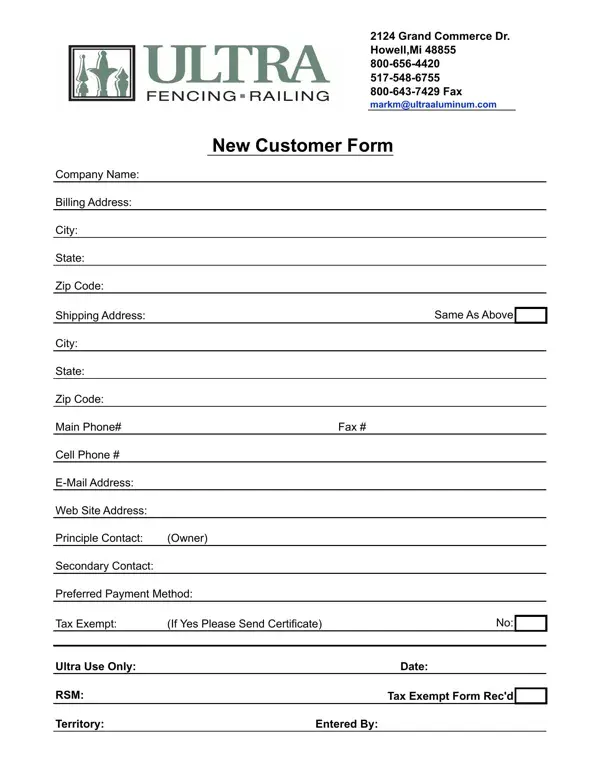
When businesses initiate relationships with new clients, the exchange of comprehensive contact and essential business information becomes imperative. This is where a Customer Information Form plays a crucial role, serving not only as a conduit for gathering key details but also as a foundation for future transactions and communication. Such forms typically require the new customer to provide their company name, billing and shipping addresses, main contact information including phone numbers, email, and possibly the company's website address. Further, the form might delve into specifics like the primary contact person, often the owner, a secondary contact, and preferences concerning payment methods. In addition, the aspect of tax exemption becomes pertinent, calling for the submission of relevant certificates if applicable. Beyond these essentials designed to foster a smooth operational flow, the form also contains sections for internal use by the company gathering the information, noting the date of form completion, the responsible sales manager (RSM), receipt of tax-exempt forms, and information on territory and data entry personnel. This introductory layer to a client-company relationship underscores the importance of meticulous record-keeping and the efficient management of customer data for both immediate and long-term business engagements.
| Question | Answer |
|---|---|
| Form Name | Customer Information Form |
| Form Length | 1 pages |
| Fillable? | No |
| Fillable fields | 0 |
| Avg. time to fill out | 15 sec |
| Other names | generic new customer set up form, ar email request form for customer, customer contact information forms, accounts receivable contact information form |
Customer Information Form isn’t the one you’re looking for?