

DA Form 5181 at a glance
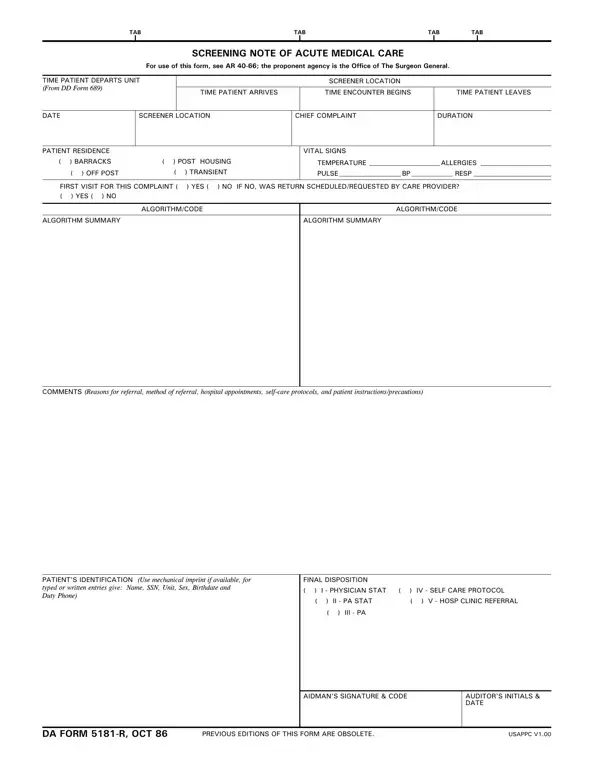
What it is: DA Form 5181 is the SCREENING NOTE OF ACUTE MEDICAL CARE.
Where and when to file: This form will be filed in the HREC when evaluation and audit are completed.
On page 2, under SPECIAL INSTRUCTIONS: this form will be utilized in lieu of SF 600 (Health Record-Chronological Record of Medical Care) at the BAS level and above when care is initiated by an ADTMC screener.
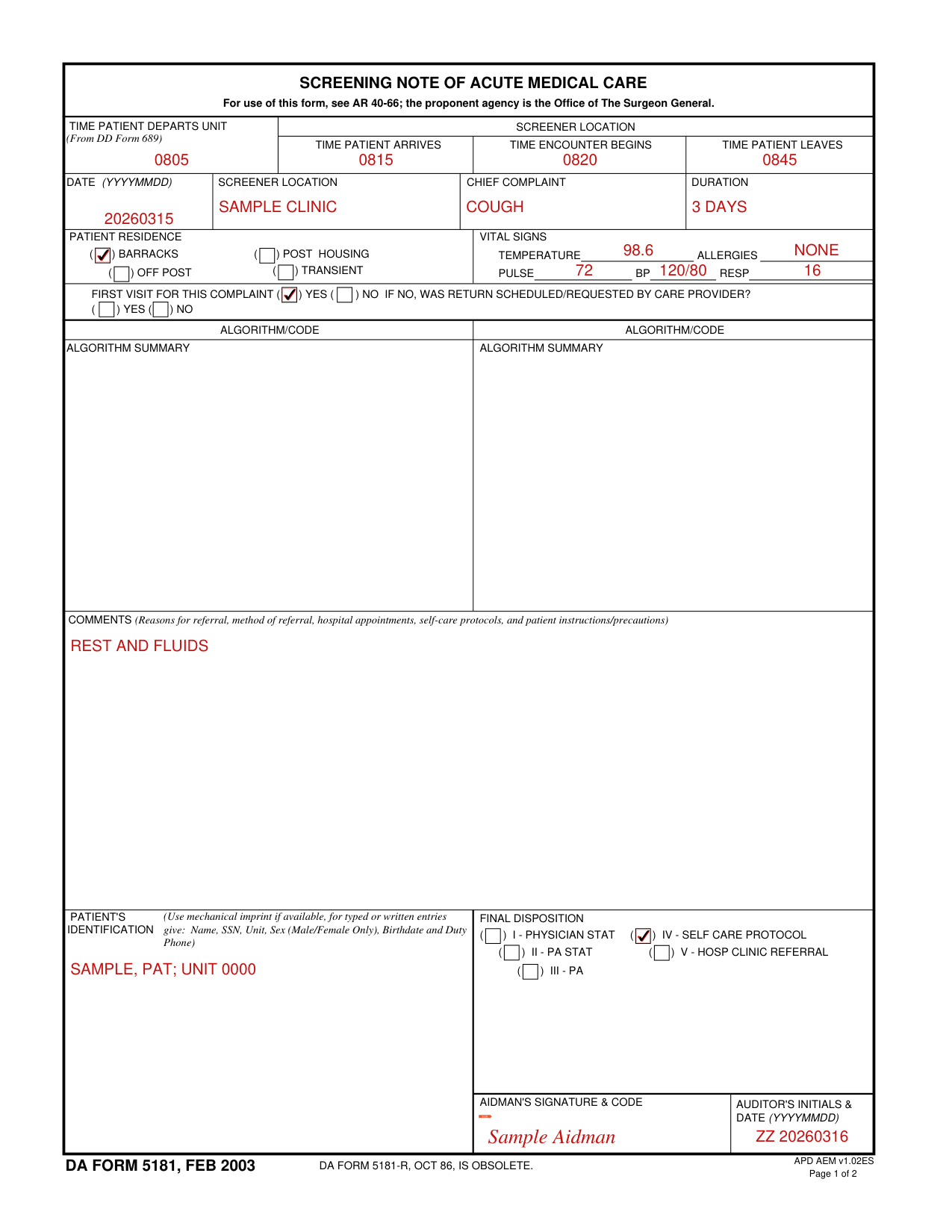
A filled-in DA Form 5181 example: a screener records an acute medical care visit
How to fill out DA Form 5181, box by box
Times, date and screener location

Enter the TIME PATIENT DEPARTS UNIT (From DD Form 689).
Enter the TIME PATIENT ARRIVES and the TIME ENCOUNTER BEGINS.
Enter the TIME PATIENT LEAVES.
Enter the DATE (YYYYMMDD), the SCREENER LOCATION, the CHIEF COMPLAINT and the DURATION.
Patient residence

Under PATIENT RESIDENCE: BARRACKS, POST HOUSING, TRANSIENT, OFF POST.
Temperature, pulse, BP, resp and allergies

Enter the TEMPERATURE.
Enter the PULSE.
Enter the BP and the RESP.
Enter the ALLERGIES.
First visit for this complaint

Mark YES or NO for FIRST VISIT FOR THIS COMPLAINT. If NO, mark YES or NO for WAS RETURN SCHEDULED/REQUESTED BY CARE PROVIDER?
Algorithm and comments
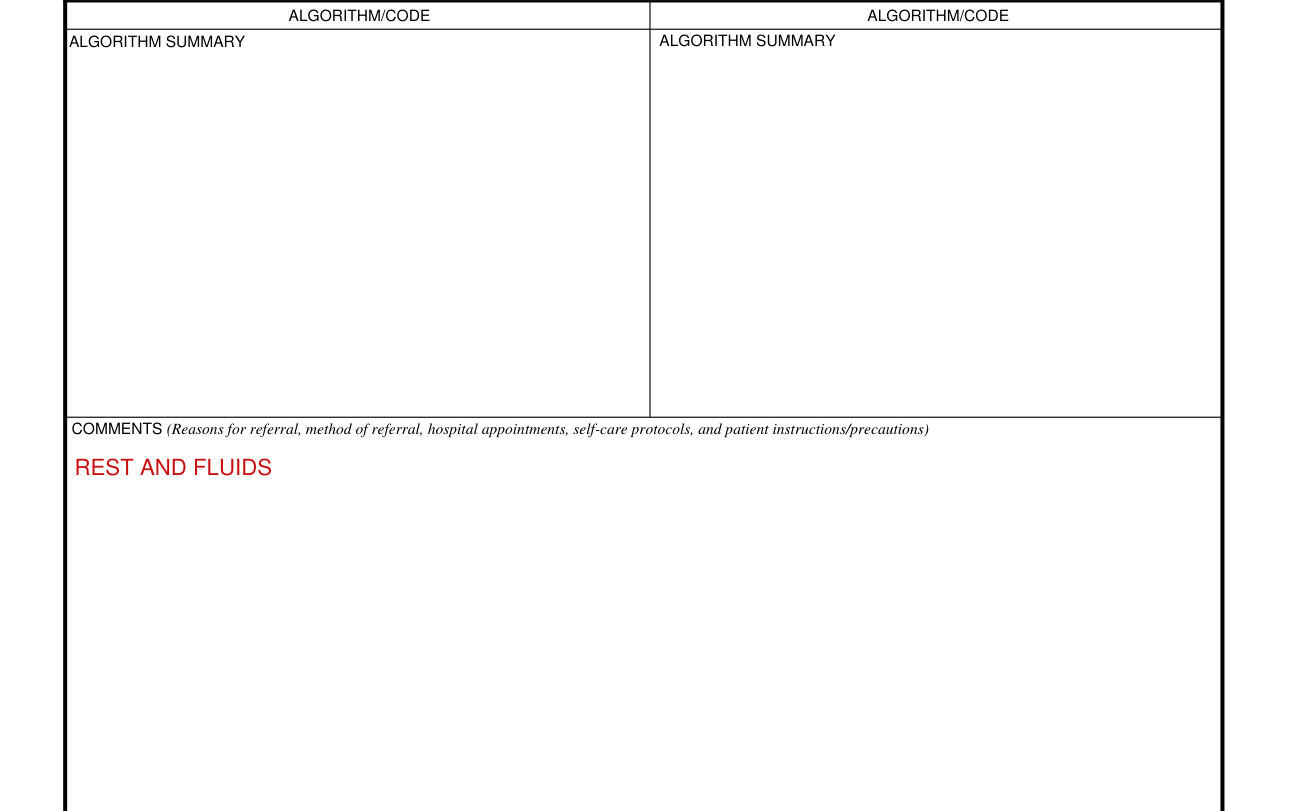
Enter the ALGORITHM/CODE.
Enter the ALGORITHM SUMMARY.
In COMMENTS: reasons for referral, method of referral, hospital appointments, self-care protocols, and patient instructions/precautions.
Patient's identification
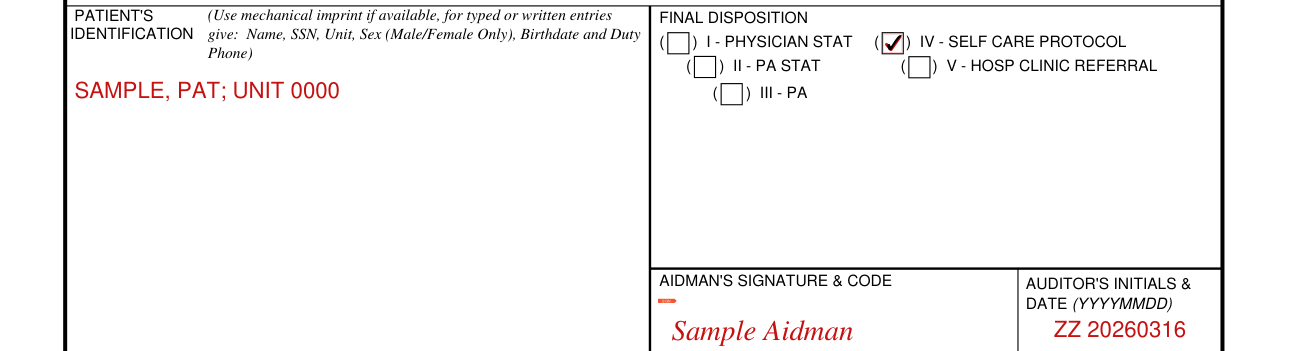
Enter the PATIENT'S IDENTIFICATION.
Use mechanical imprint if available; for typed or written entries give: Name, SSN, Unit, Sex (Male/Female Only), Birthdate and Duty Phone.
Final disposition

FINAL DISPOSITION: I - PHYSICIAN STAT, II - PA STAT, III - PA, IV - SELF CARE PROTOCOL, V - HOSP CLINIC REFERRAL.
Aidman's signature and auditor's initials

The AIDMAN signs AIDMAN'S SIGNATURE & CODE. The AUDITOR enters the AUDITOR'S INITIALS & DATE (YYYYMMDD).
Record of acute medical care, second care location

Entries on the RECORD OF ACUTE MEDICAL CARE should be restricted to further evaluation and treatment of complaint(s) screened.
Enter the DATE (YYYYMMDD), the 2ND CARE LOCATION, the TIME PATIENT ARRIVES, the TIME ENCOUNTER BEGINS and the TIME PATIENT LEAVES.
Signatures of health care provider and medical supervisor

The HEALTH CARE PROVIDER signs the SIGNATURE OF HEALTH CARE PROVIDER. The MEDICAL SUPERVISOR signs the SIGNATURE OF MEDICAL SUPERVISOR. The AUDITOR enters the AUDITOR'S INITIALS AND DATE (YYYYMMDD).
More rules for DA Form 5181
For use of this form, see AR 40-66; the proponent agency is the Office of The Surgeon General.
The record of acute, medical care will accompany the patient to the next level of care or remain in the BAS depending on disposition reached.
Sources
[1] DA Form 5181 (FEB 2003), Screening Note of Acute Medical Care, U.S. Army (the Official source link on this page).