
My Family Health Portrait at a glance
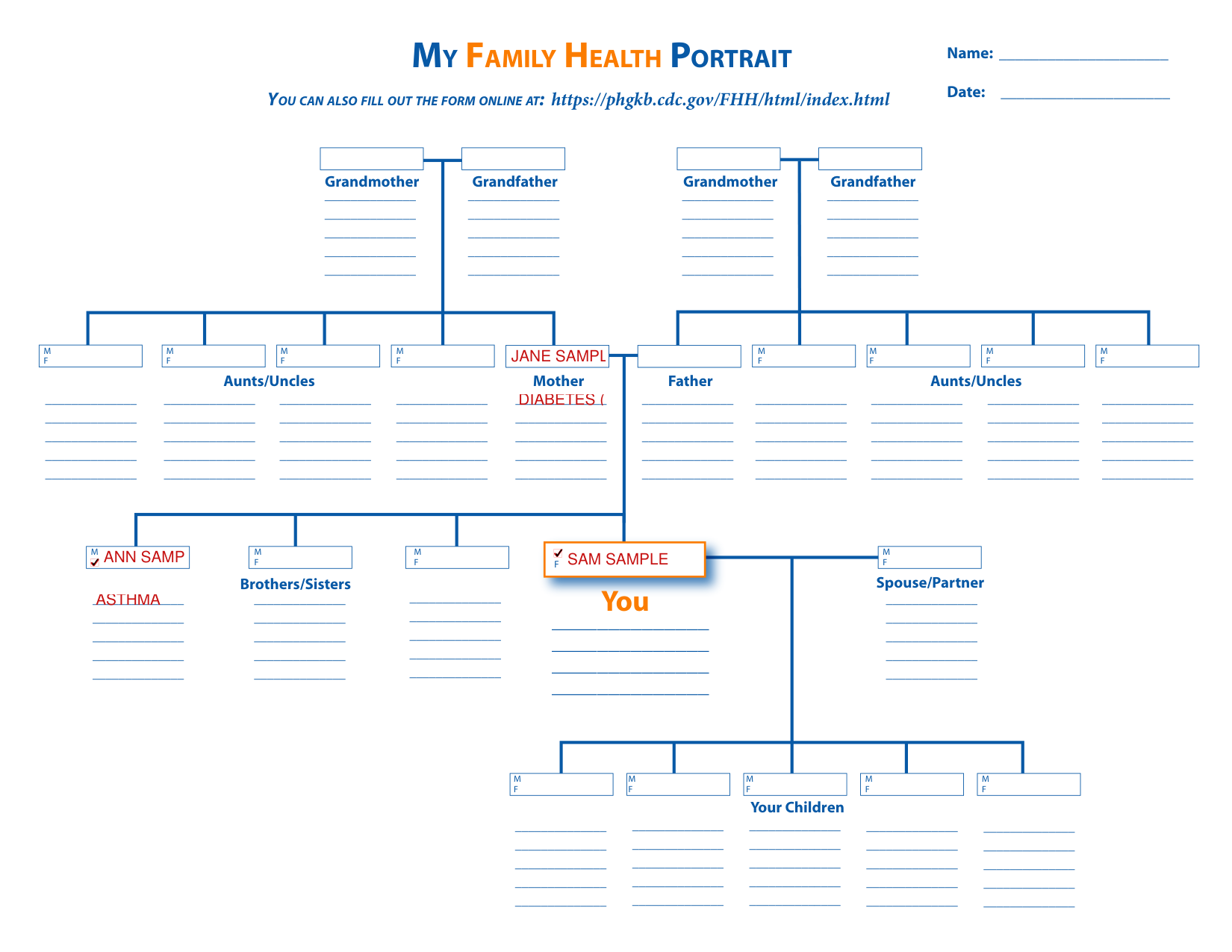
What it is: The U.S. Surgeon General's Family History Initiative form My Family Health Portrait helps you collect and organize your family information.
Where to get it: You can also fill out the form online at https://phgkb.cdc.gov/FHH/html/index.html.
A filled-in My Family Health Portrait example: a man lists his mother and sister
How to fill out My Family Health Portrait, box by box
Your relatives' names, male or female, and ancestry
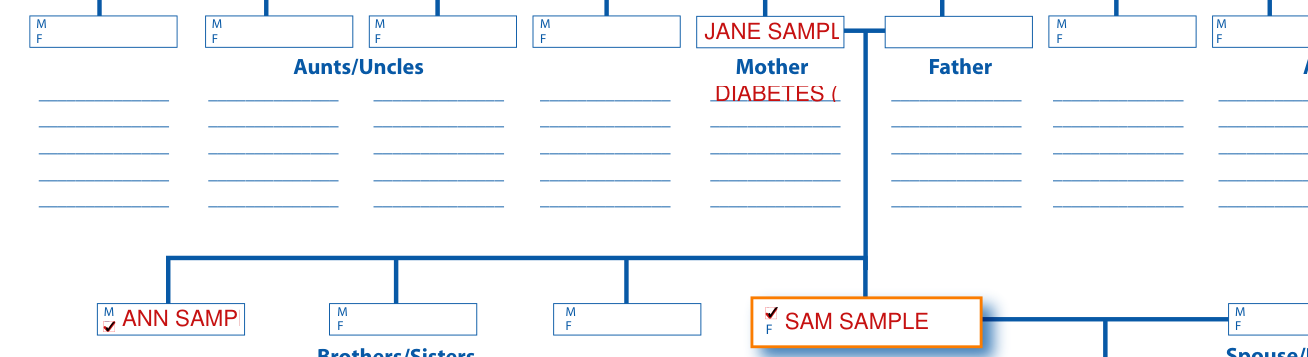
Most Important: Parents, Brothers and Sisters, Your Children.
Also Important: Grandparents, Uncles and Aunts, Nieces and Nephews, Half-Brothers and Half-Sisters.
Also Helpful: Cousins, Great Uncles and Great Aunts.
Write each of your relatives' names in the designated boxes and circle whether each is male (M) or female (F).
If you know the ancestry of your relatives and/or the country they come from, note it on the form.
For twins, write "twin" on the first line. If the twins are identical, write "identical twin" on the first line for both.
If your family includes half-brothers or half-sisters, write "half-brother" or "half-sister" on the first line, and note "same father" or "same mother" on the next line.
Health conditions on the lines under the boxes
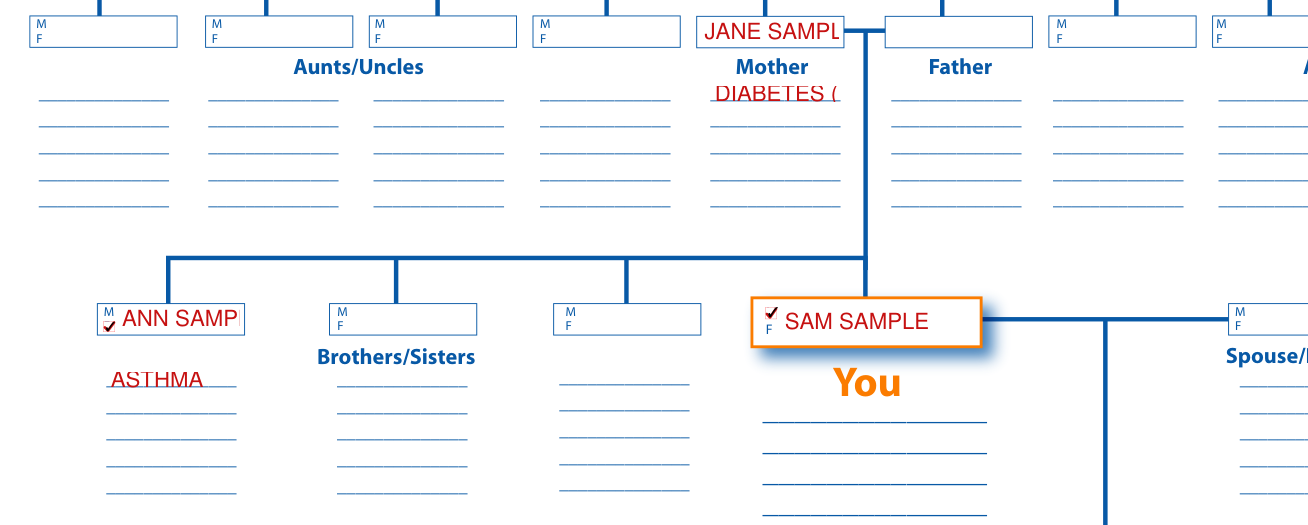
On the lines under the boxes, write the names of any health conditions your relatives have had.
If you know the age at which the condition was diagnosed, also note it, for example diabetes (diagnosed-age 37).
If family members have died, write "deceased" and the age at which they died, for example heart attack (deceased-age 63).
Ask about chronic illnesses, such as heart disease and diabetes; pregnancy complications, such as miscarriage; and any developmental disabilities.
If possible, list formal names of conditions and the medicines your relatives may be taking.
If there is cancer or a rare condition in the family, collect information from as many family members as possible. If someone is deceased, ask other relatives or check to see if doctors have retained those medical records.
More rules for My Family Health Portrait
Talk directly with your relatives and explain to them that their health information can help improve prevention and screening of diseases for ALL family members.
No form can reflect every version of the American family, so use the chart as a starting point and adapt it to your needs.
Ask relatives or health care professionals for information about health conditions that have affected you or your family members, living or deceased, and if possible get copies of medical records.
Once you have completed the form, take it to your health care professional.
If you are planning to have children, you and your partner should EACH create a family health portrait and show it to your health care professional.
Make a copy for your records.
Update the form as circumstances change or you learn more about your family's health.
Sources
[1] My Family Health Portrait, U.S. Surgeon General's Family History Initiative (the Official source link on this page).