

Form FL-110 at a glance
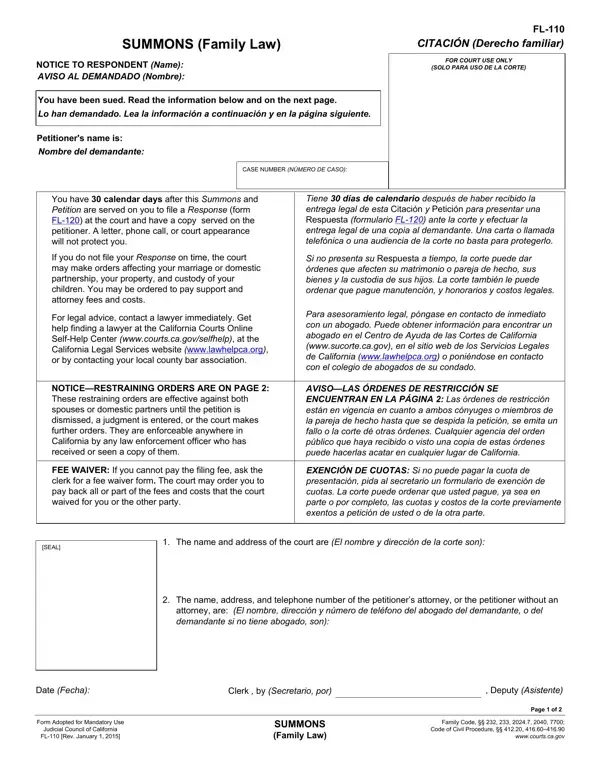
What it is: FL-110 is the SUMMONS (Family Law), a NOTICE TO RESPONDENT.
Where and when to file: You have 30 calendar days after this Summons and Petition are served on you to file a Response (form FL-120) at the court and have a copy served on the petitioner.
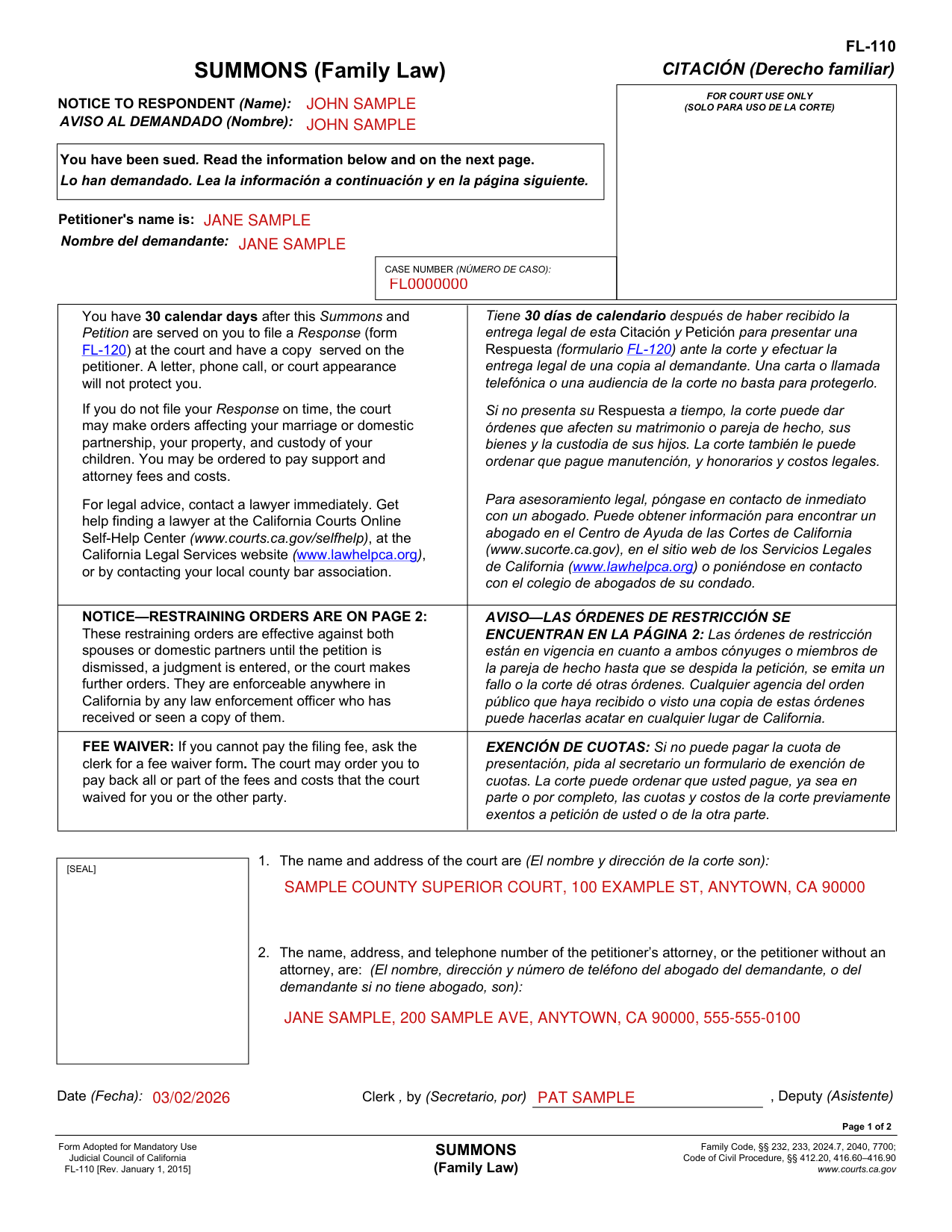
A filled-in Form FL-110 example: a petitioner without an attorney
How to fill out Form FL-110, box by box
NOTICE TO RESPONDENT (Name), Petitioner's name and CASE NUMBER
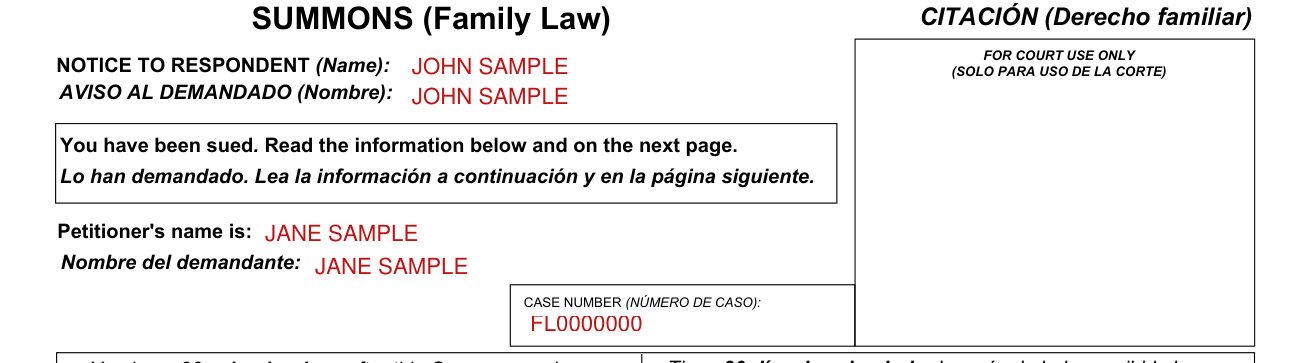
Enter the name under NOTICE TO RESPONDENT (Name).
Enter the name after Petitioner's name is.
Enter the number under CASE NUMBER.
The name and address of the court

Enter the name and address of the court.
The petitioner's attorney, or the petitioner without an attorney

Enter the name, address, and telephone number of the petitioner's attorney, or, with no attorney, of the petitioner.
Date and Clerk, by

Leave the Date and the Clerk, by lines to the Clerk (Deputy).
If your situation is different
You have been served
A letter, phone call, or court appearance will not protect you.
If you do not file your Response on time, the court may make orders affecting your marriage or domestic partnership, your property, and custody of your children. You may be ordered to pay support and attorney fees and costs.
For legal advice, contact a lawyer immediately. Get help finding a lawyer at the California Courts Online Self-Help Center (www.courts.ca.gov/selfhelp), at the California Legal Services website (www.lawhelpca.org), or by contacting your local county bar association.
You cannot pay the filing fee
If you cannot pay the filing fee, ask the clerk for a fee waiver form. The court may order you to pay back all or part of the fees and costs that the court waived for you or the other party.
Restraining orders apply to you and your spouse or domestic partner
The restraining orders are effective against both spouses or domestic partners until the petition is dismissed, a judgment is entered, or the court makes further orders. They are enforceable anywhere in California by any law enforcement officer who has received or seen a copy of them.
Starting immediately, you and your spouse or domestic partner are restrained from: removing the minor children of the parties from the state or applying for a new or replacement passport for those minor children without the prior written consent of the other party or an order of the court; cashing, borrowing against, canceling, transferring, disposing of, or changing the beneficiaries of any insurance or other coverage, including life, health, automobile, and disability, held for the benefit of the parties and their minor children; transferring, encumbering, hypothecating, concealing, or in any way disposing of any property, real or personal, whether community, quasi-community, or separate, without the written consent of the other party or an order of the court, except in the usual course of business or for the necessities of life; 2. creating a nonprobate transfer or modifying a nonprobate transfer in a manner that affects the disposition of property subject to the transfer, without the written consent of the other party or an order of the court. You must notify each other of any proposed extraordinary expenditures at least five business days prior to incurring these extraordinary expenditures and account to the court for all extraordinary expenditures made after these restraining orders are effective.
Before revocation of a nonprobate transfer can take effect or a right of survivorship to property can be eliminated, notice of the change must be filed and served on the other party.
However, you may use community property, quasi-community property, or your own separate property to pay an attorney to help you or to pay court costs.
Common questions about Form FL-110
What is a FL 110 form?
FL-110 is the SUMMONS (Family Law), a NOTICE TO RESPONDENT. You have been sued.
Sources
[1] Form FL-110 (Rev. January 1, 2015), Summons (Family Law), Judicial Council of California (the Official source link on this page).