
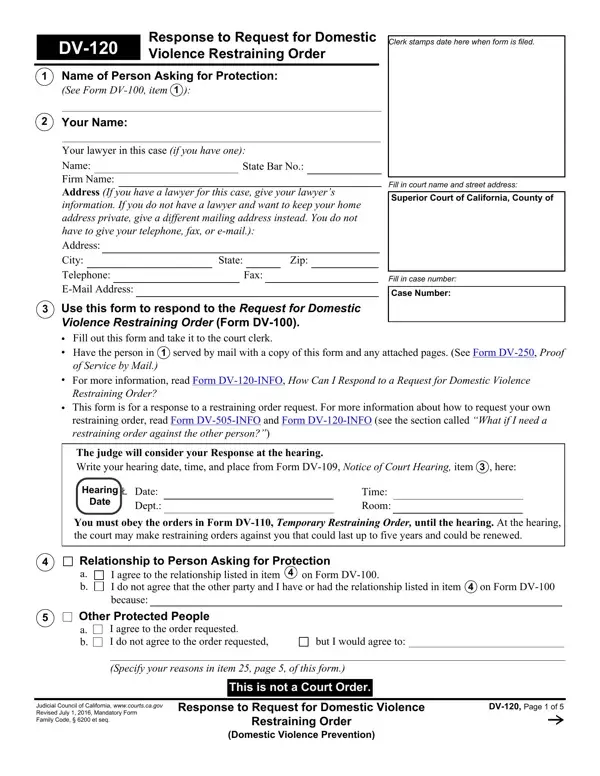
Do not use this form to ask for your own restraining order.
Hearing: if you do not attend your hearing, the judge could grant a restraining order that could last up to five years.
Cost: there is no cost to file this form with the court.
Orders: explain why you disagree, or describe a different order that you would agree to.
Body armor: if you were served with form DV-110, Temporary Restraining Order, you are prohibited from owning, possessing, or buying body armor.
| Question | Answer |
|---|---|
| Form Name | Form DV-120 |
| Form Length | 8 pages |
| Fillable? | Yes |
| Fillable fields | 279 |
| Avg. time to fill out | 47 min |
| Edition | January 1, 2026 |
| Issuing agency | Judicial Council of California |
| Matches the agency's file | Yes, checked October 1, 2026 |
| Other names | DV-120, DV120, DV 120, DV-120 form, DV120 form, California DV-120, Response to Request for Domestic Violence Restraining Order |
| Official source | Form DV-120 (Rev January 1, 2026), Judicial Council of California |
Form Dv 120 isn’t the one you’re looking for?