
The restrained person must, within 24 hours of receiving this order, sell to or store with a licensed gun dealer, or turn in to law enforcement, any prohibited items in their possession or control.
Receipt: within 48 hours, the restrained person must file a receipt with the court that proves all prohibited items have been turned in, sold, or stored.
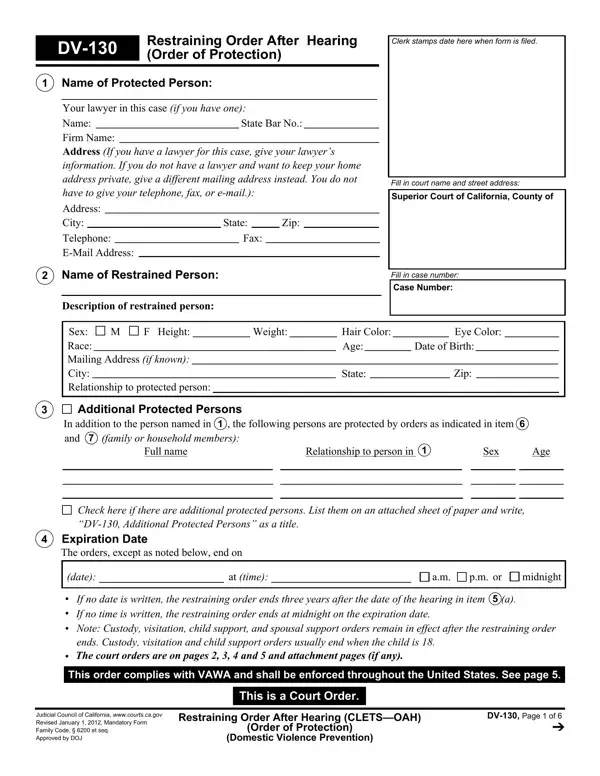
Expiration: if no time is written, the restraining order ends at midnight on the expiration date.
Body armor: the restrained person cannot own, possess, or buy body armor and must relinquish any body armor in their possession.
Serving: the sheriff or marshal will serve this order for free.
Child orders: custody, visitation, and child support orders usually end when the child is 18.
| Question | Answer |
|---|---|
| Form Name | DV-130 |
| Form Length | 11 pages |
| Fillable? | Yes |
| Fillable fields | 373 |
| Avg. time to fill out | 60+ min |
| Edition | January 1, 2026 |
| Issuing agency | Judicial Council of California |
| Matches the agency's file | Yes, checked October 2, 2026 |
| Other names | DV-130, DV130, DV 130, Form DV-130, California DV-130, Restraining Order After Hearing |
| Official source | DV-130 (Rev January 1, 2026), Judicial Council of California |
Form Dv 130 isn’t the one you’re looking for?