Please rate Ing Beneficiary

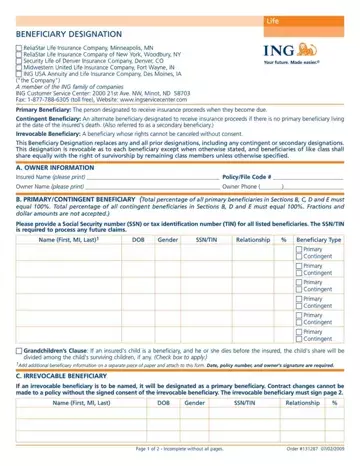
When it comes to planning for the future, especially in matters related to personal finance and estate planning, understanding how to manage and designate beneficiaries is crucial. The Ing Beneficiary Form plays a significant role in this arena, allowing individuals to specify who will receive the benefits from their accounts, policies, or trusts upon their passing. This document is a key element in ensuring that one's assets are distributed according to their wishes, helping to avoid potential disputes among heirs or family members. Its importance cannot be overstated, as it not only provides peace of mind to the account holder but also offers clear directions for the execution of their estate. By properly completing this form, individuals can ensure that their financial legacy is handed down as intended, bypassing the often complex and time-consuming probate process. This introductory exploration aims to shed light on the major aspects of the Ing Beneficiary Form, highlighting its purpose, the process of filling it out, and its implications for both the account holder and their designated beneficiaries.
| Question | Answer |
|---|---|
| Form Name | Ing Beneficiary |
| Form Length | 2 pages |
| Fillable? | Yes |
| Fillable fields | 95 |
| Avg. time to fill out | 19 min 30 sec |
| Other names | beneficiary ing form, reliastar forms, ing beneficiary, beneficiary reliastar |
Ing Beneficiary isn’t the one you’re looking for?
Please rate Ing Beneficiary