
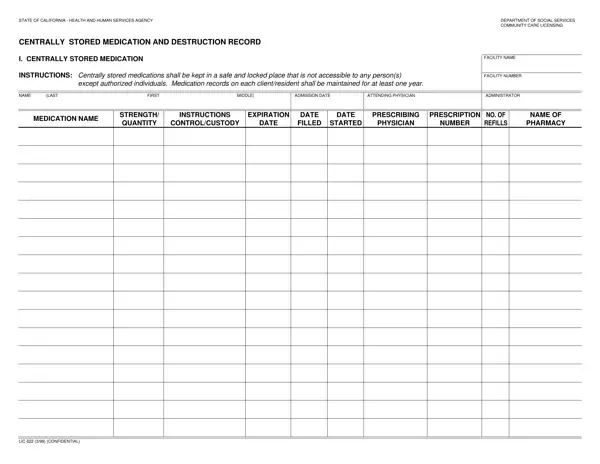

LIC 622 at a glance
What it is: In this form, Part I is CENTRALLY STORED MEDICATION and Part II is MEDICATION DESTRUCTION RECORD.
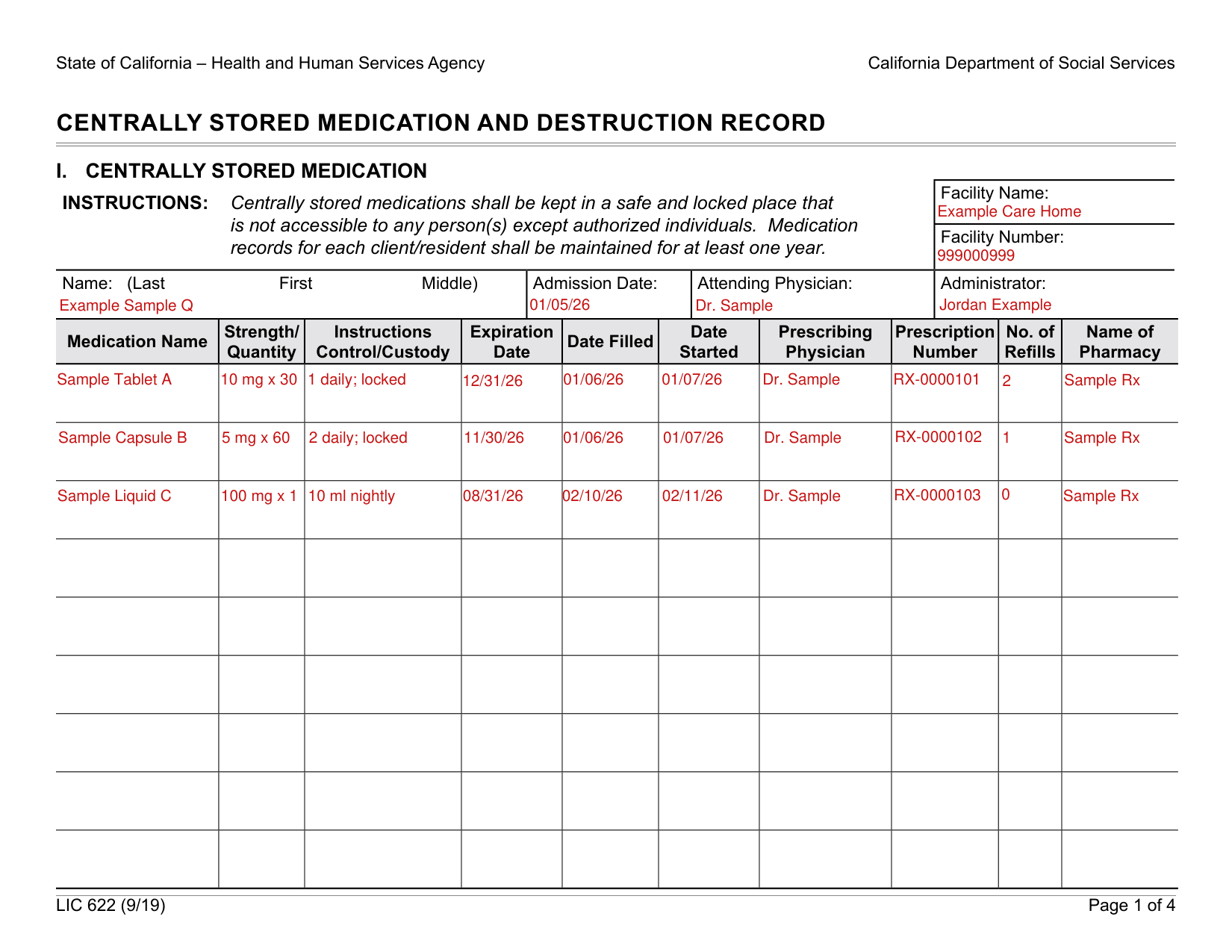
A filled-in LIC 622 example: one resident's Part I and Part II
How to fill out LIC 622, box by box
Tap a group of boxes to open it, and a picture to see it full size.
Part I: Instructions, Facility and Name

Centrally stored medications shall be kept in a safe and locked place that is not accessible to any person(s) except authorized individuals. Medication records for each client/resident shall be maintained for at least one year.
In Part I, write the Facility Name and the Facility Number.
Fill in Name (Last First Middle), Admission Date, Attending Physician and Administrator.
Part I: the medication boxes

In each row, fill in Medication Name, Strength/Quantity, Instructions Control/Custody, Expiration Date, Date Filled, Date Started, Prescribing Physician, Prescription Number, No. of Refills and Name of Pharmacy.
Part II: Destruction Record and signatures

In Part II, MEDICATION DESTRUCTION RECORD, fill in Medication Name, Strength/Quantity, Date Filled, Prescription Number, Disposal Date and Name of Pharmacy in each row.
Each row of Part II has two signature boxes: Signature of Administrator or Designated Representative, and Signature of Witness Adult Non-Client/Resident.
For facilities other than Residential Care Facilities for the Chronically Ill (RCFCI) and Residential Care Facilities for the Elderly (RCFE), prescription medication that is not taken with a client or resident when services are terminated or otherwise disposed of must be destroyed in the facility by the administrator or designated representative and witnessed by one other adult who is not a client or resident. Medication destruction records must be retained for at least one (1) year.
For RCF-CIs: Prescription medication that is not taken with a resident when placement is terminated or which is not to be retained must be destroyed by the administrator and the facility manager. Medication destruction records must be retained for at least three (3) years.
For RCFEs: Prescription medications which are not taken with a resident when services are terminated, not returned to the issuing pharmacy, not retained in the facility as ordered by the resident's physician and documented in the resident's record, not disposed of according to the established procedures of a hospice agency, or not otherwise disposed of must be destroyed by the administrator and one other adult who is not a resident of the RCFE, in the RCFE. Records documenting destruction of medication must be retained for at least three (3) years.
Sources
[1] LIC 622 (9/19), Centrally Stored Medication and Destruction Record, California Department of Social Services (the Official source link on this page).