
Nfpa Fire Pump Inspection Form PDF Details

Ensuring the functionality and safety of fire pumps is a crucial aspect of fire safety management within any building or facility. The NFPA (National Fire Protection Association) Fire Pump Inspection form serves as an essential tool for this purpose. Originating from the Hopewell Valley Bureau of Fire Safety, this comprehensive form is designed to guide inspectors through a detailed weekly inspection covering a three-month period. It encompasses various checks such as room temperature requirements, operational status of intake air louvers, the integrity of pump suction, discharge, and bypass valves, alongside assessments for leaks in piping or the fire pump itself. Moreover, it evaluates the suction and system line pressures, reservoir levels, and the operational readiness of the pump’s electrical components, including controller pilot lights, isolating switches, and battery conditions. Additionally, it oversees the mechanical aspects like oil levels in motors, diesel fuel tank levels, and the functionality of cooling systems, among others. Every inspection point allows for a response of satisfactory, unsatisfactory (with space for comments), or not applicable, ensuring each aspect of the fire pump system’s operation is meticulously recorded. This form not only facilitates the maintenance of high safety standards but also ensures compliance with NFPA regulations, making it indispensable for businesses and fire safety professionals committed to preventing fire-related incidents.

QuestionAnswer
Form NameNfpa Fire Pump Inspection Form
Form Length2 pages
Fillable?No
Fillable fields0
Avg. time to fill out30 sec
Other namesfire pump test log sheet, fire protection pumps test sheet, nfpa fire pump testing forms, fire pump checklist

How to Fill Out Fire Pumps Weekly Inspection

Fire Pumps Weekly Inspection at a glance

What it is: The Fire Pumps Weekly Inspection form covers a 3-month period.

Who signs: The Business Representative signs on the Signature line.

A filled-in Fire Pumps Weekly Inspection example: a weekly fire pump inspection
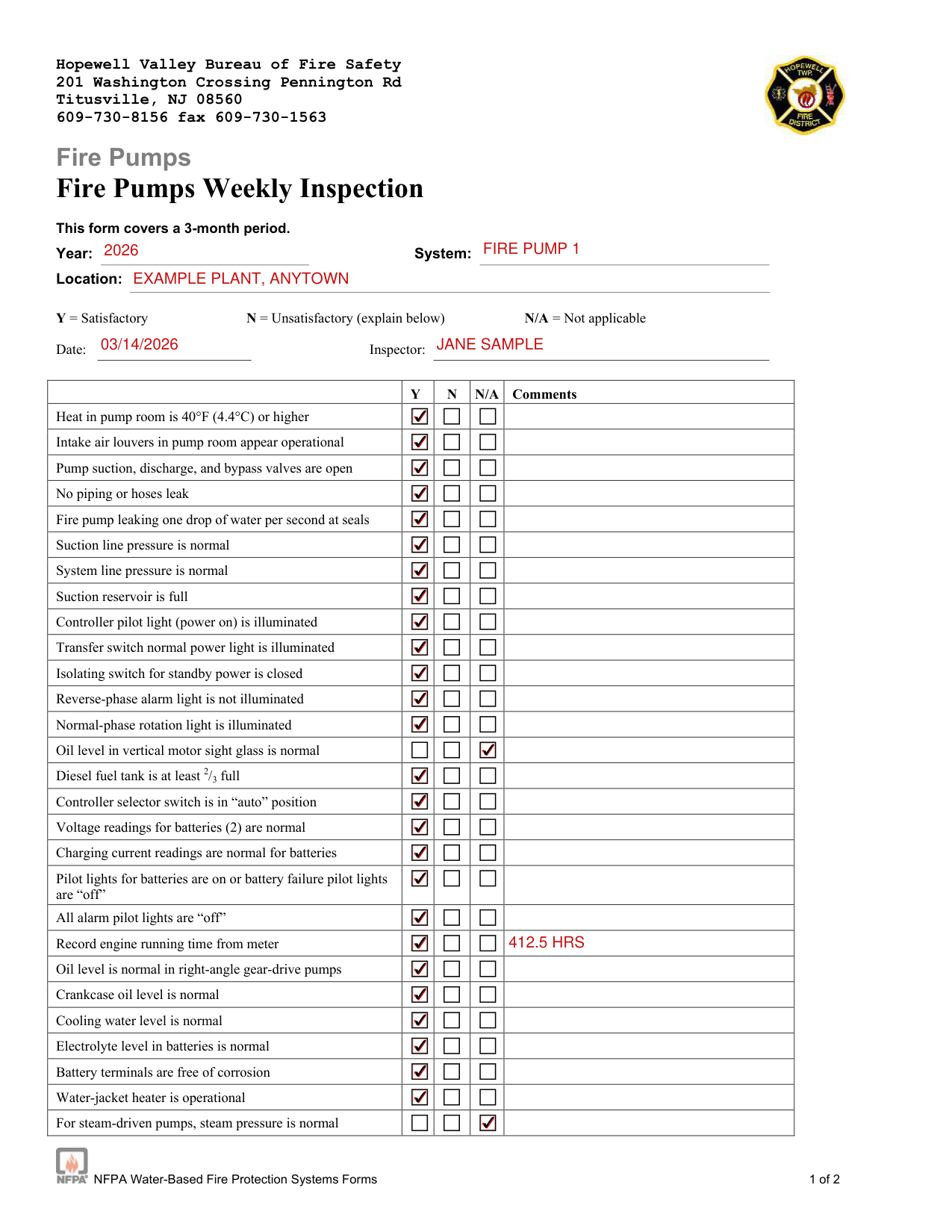
Fire Pumps Weekly Inspection example filled out, example: a weekly fire pump inspection
An inspector completes one weekly fire pump inspection for one system. Every line is satisfactory except two that do not apply, so the N boxes stay empty. The picture shows page one of the form and none of its entries is real.

How to fill out Fire Pumps Weekly Inspection, box by box

Year, system, location, date and inspector

Fire Pumps Weekly Inspection example filled out, year, system, location, date and inspector

Fill in the Year, the System and the Location.

Mark Y for Satisfactory, N for Unsatisfactory (explain in Comments) or N/A for Not applicable, and fill in the Date and the Inspector.

Pump room, valves, piping and pressure
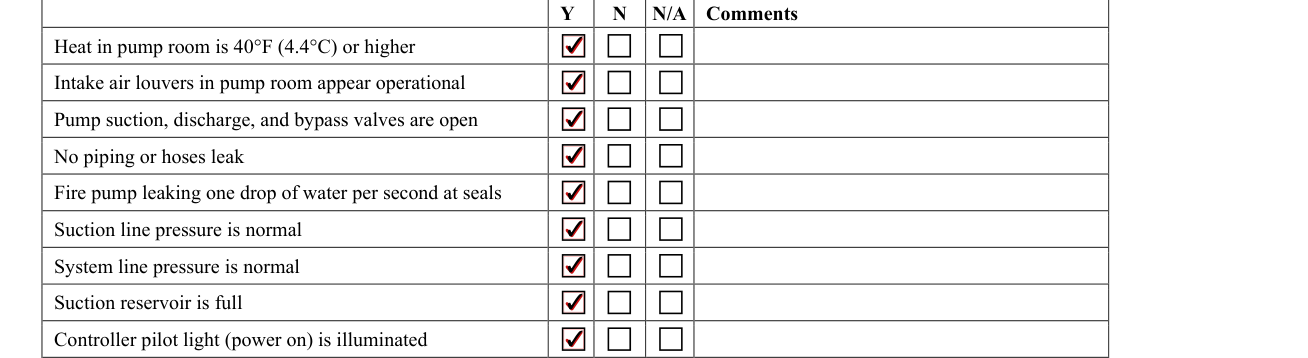
Fire Pumps Weekly Inspection example filled out, pump room, valves, piping and pressure

Mark these lines: Heat in pump room is 40°F (4.4°C) or higher; Intake air louvers in pump room appear operational; Pump suction, discharge, and bypass valves are open; No piping or hoses leak; Fire pump leaking one drop of water per second at seals; Suction line pressure is normal; System line pressure is normal; Suction reservoir is full.

Controller, power and phase lights
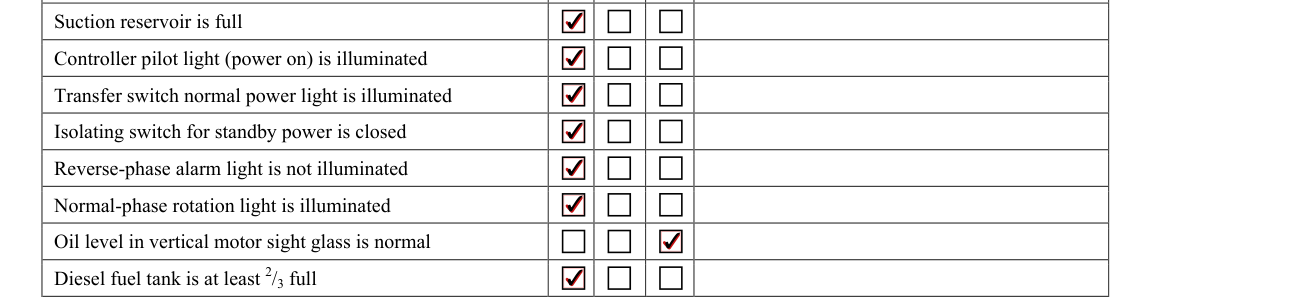
Fire Pumps Weekly Inspection example filled out, controller, power and phase lights

Mark these lines: Controller pilot light (power on) is illuminated; Transfer switch normal power light is illuminated; Isolating switch for standby power is closed; Reverse-phase alarm light is not illuminated; Normal-phase rotation light is illuminated; Oil level in vertical motor sight glass is normal.

Fuel, batteries, alarm lights and engine time
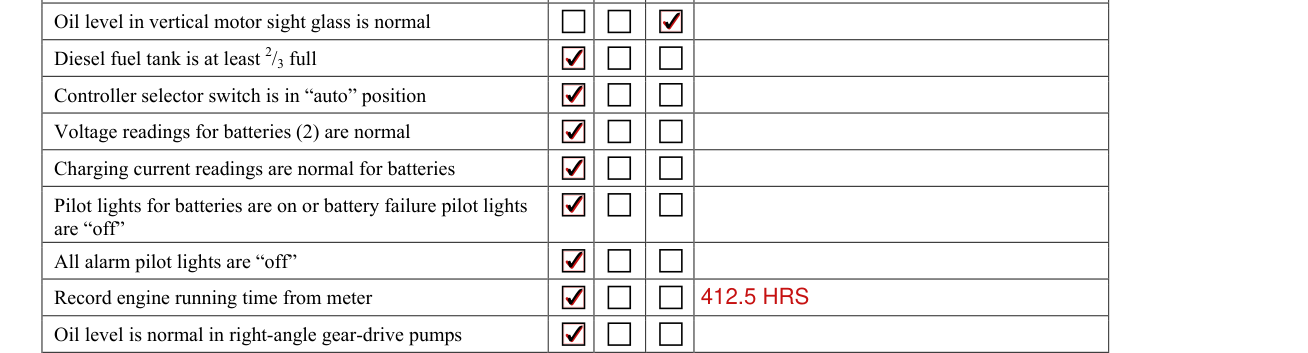
Fire Pumps Weekly Inspection example filled out, fuel, batteries, alarm lights and engine time

Mark these lines: Diesel fuel tank is at least 2/3 full; Controller selector switch is in “auto” position; Voltage readings for batteries (2) are normal; Charging current readings are normal for batteries; Pilot lights for batteries are on or battery failure pilot lights are “off”; All alarm pilot lights are “off”; Record engine running time from meter.

Oil, cooling water, battery, heater and steam checks
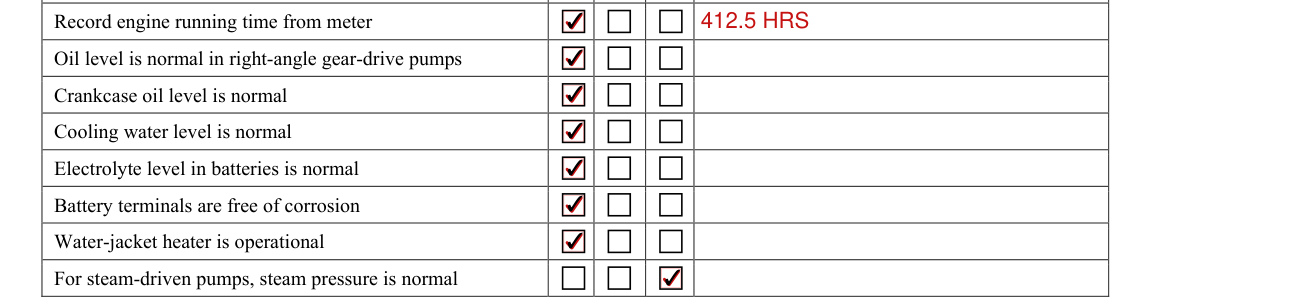
Fire Pumps Weekly Inspection example filled out, oil, cooling water, battery, heater and steam checks

Mark these lines: Oil level is normal in right-angle gear-drive pumps; Crankcase oil level is normal; Cooling water level is normal; Electrolyte level in batteries is normal; Battery terminals are free of corrosion; Water-jacket heater is operational; For steam-driven pumps, steam pressure is normal.

Second page checks: exhaust, lube oil heater, condensate trap and diesel fuel tank water

Fire Pumps Weekly Inspection example filled out, second page checks: exhaust, lube oil heater, condensate trap and diesel fuel tank water

Mark these lines: Examine exhaust system for leaks; Check lube oil heater for operation (diesel pumps); Drain condensate trap of cooling system.

Mark the line Check for water in diesel fuel tank.

Second page: Business Representative, phone, signature and date

Fire Pumps Weekly Inspection example filled out, second page: Business Representative, phone, signature and date

Fill in Business Representative and Phone, sign on the Signature line and fill in Date.

Sources

[1] Fire Pumps Weekly Inspection form, as served on FormsPal (the Official source link on this page).

Please rate Nfpa Fire Pump Inspection Form

1 Votes
If you believe this page is infringing on your copyright, please familiarize yourself with and follow our DMCA notice and takedown process - click here to proceed .