
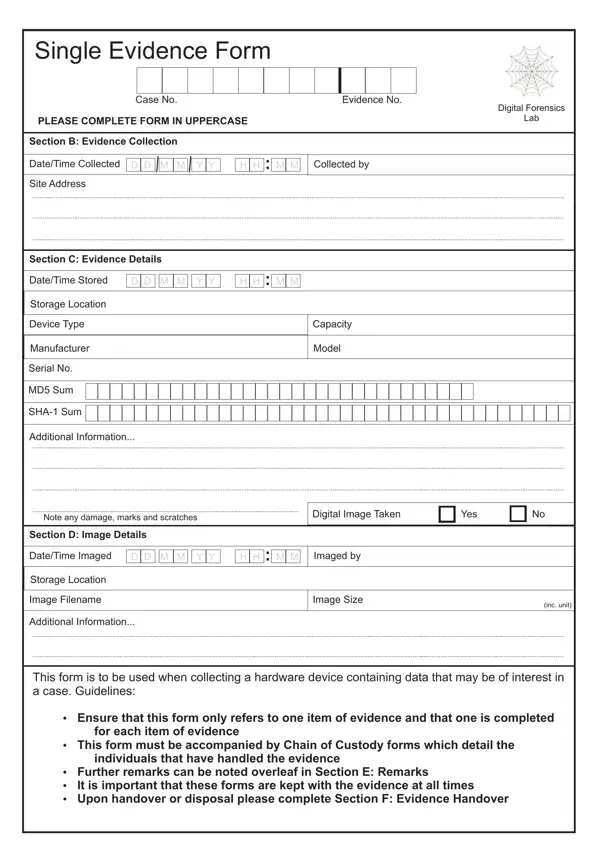
In the realm of digital forensics, the Single Evidence Form represents a critical piece in maintaining the integrity and veracity of evidence collected during an investigation. This meticulously designed form serves as the first step in documenting hardware devices containing potentially crucial data. It encapsulates information starting from the case and evidence numbers to more intricate details like the device's type, capacity, manufacturer, model, and unique identifiers such as serial numbers and digital signatures (MD5 Sum, SHA-1 Sum). Notably, it emphasizes the importance of documenting any physical alterations or distinguishing marks on the device, ensuring that a digital image of the evidence is taken if needed. This form is not just a static document but part of a rigorous process, mandating completion in uppercase for clarity, accompanying each piece of evidence uniquely, and always to be accompanied by a Chain of Custody form. This latter requirement underscores the form's role in a larger ecosystem of evidence management, highlighting the rigor in tracking who has handled the evidence from collection to storage, and eventually to handover or disposal. The guidelines further insist that such forms, along with detailed remarks possibly noted in a dedicated section, remain with the evidence throughout its lifecycle, underscoring the form's pivotal role in maintaining the chain of custody and safeguarding the evidence’s integrity for legal scrutiny.
| Question | Answer |
|---|---|
| Form Name | Single Evidence Form |
| Form Length | 3 pages |
| Fillable? | No |
| Fillable fields | 0 |
| Avg. time to fill out | 45 sec |
| Other names | profdavis evidence, digital forensics evidence form, digital evidence form, forensics evidence form |
Single Evidence Form isn’t the one you’re looking for?