
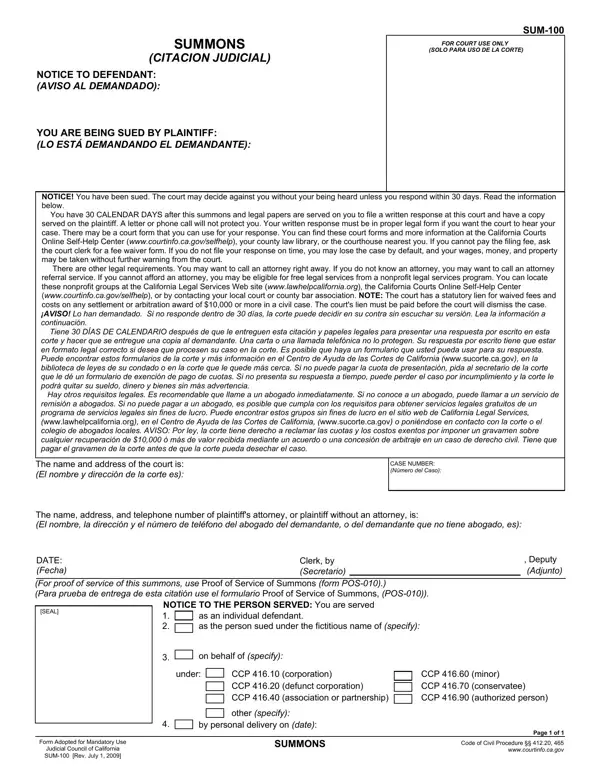
When individuals or entities encounter legal disputes requiring court intervention, navigating the complexities of the legal system begins with understanding critical documents like the Summons, known formally as the SUM-100 form. This document, essentially, heralds the onset of a legal case by notifying the defendant that they are being sued and outlines the imperative steps that must be taken to respond appropriately. The form advises defendants they have a limited timeframe—specifically, 30 calendar days from the day of receiving the summons—to file a written reply within the court system to counter the lawsuit filed against them. Ignoring this notice or opting for informal responses such as phone calls or letters offers no protection against the lawsuit. Crucially, this document also underscores the availability of legal forms and resources through various channels including the California Courts Online Self-Help Center, providing guidance for those unfamiliar with legal proceedings or unable to afford legal representation. The summons further cautions about the financial consequences of a default judgment due to non-response, including potential wage garnishment or asset seizure, and mentions the potential for court fees to be waived for those who cannot afford them. Additionally, it alerts recipients about the court's statutory lien on any settlements or arbitration awards valued at $10,000 or more, emphasizing the legal and financial implications of being sued. In sum, the SUM-100 serves not just as a notification but as a crucial guide for navigating the initial stages of a lawsuit, highlighting the importance of timely and legally compliant responses.
| Question | Answer |
|---|---|
| Form Name | Sum 100 Form |
| Form Length | 1 pages |
| Fillable? | No |
| Fillable fields | 0 |
| Avg. time to fill out | 15 sec |
| Other names | summons judicial, sum 100, your california summons, legal summons form |
Sum 100 Form isn’t the one you’re looking for?