
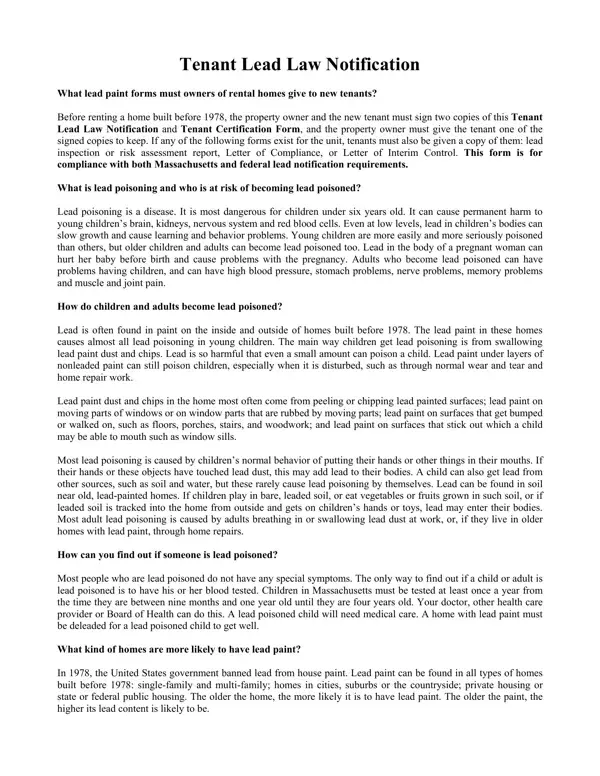
Fill out both pages of the Tenant Certification Form.
Copies: before renting a housing unit built before 1978, the owner/agent must provide the tenant with one signed copy.
Reports: if available, lead inspection reports and compliance documents must be given to tenants as part of the Tenant Certification Form.
Owners: owners of homes built before 1978 must make a home lead-safe if a child under the age of 6 lives there.
Certification: all parties must sign the Certification of Accuracy.
Type size: the document can be copied or digitized, but the type size must not be reduced.
| Question | Answer |
|---|---|
| Form Name | CLPPP Form 95-17 |
| Form Length | 10 pages |
| Fillable? | Yes |
| Fillable fields | 20 |
| Avg. time to fill out | 4 min |
| Edition | Rev. 4/10/26 |
| Who signs | Property owners/agents and tenants, on two copies of the Tenant Certification Form before renting a housing unit built before 1978 |
| Other names | CLPPP Form 95-17, Form 95-17, Tenant Certification Form, Tenant Lead Law Notification, Massachusetts tenant certification form |
| Official source | CLPPP Form 95-17 (Rev 4/10/26), Massachusetts Department of Public Health |
Tenant Certification Form isn’t the one you’re looking for?