Please rate Trust Revocation Declaration Form

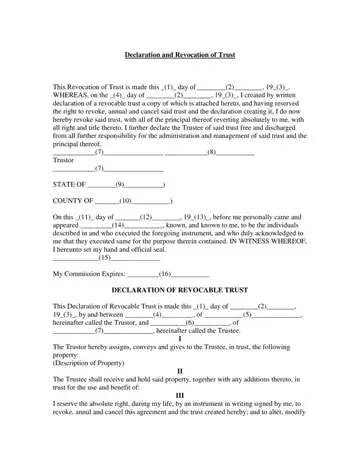
In the intricate landscape of estate planning, the trust form emerges as a pivotal legal instrument designed to manage assets for the benefit of individuals or entities. This form encompasses two main documents: the Declaration of Revocable Trust and the Revocation of Trust, each serving distinct purposes within estate management. The Declaration of Revocable Trust initiates the process, wherein an individual, known as the trustor, assigns and conveys property to another, known as the trustee, who then holds this property for the benefit of designated beneficiaries. This foundational document outlines the trustor's stipulation that they reserve the right to revoke, annul, or modify the trust at any time, highlighting the flexibility and control retained by the trustor over their assets. Meanwhile, the Revocation of Trust document formalizes the termination of the trust, reverting all assets back to the trustor and absolving the trustee of further responsibilities. Together, these documents underscore the trust’s dynamism as an estate planning tool, providing a structured yet adaptable framework for asset management, protection, and distribution according to the trustor’s evolving intentions and circumstances. The nuanced provisions within these forms, touching upon everything from the specific powers granted to the trustee to the mechanism for dispute resolution and compensation, illustrate the comprehensive nature of trust agreements in safeguarding an individual's legacy while navigating the complexities of state statutes and individual wishes.
| Question | Answer |
|---|---|
| Form Name | Trust Revocation Declaration Form |
| Form Length | 4 pages |
| Fillable? | No |
| Fillable fields | 0 |
| Avg. time to fill out | 1 min |
| Other names | declaration revocation trust, trust revocation declaration form california, revocation of irrevocable trust form pdf, revocation of living trust form |
Trust Revocation Declaration Form isn’t the one you’re looking for?
Please rate Trust Revocation Declaration Form