
Updated:
Get Form Now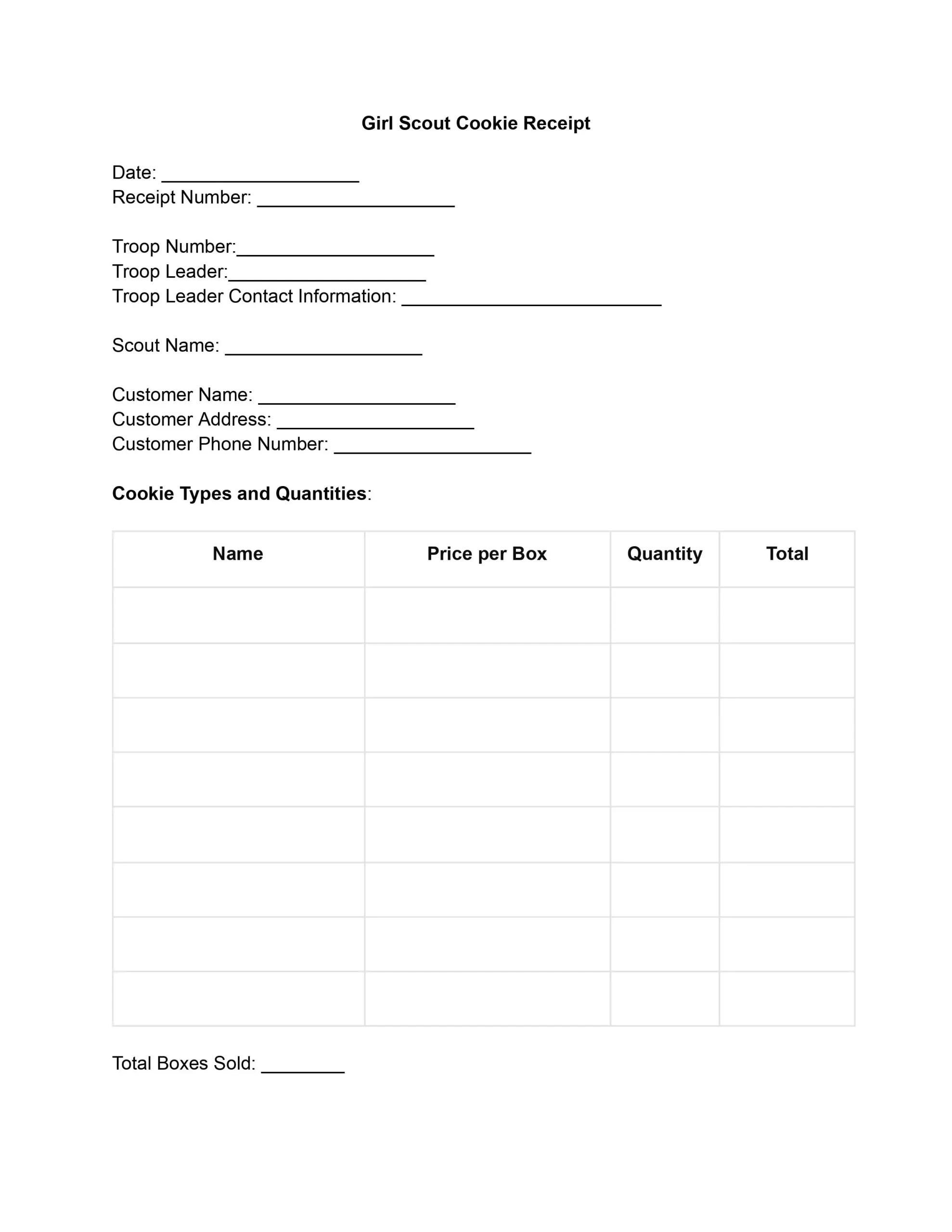
A Girl Scout cookie receipt is written proof of a cookie sale. The receipt lists the date, the cookies sold, the boxes, the total paid and the seller. Scouts, parents and troop volunteers use it at booths, door to door and on delivery.
Key facts
A Girl Scout cookie receipt is a document given to a customer after they buy cookies. It acknowledges the sale and lists the details of the transaction, so scouts, parents and troop volunteers can keep every sale on record. The receipt also works as the customer's proof of purchase: it shows what was bought, from whom and for how much.
A receipt helps both sides of the sale in different ways. The buyer gets a clear note of the boxes and the amount paid. The scout gets a matching copy that later checks the cookie count and the cash box against each other. Writing receipts at a booth or at the door teaches record-keeping, good customer service and the habit of giving clear, accurate information in a sale.
A cookie receipt includes the sale date, the seller, the buyer, the cookie list and the payment, with a signature line at the bottom of the page. The table below shows what each part holds and why it matters.
| Part of the receipt | What goes in it | Why it matters |
|---|---|---|
| Date | The date the buyer paid or picked up the cookies | Matches the receipt to the sales log |
| Seller | The scout's first name, troop number and a contact for the troop | Tells the buyer whom to ask about the order |
| Buyer | The customer's name and a phone or email, if they agree to share it | Lets the scout reach the buyer about a delivery |
| Cookie list | Each cookie type, the number of boxes and the price per box | Shows exactly what was sold |
| Payment | The total, the payment method and any change given | Ties the money collected to the sale |
| Signature | The scout's or the guardian's signature | Confirms who handled the sale |
The seller line works best with a first name and a troop contact, not a scout's home address or personal phone number. Many troops ask scouts to share a parent's or the troop's contact details instead.
A cookie receipt confirms a sale that is paid, while a cookie order form or order card lists what customers plan to buy before the cookies arrive. The order form comes first, and the receipt closes the sale.
For sales outside cookie season, such as a bake sale or a craft fair, a general receipt template fits better than a cookie receipt.
A cookie receipt goes to the buyer at the moment money changes hands, whether at a booth, at the door or at delivery. Each setting changes how the receipt is handled.
A booth receipt is short and quick. Pre-printed receipts with the date, the troop and the price per box already filled in keep the line moving. The scout then adds only the boxes, the total and the payment method for each buyer.
A door-to-door receipt carries the buyer's name, because the scout may return with the cookies later. On delivery, the receipt confirms that the boxes arrived and that the order is paid in full.
The receipt is filled in top to bottom, a separate receipt for each sale, by hand on a printed copy or typed into the PDF. Follow these steps.
No printer handy? Open the downloaded PDF in the PDF editor to type in the details and sign on screen.
The sample receipt below fills in every part of a cookie receipt, from the date down to the signature. Its names and details are made up, so replace them with your own.
Date: February 14
Seller: Maya R., Troop 1234 (troop contact: leader's email)
Buyer: Jordan Lee
Mint chocolate cookies: 3 boxes at $6.00 = $18.00
Peanut butter sandwich cookies: 2 boxes at $6.00 = $12.00
Donated boxes: 1 box at $6.00 = $6.00 (donation)
Total: $36.00
Paid by: cash, $40.00 given, $4.00 change
Signed: Maya R. and parent
The payment section of the receipt ties the money to the boxes, so it names the method and every amount that moved. Each method leaves a different trail.
A cash sale lists the amount handed over and the change given back. A check sale lists the check number next to the payment method, which helps if the check is questioned later.
A card or payment app sale already leaves an electronic receipt, yet the paper receipt still lists the boxes, which the electronic version often leaves out. Writing "card" or the app's name on the payment line keeps both easy to match.
A donation line lists the boxes a buyer pays for but does not take home. Write the number of boxes in the cookie list and add a short note that they are a donation, which keeps the count clear for everyone.
The scout's copy of each receipt is the base for the closing count, when boxes sold and money collected are checked against each other. Use these steps after each booth or delivery round.
Back home, store a copy of each one with the troop's cookie records, so you can match your sales log against the money you collected at the end of the season.
Most receipt errors come from a rushed total or a blank line, and each error makes the closing count harder.
Cookie sales raise money for group activities, community projects and travel. They started in 1917 as a small fundraiser by a troop in Muskogee, Oklahoma, who baked cookies in their school’s cafeteria to fund troop activities. Since those humble beginnings, the Girl Scout Cookie Program has grown into a national project that gives scouts hands-on business experience.
Use the PDF download link near the top of this page, save the file, and then print it or fill it in on your computer before you hand it to a buyer.
Yes. Print several copies before the booth opens, or keep a digital copy of the PDF on a phone or tablet so you can complete it on the spot, and each buyer will leave with a clear record of the purchase.
Yes, keeping a copy is a good habit, because a copy for your records makes it easy to compare your sales log against the money you collected.
The scout who made the sale signs it, or a parent or guardian signs for a younger scout. The signature shows the buyer who handled the money.
Write a receipt when the money is paid and mark it "prepaid", then note the delivery date. At delivery, the buyer already holds the receipt, so only the boxes change hands.
Yes. The receipt lists each cookie type on its own line with its boxes and price, and the total at the bottom covers every line.
General information, not legal or tax advice.
