
A Louisiana small estate affidavit is a sworn written statement that the heirs and legatees of a person who died in Louisiana sign to describe a small succession. Under Louisiana's Code of Civil Procedure, a small succession is one with a gross value of $200,000 or less at the date of death.[1] FormsPal's online builder below creates the document from your answers.
Last Updated: October 2026. This guide is reviewed and updated regularly to reflect current Louisiana law. If you notice an error or outdated information, please contact us.
Build Your Document
Answer a few simple questions to make your document in minutes
Save and Print
Save progress and finish on any device, download and print anytime
Sign and Use
Your valid, lawyer-approved document is ready
Louisiana's Code of Civil Procedure calls this procedure a small succession. Under La. Code Civ. Proc. art. 3421(1), a small succession is the succession of a person who died domiciled in Louisiana. The person must have left property with a gross value of $200,000 or less, valued as of the date of death.[1]
If the deceased left a will, all of the heirs and legatees, including the surviving spouse if there is one, may sign the affidavit.[2] If the deceased left no will, at least two persons may sign it, including the surviving spouse, if any, and one or more heirs.[3] It must be duly sworn before any officer or person authorized to administer oaths in the place where it is signed.[2]
Under La. Code Civ. Proc. art. 3432.1, the affidavit must set forth several things, including the following:[2]
An affirmation that, by signing the affidavit, the affiants swear under penalty of perjury that the information contained in the affidavit is true, correct, and complete to the best of their knowledge, information, and belief.
In plain terms, everyone who signs is vouching for the accuracy of every statement in the affidavit.
Under La. Code Civ. Proc. art. 3421(2), a different limit applies when the person died domiciled outside Louisiana: the property in Louisiana must have a gross value of $125,000 or less, valued as of the date of death.[1]
Under La. Code Civ. Proc. art. 3432, the affidavit is used when art. 3431 makes it unnecessary to open the small succession in court.[3]
| Max. Estate | $200,000 gross value at the date of death[1] |
| Min. Time to Wait After Death | Louisiana has no statute that sets a waiting period after death |
| State Laws | La. Code Civ. Proc. art. 3421(1)[1] and art. 3432.1[2] |

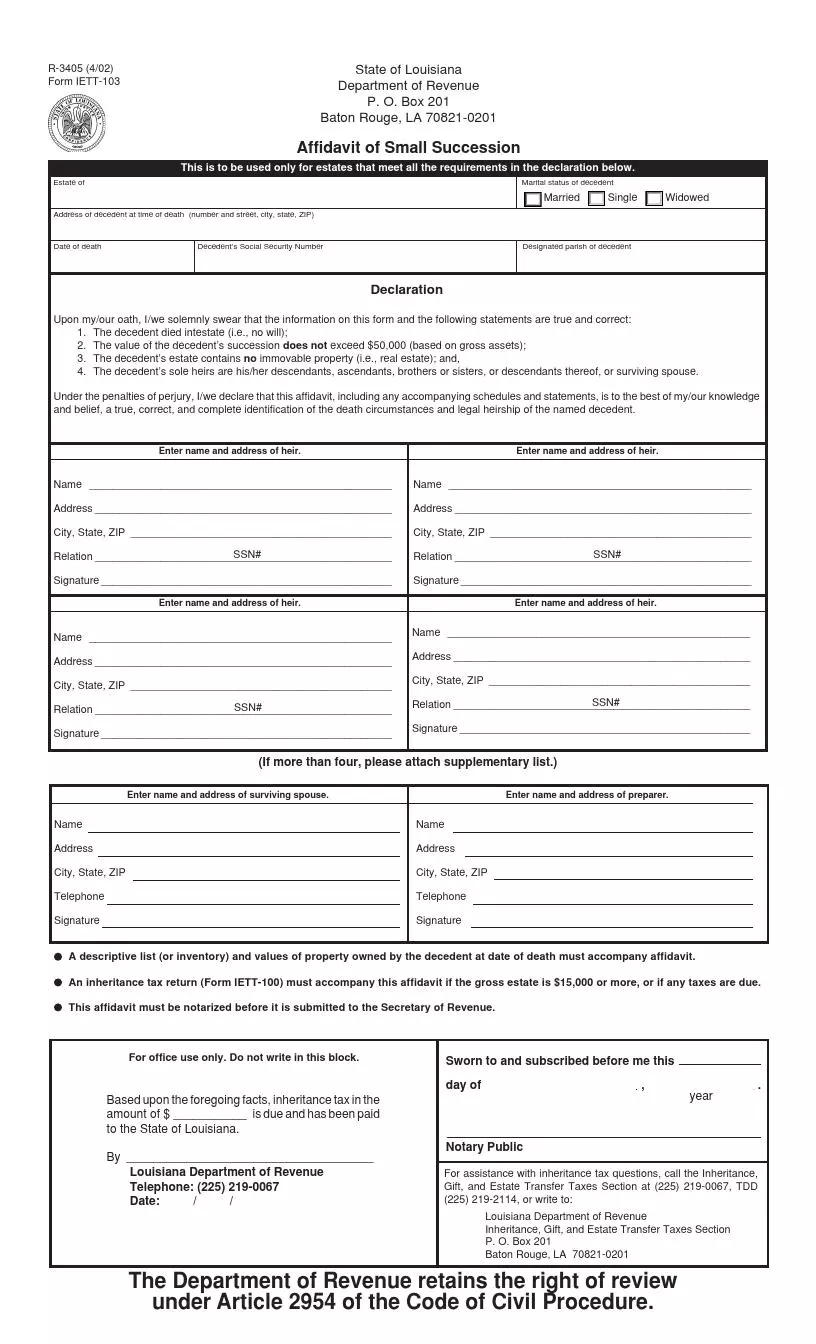
The FormsPal template fits on one form page and has four parts. Work through them in order, from the details of the person who died to the notary block at the end. The online builder asks for the same details in the same order, so you can fill out the form on screen and then download the PDF.
Have these details ready before you start:
The screenshots under each step show the FormsPal Louisiana small estate affidavit template filled with sample entries in blue, so you can see where each answer goes. The names, addresses, dates and amounts are examples only.
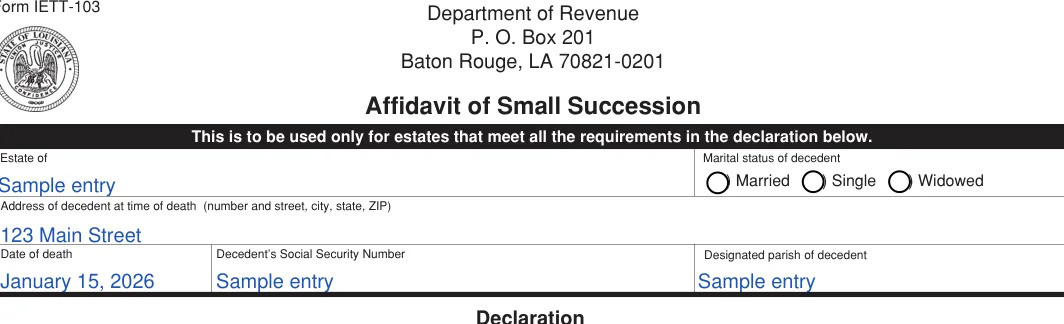
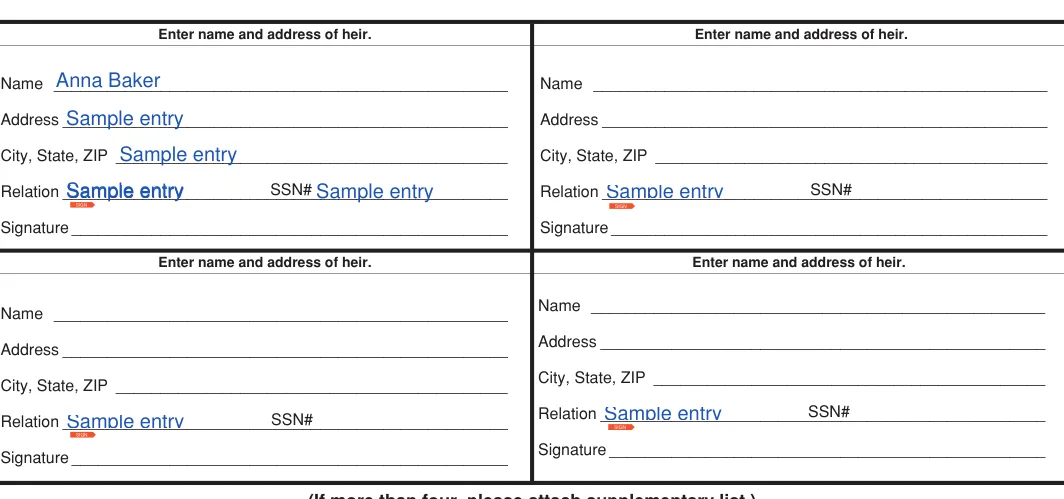
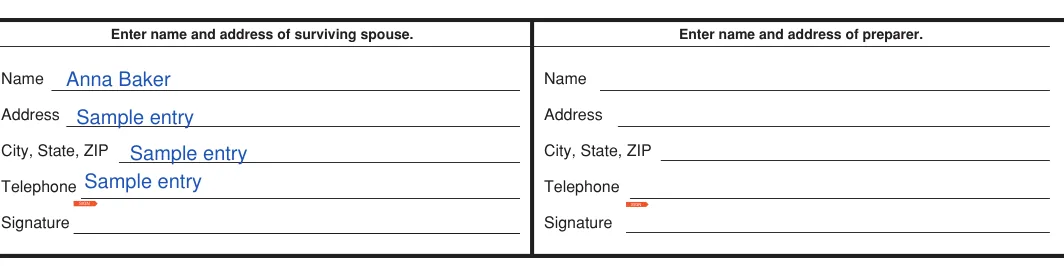
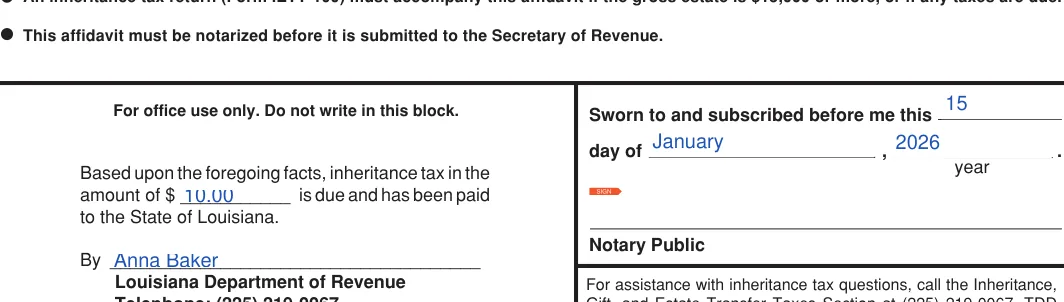
When you describe the property, be specific. List each item, say whether it is community or separate, and note any account or vehicle details that identify it.[2] If a statement on the declaration does not fit the estate, ask a Louisiana attorney before signing.
Review each entry once more before anyone signs. A name that differs between the form, the death certificate and the testament is easy to miss, and a second reader often catches it. After the notary completes the form, keep a copy of the signed affidavit with the other succession documents.
The answers below come from article 3432.1 of the Louisiana Code of Civil Procedure. They cover two requirements that affect how you fill out the form: which property the affidavit describes, and what is attached when the person who died left a will.[2]
The affidavit must include a description of the movable property left by the deceased, including whether the property is community or separate. It must also include an affirmation that the deceased died owning no immovable property in Louisiana.[2]
When the procedure is used for a person who died leaving a will, the affidavit must state that the deceased died testate, which means with a will. It must also include an attachment consisting of a copy of the testament.[2]
General information, not legal or tax advice.
