
A Minnesota small estate affidavit is a written statement made by or on behalf of the successor of someone who has died. The form is formally titled Affidavit for Collection of Personal Property for Small Estates. Under Minnesota Statutes section 524.3-1201, the successor presents it with a certified death record to the person holding the decedent's property. It applies only to an estate worth $75,000 or less.[1.2]
Last Updated: October 2026. This guide is reviewed and updated regularly to reflect current Minnesota law. If you notice an error or outdated information, please contact us.
Build Your Document
Answer a few simple questions to make your document in minutes
Save and Print
Save progress and finish on any device, download and print anytime
Sign and Use
Your valid, lawyer-approved document is ready
Minnesota lets a successor collect a decedent's personal property with an affidavit under Minn. Stat. § 524.3-1201. The estate must be worth $75,000 or less, 30 days must have passed since the death, and no personal representative may be pending or appointed. The successor must also present a certified death record.[1.2]
These are the conditions the statute sets:
The value of the entire probate estate, determined as of the date of death, wherever located, including specifically any contents of a safe deposit box, less liens and encumbrances, does not exceed $75,000
The section is titled collection of personal property by affidavit, so the affidavit is for personal property. Real property has its own rule under the small estate procedure.[1.1]
| Max. Estate | $75,000, less liens and encumbrances[1.1] |
| Min. Time to Wait After Death | 30 days[1.3] |
| Property Covered | Personal property[1.1] |
| Personal Representative | None pending or appointed[1.1] |
| Required With the Affidavit | A certified death record[1.1] |
| State Law | Minn. Stat. § 524.3-1201 |
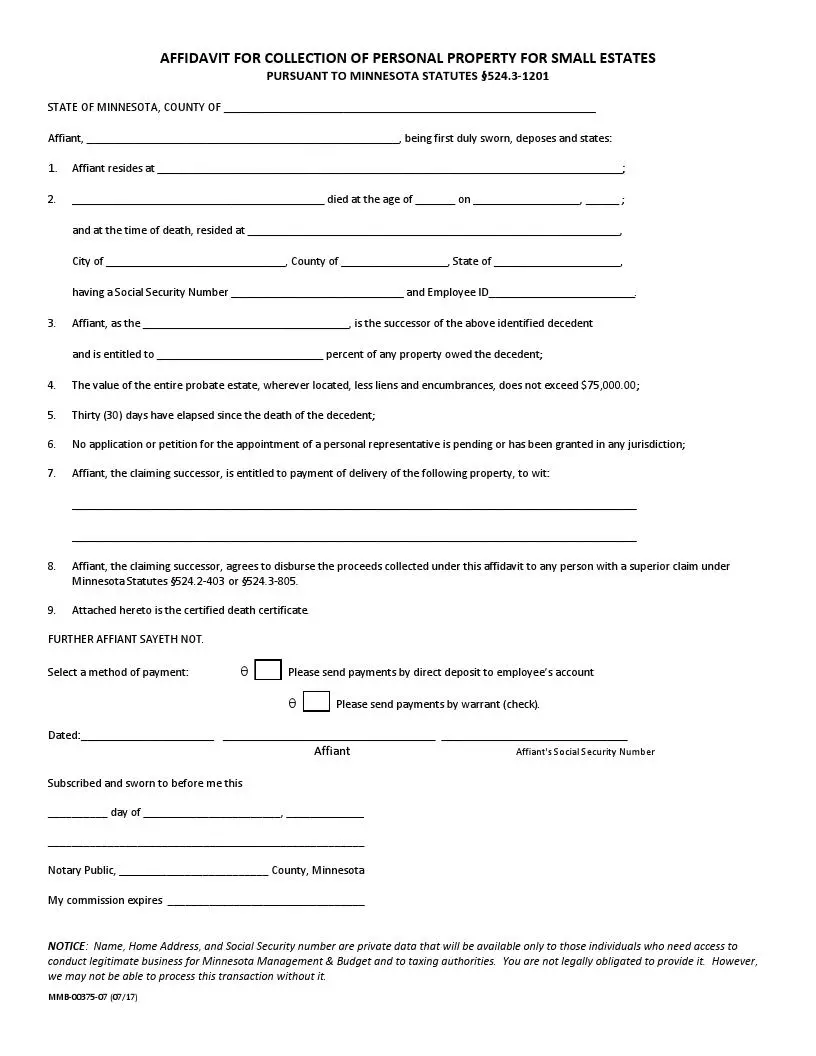
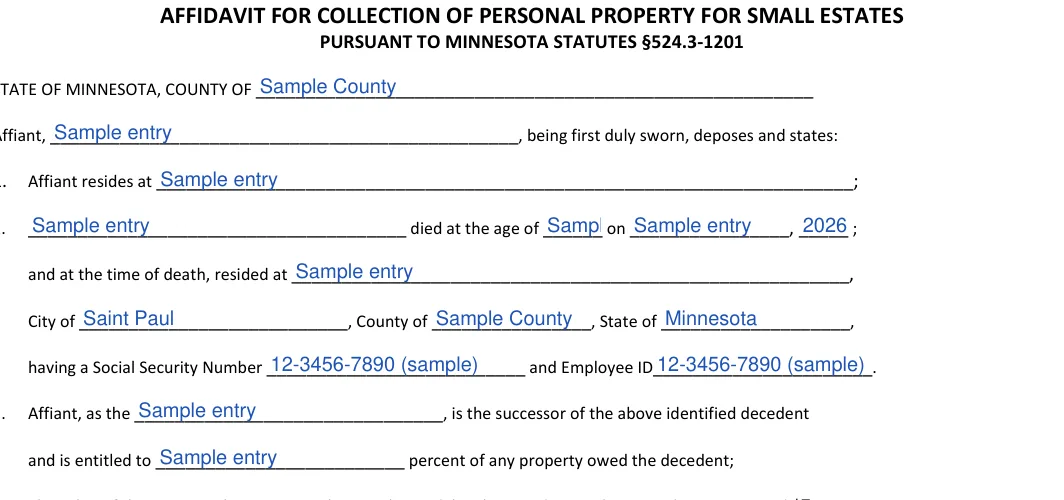
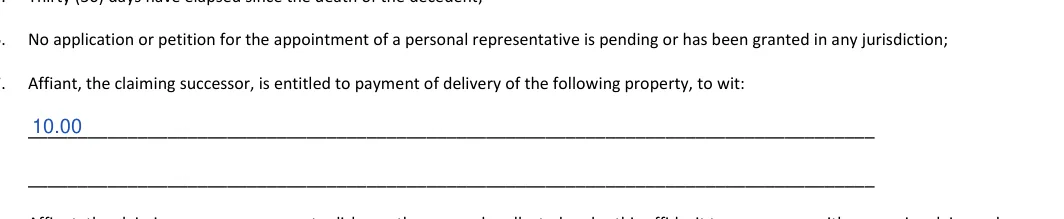
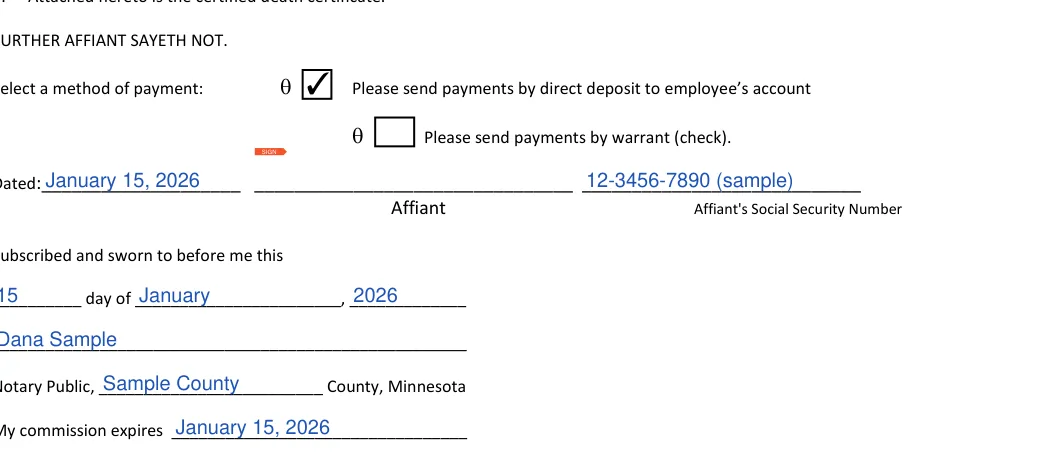
The Minnesota form has one page. You fill in the heading, Items 1 to 3, the property in Item 7, the payment method and the signature blocks. Use our form-building software to get an up-to-date template, then fill in the downloaded PDF online or print it. This page covers the Minnesota version of the small estate affidavit.
The screenshots under each step show the FormsPal Minnesota small estate affidavit template filled with sample entries in blue, so you can see where each answer goes. The names, addresses, dates and amounts are examples only.
Three requirements drive the Minnesota small estate affidavit: a $75,000 limit on the entire probate estate, a 30-day wait after the death, and a certified death record presented with the affidavit.[1.1]
Minnesota sets a $75,000 limit for the small estate affidavit procedure. The value is the entire probate estate, wherever located, less liens and encumbrances.[1.1]
Yes. Under Minn. Stat. § 524.3-1201, a person holding a decedent's property must pay or deliver it to a person claiming to be the successor. The successor must first present a certified death record and an affidavit made by or on behalf of the successor.[1.2]
The limit is $75,000, measured on the entire probate estate as of the date of death, less liens and encumbrances.[1.1]
The small estate affidavit statute sets $75,000 as the ceiling for its procedure. That value includes any safe deposit box contents.[1.1]
The successor presents two things to the person holding the property:
At least 30 days must have passed since the death of the decedent.[1.3] If the property is the contents of a safe deposit box, the 30 days run from the filing of an inventory of the box's contents.[1.1]
General information, not legal or tax advice.

