
Updated:
A furniture bill of sale is the signed proof of a furniture sale. The form names the seller and buyer, describes each piece, and states the price and payment method. Private sellers use it for used furniture, especially when a buyer pays a deposit first.
This page explains what the bill of sale for furniture includes, how the as-is clause and deposit terms work, how to fill out each section, and how to sign and share the finished form.
Key facts
A furniture bill of sale is a written transfer of ownership of a sofa, table, bed, dresser or other piece from a seller to a buyer, signed by both. The document also works as a receipt: it shows the price, the payment method and the date the furniture changed hands.
The form covers private sales of used furniture, sales of antiques and custom pieces, and furniture left behind in a sold home. For a sale of mixed household items, a general bill of sale fits better. Other kinds of property each have a form on the bill of sale page.
A furniture bill of sale gives the seller and the buyer the same written terms of the deal, so neither side depends on memory if a question comes up later. The signed form settles four points:
The form helps most with costly pieces, sales paid in two parts, and sales where the buyer collects the furniture on a later day.
| Document Name | Furniture Bill of Sale Form |
| Other Name | Bill of Sale for Furniture |
| Avg. Time to Fill Out | 10 minutes |
| # of Fillable Fields | 56 |
| Available Formats | Adobe PDF, Microsoft Word |
A furniture bill of sale includes the parties, the furniture, the price and the signatures, set out in six numbered sections over two pages, with optional witness and acknowledgment pages after them. Each part answers one question about the sale:
The description section identifies each piece so that no one can mistake it for another: the type (for example, a dining table), the brand, the color and the serial number. The Other Information line holds what the four lines leave out, such as the wood type or material, the size, and any marks, stains or repairs.
The maker's label often carries the brand and serial number. Antiques and handmade pieces rarely have a serial number, so a short note on the maker, the age claimed by the seller and the size takes its place.
An as-is furniture bill of sale states that the buyer accepts the furniture in its present condition, without promises from the seller about its quality or how long it will last. Section 5 of the form holds this clause next to the seller's statement that they own the furniture and that the form's details are true to their best knowledge. The as-is clause does not cancel that ownership statement or any promise the parties write on the form.
The as-is clause works best when the Other Information line also lists every known flaw. A buyer who signs a form that names a cracked leg or a worn cushion cannot later say the flaw was hidden from them.
A seller who wants to promise something, such as a working recliner mechanism, writes that promise in plain words on the form before both parties sign.
The furniture bill of sale supports a deposit with the balance paid later, as well as one payment in full on the purchase date. The payment section shows which of the two the parties chose.
For a deposit, the form takes three entries: the deposit amount, the date the deposit was paid and the date the balance is paid in full. The seller keeps the receipts for each payment with the signed form, so both sides can show when each payment arrived.
The payment method lines list cash, check, cashier's check and money order. A check payment also takes the check number.
A separate bill of sale for furniture lists the furniture a home buyer takes over from the seller, apart from the purchase contract for the house itself. Furniture is personal property: movable items, as opposed to the land and the building.
The separate form names each piece that stays in the home and gives the furniture its own price, with each piece left behind on its own line.
The home purchase contract also mentions the furniture sale, and the parties tell the lender and the closing agent about it before closing. A furniture payment kept off the purchase contract can affect the loan and the closing figures, so the closing agent is the one to ask how the separate price is handled.
The home seller and the home buyer fill in the furniture bill of sale the same way as in any private sale, and both sign it.
The short video below walks through the furniture bill of sale form section by section, from the date line on page 1 to the signatures on page 2.

A used furniture sale ends with a signed furniture bill of sale, after the seller has prepared, photographed and advertised the piece and agreed on a price with a buyer. The five steps below follow that order.
Clean and refurbish the furniture.

Clean the piece and touch up the paintwork or varnish where needed, because a tidy piece catches the eye of prospective buyers.
Take photographs.

Photograph the piece in good light from several angles, so buyers see it as it is.
Advertise the sale.

List the piece on an online marketplace or social media, or tell friends and family that it is for sale. Give the size, the condition and the asking price in the listing.
Meet the buyer.

Let the buyer view the furniture before deciding, then agree on the final price and on whether the buyer pays in full or leaves a deposit.
Complete the furniture bill of sale.

Fill in the form together with the buyer, take the payment, and sign. Give the buyer a copy before the furniture leaves. The next section goes through the form line by line.
The furniture bill of sale takes eleven steps to fill out, from the date at the top of page 1 to the acknowledgment on the last page. Each step below matches one part of the form.
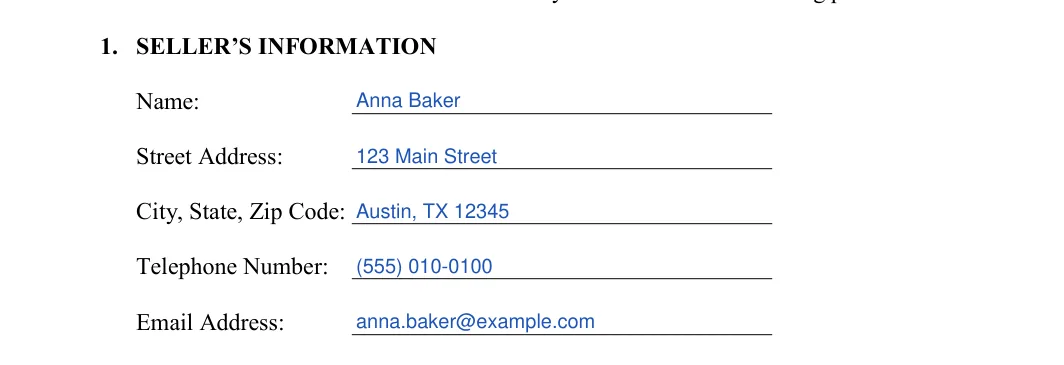
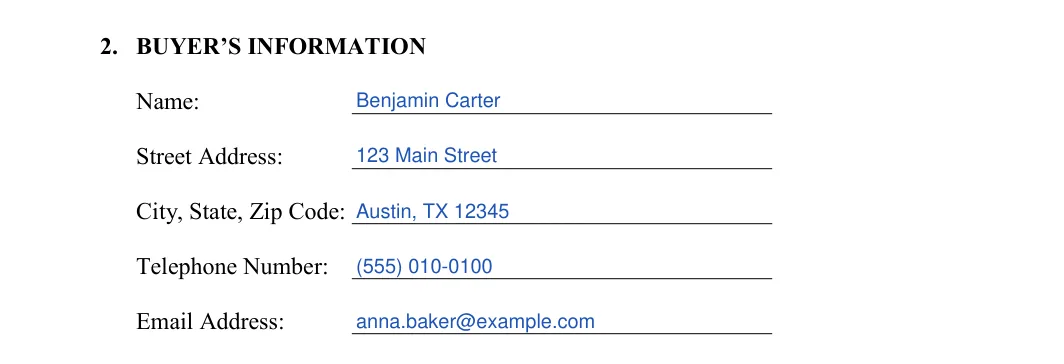
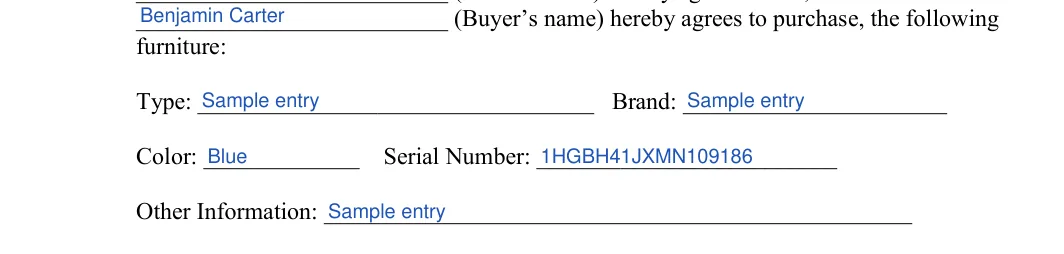
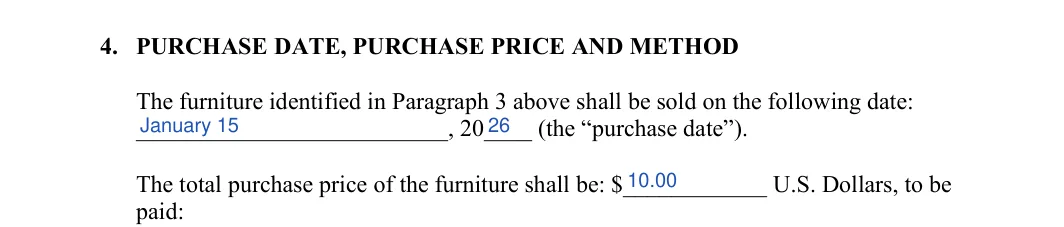
The screenshots under each step show the FormsPal Furniture Bill of Sale template filled with sample entries in blue, so you can see where each answer goes. The names, addresses, dates and amounts are examples only.
Page 1 of the furniture bill of sale holds the date, both parties' details and the furniture description, in sections 1 to 3.
Date. Enter the date of the bill of sale on the DATE line at the top of page 1.


Seller's information. Enter the seller’s details in section 1 of page 1:

Buyer's information. Fill in the same details for the buyer in section 2: name, street address, city, state and zip code, telephone number and email address.
The parties in the description. Write the seller’s name and the buyer’s name again on the two lines of the sentence that opens section 3.

The furniture. Fill in Type, Brand, Color and Serial Number. Use the Other Information line for anything else that identifies the piece, such as the wood type, the material or the condition.

Section 4 of the furniture bill of sale records the purchase date, the total price, the payment terms and the payment method on page 2.
Purchase date and total price. On page 2, find the purchase date and purchase price lines. Enter the date of the sale and the total price of the furniture.
How the price is paid. Mark one box: the full price paid all at once on the purchase date, or a deposit with the balance paid later. For a deposit, enter the deposit amount, the deposit date and the date the balance is paid in full.
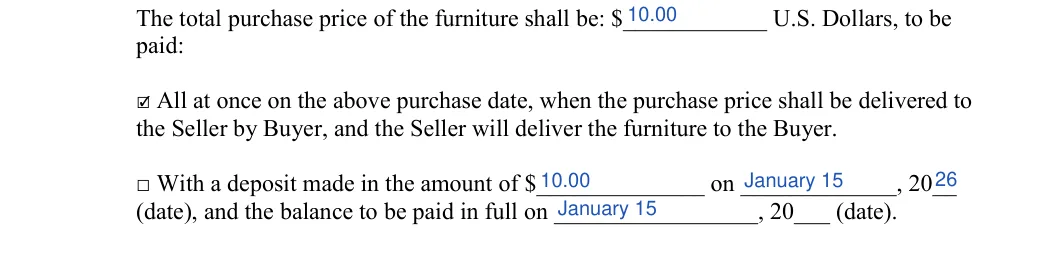
Payment method. Mark one box: Cash, Check, Cashier’s check or Money Order. If you choose Check, enter the check number.


The last part of the furniture bill of sale holds the miscellaneous provisions and the signatures, followed by optional witness lines and an acknowledgment.
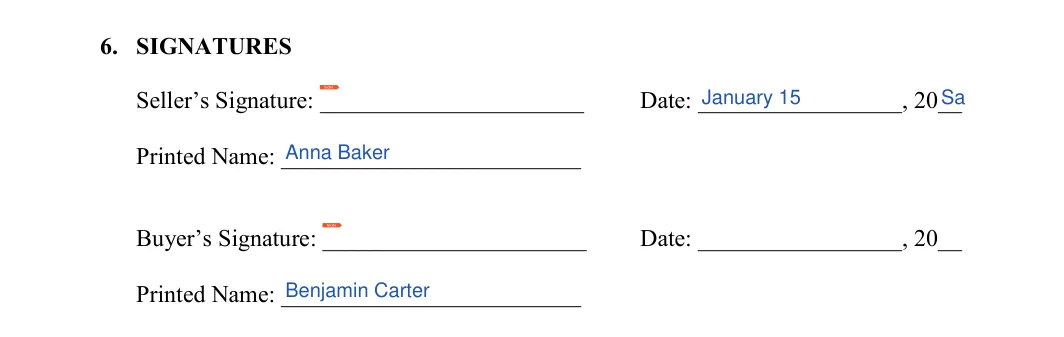
Miscellaneous provisions and signatures. Read section 5, the miscellaneous provisions, before you sign. It holds the seller's statement of ownership and the as-is clause. In the Signatures section on page 2, the seller and the buyer each sign, date and print their name.

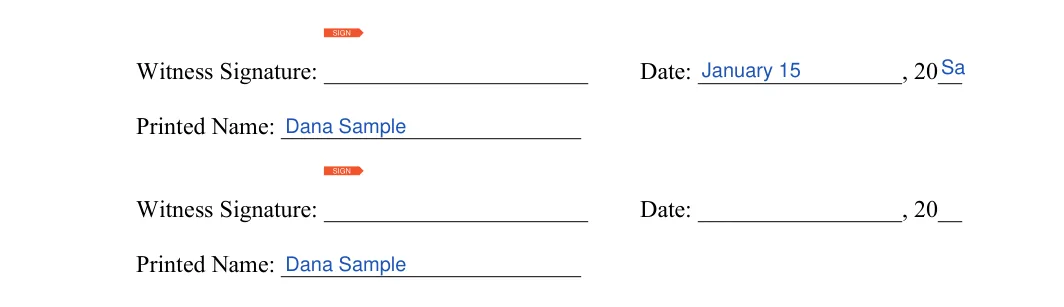
Witness lines. On page 3, each witness signs, dates and prints a name on one of the two lines.
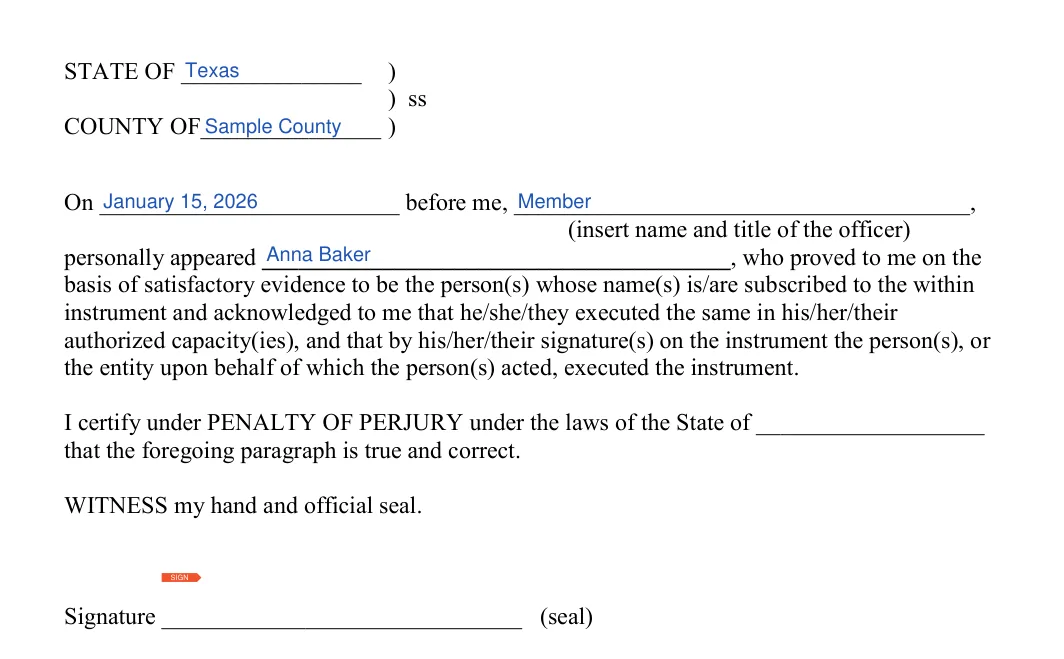
Acknowledgment. If you add the acknowledgment on page 4, sign it in front of the notary or other officer. They fill in the state, county, date and their own details, then add the seal.
A signed furniture bill of sale shows the sale and the terms the parties agreed, and the seller and the buyer each keep a signed copy. The three steps below finish the form.
On a deposit sale, a form signed when the deposit is paid comes before the balance arrives. The form can say in plain words when ownership passes to the buyer, for example on the date the balance is paid in full, and who bears the loss if the furniture is damaged before pickup.
Sign the form. Check every line, then have the seller and the buyer each sign, date and print their name on page 2.

Decide on witnesses or an acknowledgment. Use the witness lines on page 3 or the acknowledgment on page 4 if the parties want an independent signer or an officer's seal on the form.

Share copies. Give the buyer a copy of the signed form and keep one for yourself. A scan of the signed form also works as a backup if the paper copy gets lost.
A written furniture bill of sale looks like a short two-page form with filled-in lines for the parties, the furniture, the price and the signatures. The sample below shows the main entries of one sale.
Sample entries (made-up names and amounts):
A bill of sale for used furniture gives both sides written proof of the deal: who sold it, who bought it, the price and the date. It helps most with costly pieces, deposits and sales where the buyer collects the furniture later.
The furniture bill of sale form treats notarization as an option: page 4 holds an acknowledgment block that the parties may add or leave blank. The form is complete with the seller's and the buyer's signatures on page 2.
A furniture bill of sale lists minor damage on the Other Information line, such as a scratch, a stain or a repaired leg. Naming each flaw next to the as-is clause shows that the buyer saw it before signing.
A receipt confirms a payment, while a furniture bill of sale also names both parties, describes the furniture and carries the seller's ownership statement and the as-is clause. The bill of sale covers both the payment and the transfer of ownership.
One furniture bill of sale can cover a whole set or several pieces sold together. Describe each piece by type, brand, color and serial number, and give one total price for the sale.
Make a copy for each party and keep the signed form with your sales records. A scan of the signed form also works as a backup if the paper copy gets lost.
General information, not legal or tax advice.
