
A business bill of sale is a written record between a buyer and a seller that shows the sale of a business took place. It is a binding document that reveals the intricate details of the contract. It lists the business name, the dates of the agreement and the sale, the names of the seller and the buyer, the payment terms, and the transfer of the business.
It serves both the interests of the buyer and seller since it prevents any breach of contract. It also gives each side a clear record to point to later.
If you are purchasing a business, ensure that you understand the contents of the business sale agreement. You can seek professional advice from experts like accountants or lawyers to help you know what the transaction entails to prevent you from getting a raw deal or in case of any malpractice. Read on to gain more information on why you need a bill of sale before buying any business.
Before you start: have the business name, its Tax ID number, the sale date and the price on hand. The form asks for all of them, and it takes about 10 minutes to complete.
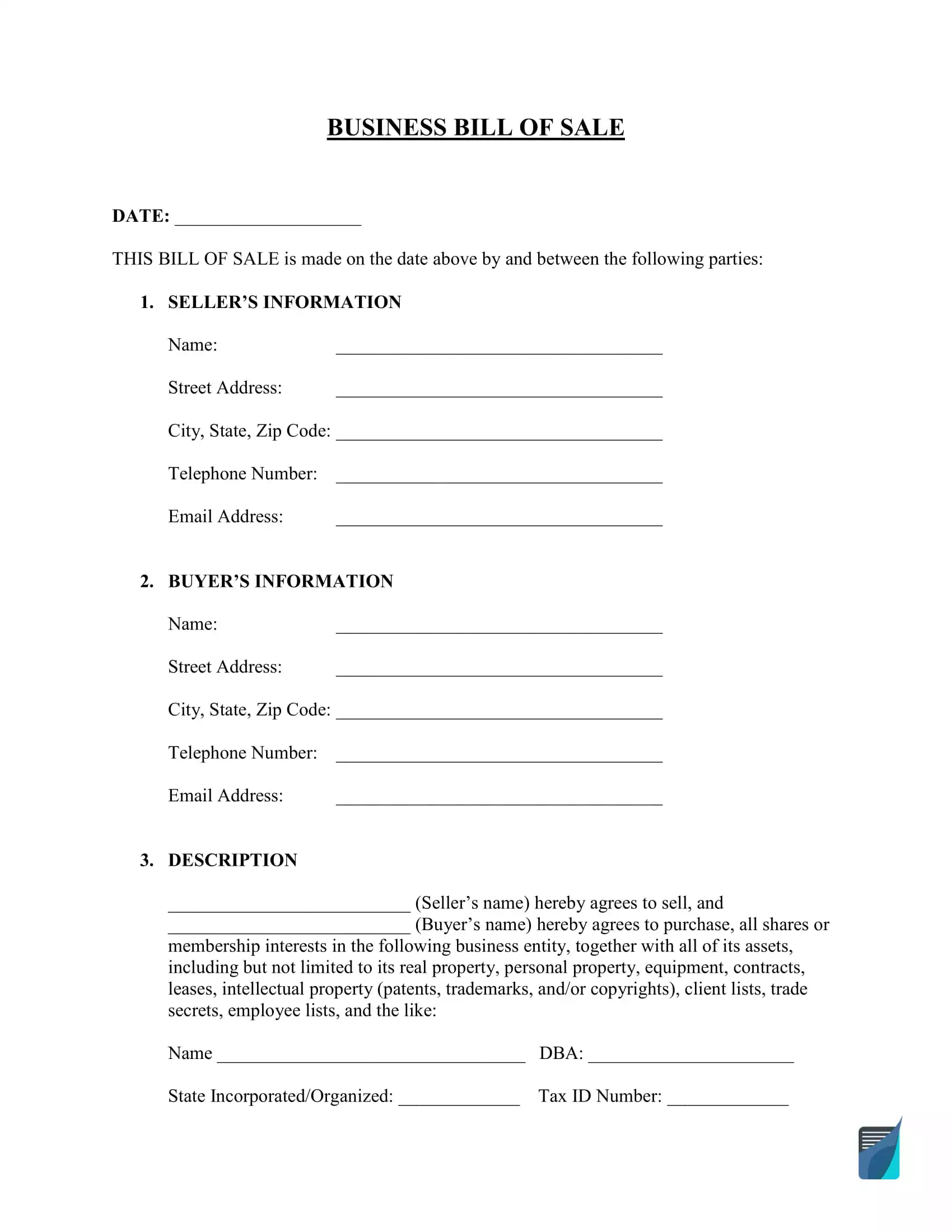
This document is a written record of the sale of a business between a buyer and a seller. It names both parties, describes the business and its assets, and states the price and how it is paid.
It is used when a whole business changes hands, not just one item. A plain bill of sale covers a single item such as a car or a bike. The business version also covers the shares or membership interests and the business details, such as its name, DBA and Tax ID number.
A business bill of sale is a critical document in the purchase or sale of a business. It is mandatory to establish the transfer of ownership from one party to the next. The state requires this essential document for legal reasons, tax purposes, and revenue collection.
If a seller does not incorporate a business bill of sale, the transaction may be questionable, and both parties may suffer legal consequences. It cushions the seller from scammers who may be transacting illegally and intending to defraud unsuspecting individuals.
If a buyer purchases with cash, it may be challenging to track the money trail without a proper agreement. Thus, the bill of sale is crucial in providing proof of the purchase, the details of the payment, and any pending amount.
The bill of sale form certifies the ownership and property transfer of the business plus all the assets associated with the company.
| Document Name | Business Bill of Sale Form |
| Other Names | Bill of Sale for Business Assets, Corporation Bill of Sale |
| Avg. Time to Fill Out | 10 minutes |
| # of Fillable Fields | 53 |
| Available Formats | Adobe PDF, Microsoft Word |
A business sale usually moves several kinds of property from the seller to the buyer in a single transaction, as set out in the sales agreement. The bill of sale is the place to list each item of property and its value, so both sides share the same view of the sale and can avoid disputes later. Common examples include:
Naming each item of property in the bill of sale protects the buyer and the seller, because the record shows what was agreed. Where an item has a known value, such as a vehicle or a machine, write that value next to it. Keep the sales agreements and other agreements with the bill of sale, so the whole transaction is easy to follow.
Selling a business is hard to do alone. Ask a lawyer or a sales broker who knows the process to handle the sale with you. The steps below take you from the first documents to the finished sale.

Gather every document about your business before you tell the public it is for sale. Having each detail in place avoids doubt on the buyer’s side. Documents to collect include:
Keep all company records ready so interested buyers can check how the business operates before they commit.

You can approach professionals to assist you in drafting the bill of sale and the business purchase agreement. Understanding the difference between the bill of sale and the purchase agreement is crucial.
While a bill of sale executes the final transfer of ownership, a purchase agreement is a document that secures the sale and is used during the negotiation stages.
Other agreements often go with a business sale, such as an asset purchase agreement, a non-compete agreement or an LLC operating agreement.

Whether you are the buyer or the seller, read the form so you know what it contains. The form includes these parts:

After filling out the bill of sale, the buyer takes possession after the completion of payment at an agreed time and location.
Both parties will sign the bill of sale, and the certificate title will now belong to the buyer. The seller then issues a receipt to confirm a successful sale. If you are the buyer, ensure that you mutually agree on the sales tax settlement to avoid penalties.
There may be other inclusions in a business bill of sale depending on the intricate details of your business, the terms of purchase, and state laws. Our site offers other bill of sale templates in editable formats that you can adapt to your sale.
The instructions below follow the FormsPal template, one step for each part of the form. Yet, if there is a document provided by your local officials, it is always recommended to choose it in the deal.
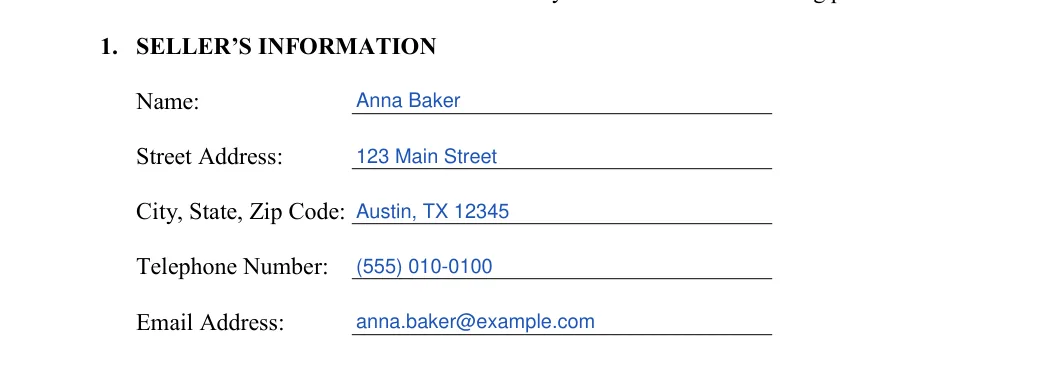
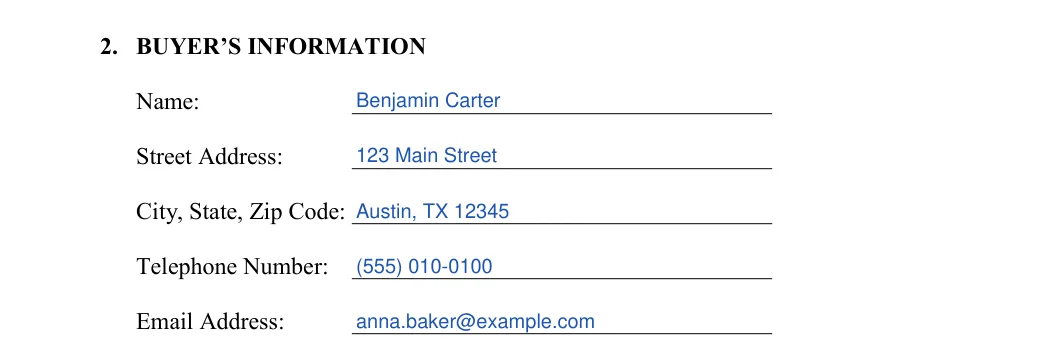
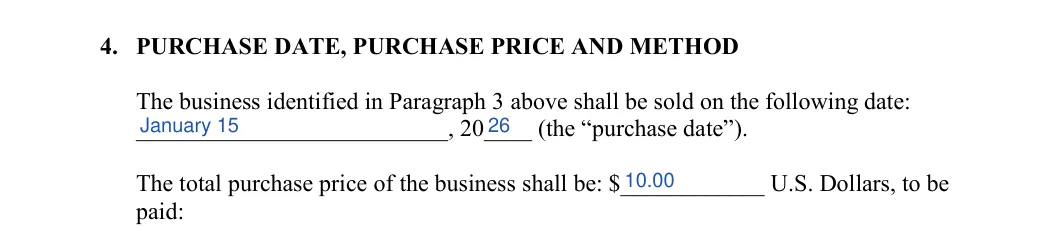
The screenshots under each step show the FormsPal Business Bill of Sale template filled with sample entries in blue, so you can see where each answer goes. The names, addresses, dates and amounts are examples only.
Write the date the bill of sale is made on the DATE line at the top of the form.


Enter the seller’s full name, street address, city, state, zip code, phone number and email address.

Enter the same details for the buyer.
This part says the seller agrees to sell, and the buyer agrees to purchase, all shares or membership interests in the business and its assets. Write the seller’s name and the buyer’s name in the blanks.


Under the list of assets, enter the business name, its DBA (the name it does business under), the state where it was incorporated or organized, and the Tax ID number.

Finish the description with the Secretary of State ID number, the principal office, and any other information about the business being sold.

Enter the purchase date, which is the day the business is sold, and the total purchase price in U.S. dollars.
Check the box that matches how the buyer pays. The form text says the price is paid by wire transfer.
If the buyer pays in parts, a promissory note can set out the payment plan.

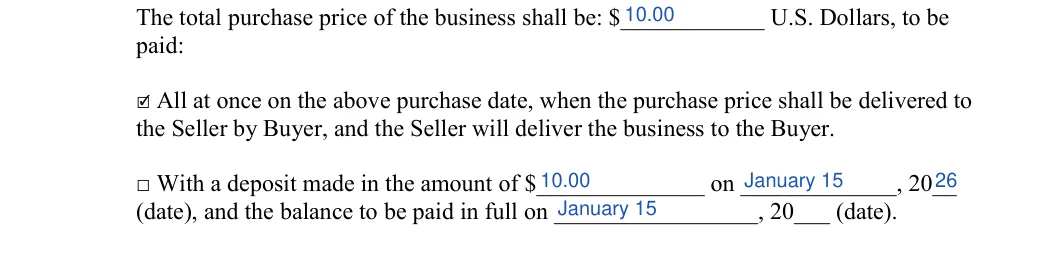
Go over the standard terms in the Miscellaneous Provisions and make sure that both sides are familiar with them. The seller then signs and dates the form.
The “as-is” provision points out that the business owner provides no warranties and does not have any liabilities regarding the business after the transaction.


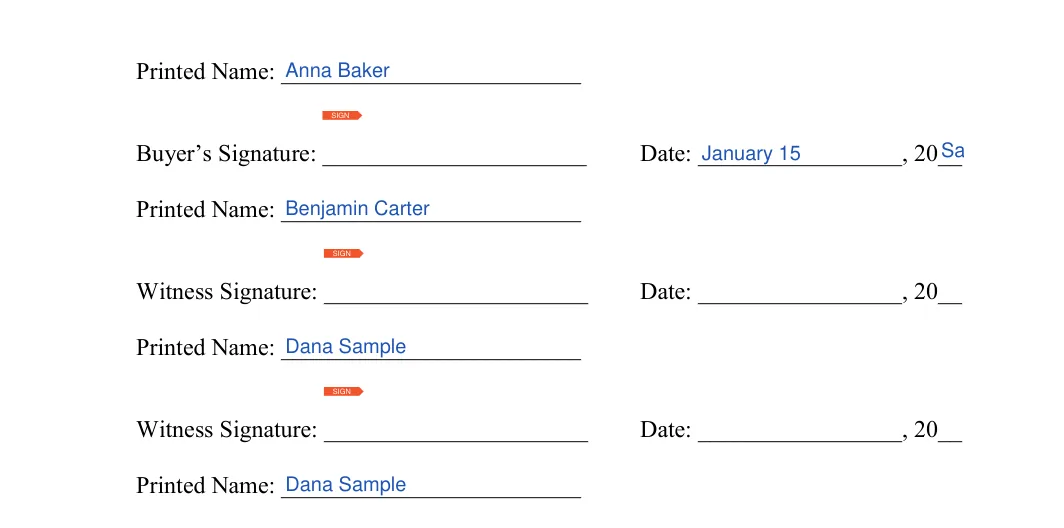
On the next page, print the seller’s and buyer’s names, then add the buyer’s signature and date. The witnesses sign, print their names and add the date.
It is prudent to make both parties sign the document. As a result, you are more protected from legal troubles that might arise after the deal. Just to be on the safe side, the buyer and seller could choose someone who can attest to the deal and sign the business bill of sale too.

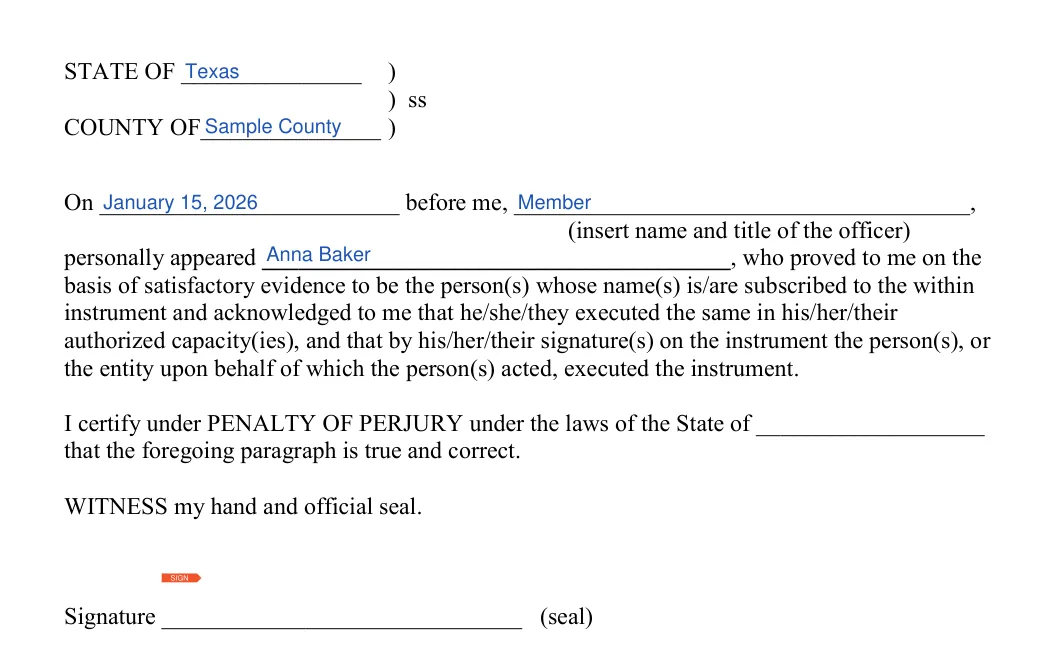
The last page holds the notary acknowledgment. The state, county, date, signer’s name, and the officer’s name and title go there, and the notary signs and seals at the bottom.
Notarization is an excellent way to add one more layer of legal protection to the deal.

Filling in the form is only part of the job. These last steps help both sides finish the sale with a clear paper trail. Work through them after the form is complete and before the business changes hands.
These answers cover the questions people ask most about this form and how to fill it out. For questions about the sale itself, check with a lawyer or an accountant who knows the deal.
The form has a place for each of these items:
Yes. Use the Create My Document button at the top of this page, answer a few simple questions, and save or print the finished document on any device. You can also download the form as a PDF or a Word file.
The form has 53 fillable fields and takes about 10 minutes on average. Having the business details, the Tax ID number and the payment terms ready makes it faster.
General information, not legal or tax advice.
