
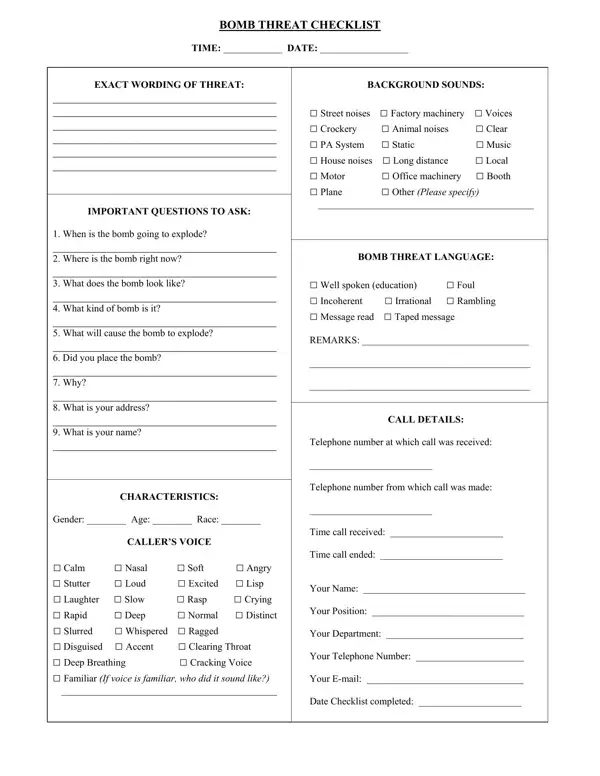
Bomb Threat Checklist Form PDF Details

A Bomb Threat Checklist Form is used to record all key details during an emergency call. Having a completed checklist gives law enforcement the information they need to investigate quickly and protect everyone on site.

What the Form Captures

The checklist covers four core areas every response team must document:

Why a Standardized Checklist Reduces Risk

Under stress, people skip critical details. A standardized form removes guesswork. Every field on the checklist corresponds to a question investigators ask after an incident, so completing it accurately speeds up the response and reduces risk to people on site.

Pairing This Form with a Broader Safety Plan

Most security officers file completed checklists alongside a building security plan so all threat records are stored in one place. Organizations running drills also use an adult emergency form to register who was present and how personnel responded during the incident.

QuestionAnswer
Form NameBomb Threat Checklist Form
Form Length1 pages
Fillable?Yes
Fillable fields83
Avg. time to fill out16 min 55 sec
Other namesHomeland Security Bomb Threat Checklist Form, Telephone Bomb Threat Checklist Form

How to Edit Bomb Threat Checklist Form Online for Free

Step 1: Keep the Caller on the Line

Stay calm and keep the caller talking. While you listen, signal a colleague to call 911 from another phone. The longer the call lasts, the more details you can capture.

Step 2: Open the Bomb Threat Checklist Form

Open this PDF on your device or use a printed copy kept at your reception desk. Begin filling out every field in real time. Do not wait until after the call ends, because key details fade fast under stress.

Step 3: Document Caller Characteristics

Note the caller's gender, approximate age, and accent. Record their emotional state as calm, excited, angry, or crying. Listen for background noises such as traffic, crowd sounds, or equipment that could indicate where the call is coming from.

Step 4: Write Threat Language Word for Word

Record the caller's exact words about the device, its location, and any stated detonation time. Use quotation marks. Do not paraphrase, because the specific wording may be important evidence.

Step 5: Deliver the Form to Security or Law Enforcement

Hand the completed checklist directly to your security officer or the responding officer immediately after the call. Keep a copy in your safety plan template file so incident records stay organized.

Step 6: Download and Store a Printed Backup

Print several copies and place them at every staffed reception point in your building. Pair this form with a fire safety plan so your team has a complete emergency documentation kit ready before any incident occurs.