
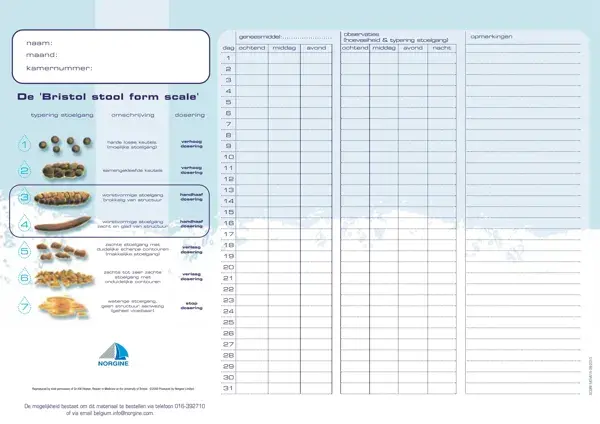
Monitoring and managing digestive health is an essential aspect of overall well-being. The Bowel Diary Chart provides a structured way to track bowel movements over time, helping patients and healthcare professionals identify patterns and make informed decisions about treatment.
The chart uses the Bristol stool scale, a clinically validated method for categorizing the type and consistency of stool. This understanding helps doctors assess gastrointestinal conditions and evaluate whether medications or dietary changes are producing the results needed. Each record includes sections for personal details such as name, month, and room number, with space to note the time, stool type, and daily remarks about changes observed.
Consistent daily tracking gives your doctor the data needed to spot trends, adjust care plans, and evaluate the effectiveness of any interventions. You may also want to track related health data using the Blood Record Chart or the Caregiver Daily Log.
Reproduced with permission from Dr. KW Heaton, University of Bristol. The form is recognized for its clinical relevance and ease of use by patients and healthcare providers.
| Question | Answer |
|---|---|
| Form Name | Bowel Diary Chart Form |
| Form Length | 2 pages |
| Fillable? | No |
| Fillable fields | 0 |
| Avg. time to fill out | 30 sec |
| Other names | bowel movement chart template, bristol stool chart diary, bowel movement diary template, bowel movement diary |
Bowel Diary Chart Form isn’t the one you’re looking for?