
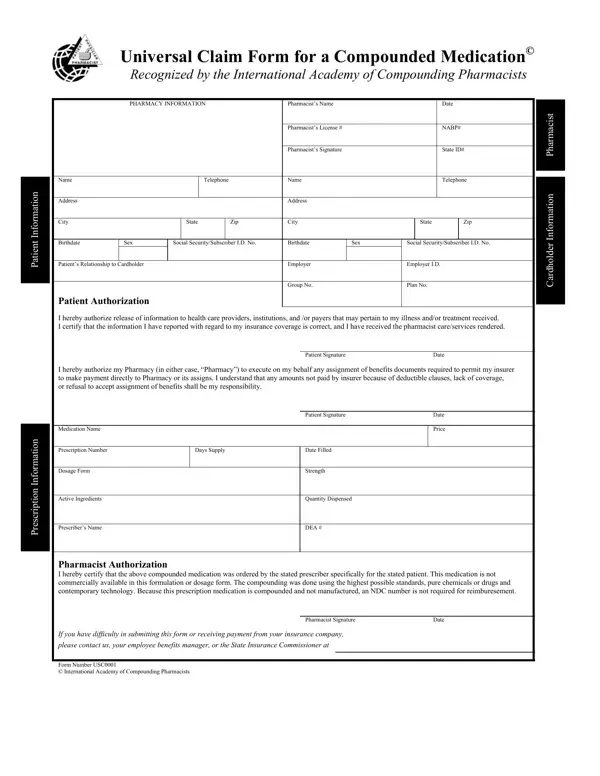
The Compounding Universal Claim Form is the standard insurance claim document used by patients who need reimbursement for compounded prescription medications. Created with input from the International Academy of Compounding Pharmacists, this universal form gives insurers and pharmacies a consistent structure for reviewing and processing claims. Patients fill out and submit this form when their health plan does not cover a compounded drug at the pharmacy counter.
Compounded medications are custom drugs that a licensed pharmacist prepares to match a patient's exact medical requirements. A compounding pharmacy creates these medications when a patient needs a specific dosage, strength, or formulation that commercial products do not offer. Because compounded drugs fall outside standard pharmacy benefit formularies, most health plans require a formal claim form before they issue reimbursement. The universal claim form meets this requirement by collecting all necessary information in a single standardized document.
Complete and accurate information in every section of the form helps prevent delays and reduces the risk of denial. The claim form is divided into four parts. Each part captures details that the insurer needs to verify and approve the claim.
Most commercial health plans complete their review of a properly submitted claim form within 10 to 30 business days of receipt. Plans that allow assignment of benefits send payment directly to the compounding pharmacy. Plans that do not allow direct payment mail a reimbursement check to the patient at the address shown on the form.
Prior authorization is a separate step that some health plans require before approving coverage for a compounded prescription. When prior authorization is required, you or your physician must submit a written request to the insurer before filling the prescription. Submitting a universal claim form without prior approval on a plan that requires it usually results in a coverage denial. Contact your insurer's member services line to confirm whether prior authorization applies to your specific plan.
Common reasons a claim is denied include incomplete fields on the form, a pharmacist signature that is missing, or a prescribed drug that falls outside the plan's approved formulary. Keeping copies of all forms and supporting documents allows you to appeal a denial or resubmit a corrected claim quickly.
Depending on your health situation, you may also need other forms during the prescription and reimbursement process. A pharmacy prescription form is the written order your prescribing physician provides to the compounding pharmacy. If your insurer requires prior authorization before covering the compounded drug, submit a medication prior authorization form before picking up the prescription. For healthcare billing that covers multiple services in one submission, a combined insurance claim form may be the right option. The CMS-1450 claim form is another widely used billing document accepted by many health plans and government programs. All of these forms are available on FormsPal and can be filled out online at no cost.
| Question | Answer |
|---|---|
| Form Name | Compounding Universal Claim Form |
| Form Length | 1 pages |
| Fillable? | No |
| Fillable fields | 0 |
| Avg. time to fill out | 15 sec |
| Other names | universal claim forms for compounded prescriptions, blank universal claim form for a compounded medication, universal claim form compounding, caremark compound prescription claim form |
Compounding Universal Claim Form isn’t the one you’re looking for?