
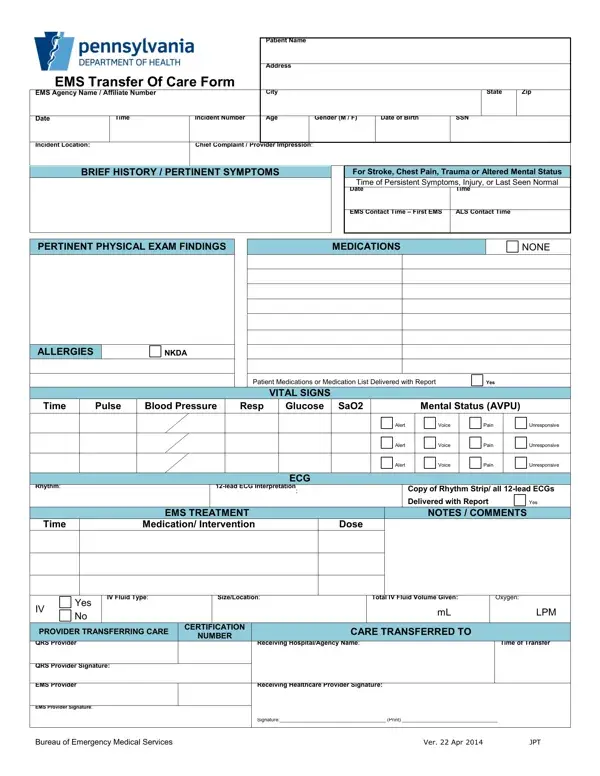
Ensuring a seamless transition in emergency medical situations is vital for patient outcomes, and the EMS Transfer of Care form plays a crucial role in this process. This comprehensive document serves as a bridge between emergency medical services (EMS) providers and hospital or healthcare facility staff, containing essential information that supports continuity of care. Key elements of the form include patient demographics, such as name, address, and date of birth, alongside the EMS agency's details and incident specifics. The form goes further to detail the patient's chief complaint or provider's impression, a brief history or pertinent symptoms related to conditions like stroke, chest pain, trauma, or altered mental states. Time-sensitive information, such as the onset of symptoms and EMS contact times, are meticulously recorded. Moreover, the form includes an outline of the patient's physical exam findings, medications, known allergies, and vital signs at various times. It also captures EMS treatments and interventions, ensuring that receiving healthcare providers have a clear picture of the care already provided. Medication lists and copies of ECGs, when available, are attached to provide a comprehensive view of the patient's condition upon transfer. The form culminates in a certification section where EMS providers and receiving hospital or agency staff officially document the care transition. This formalizes the handoff and underscores the collaborative effort between pre-hospital and hospital-based teams. Overall, the EMS Transfer of Care form is an indispensable tool in emergency medical services, designed to enhance patient safety and improve outcomes by ensuring a smooth and informed transfer of care.
| Question | Answer |
|---|---|
| Form Name | EMS Transfer Of Care Form |
| Form Length | 1 pages |
| Fillable? | Yes |
| Fillable fields | 103 |
| Avg. time to fill out | 20 min 55 sec |
| Other names | ems transfer of care form, pa ems transfer of care form, pa transfer of care form fillable, 12-lead |
EMS Transfer Of Care Form isn’t the one you’re looking for?