

Broker's Market Analysis and Strategy Report at a glance
What it is: The Worldwide ERC Broker's Market Analysis and Strategy Report is designed to enable the real estate broker to conduct a diligent analysis of the subject property's condition, competition, and future marketability.
Who signs: Under SIGNATURES, the form has a Contact Signature and an Agent Preparer Signature.
A filled-in Broker's Market Analysis and Strategy Report example: an agent completes page 6
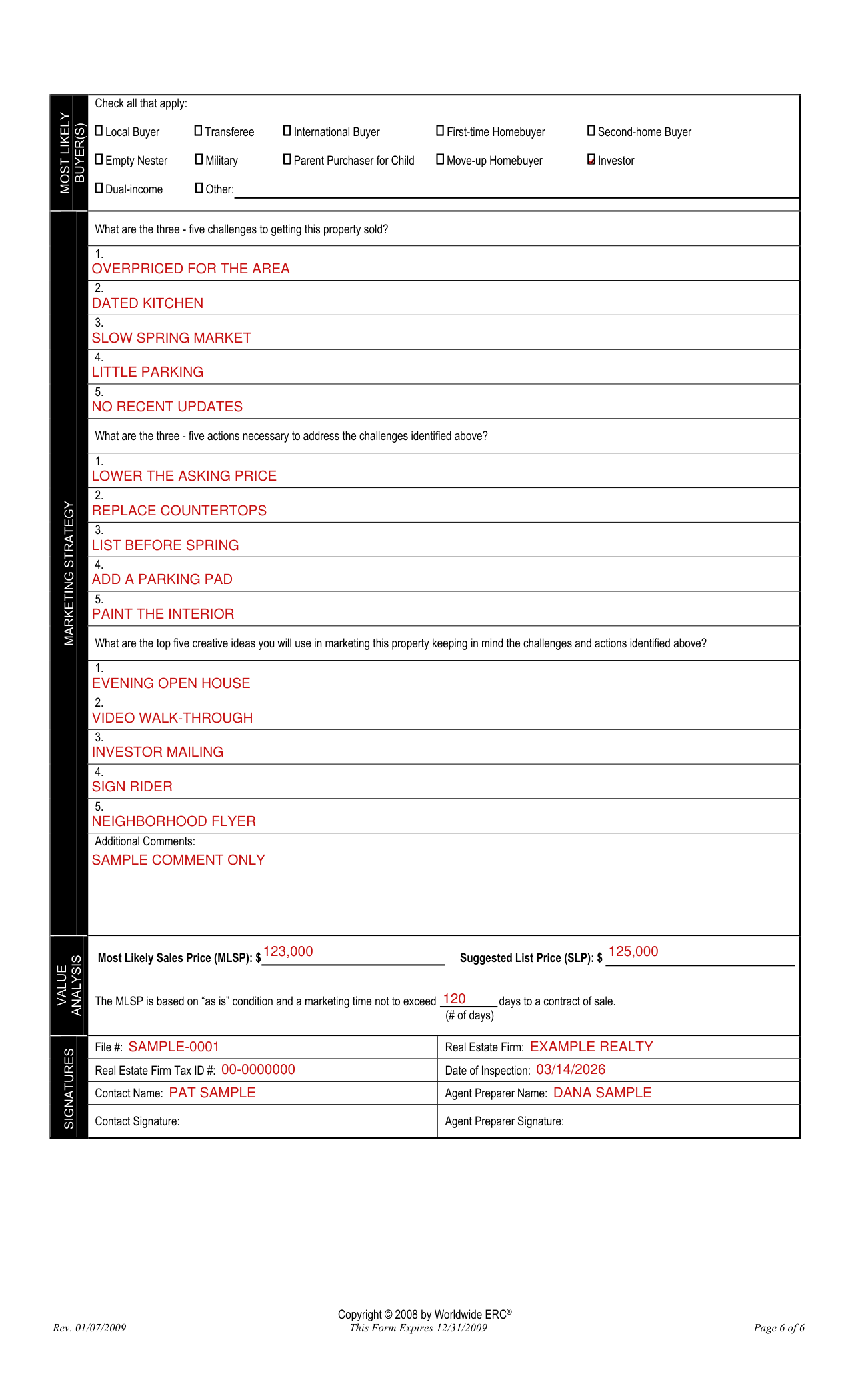
How to fill out Broker's Market Analysis and Strategy Report, box by box
Most likely buyer(s)

Under MOST LIKELY BUYER(S), check all that apply: Local Buyer, Transferee, International Buyer, First-time Homebuyer, Second-home Buyer, Empty Nester, Military, Parent Purchaser for Child, Move-up Homebuyer, Investor, Dual-income or Other.
Challenges to getting this property sold
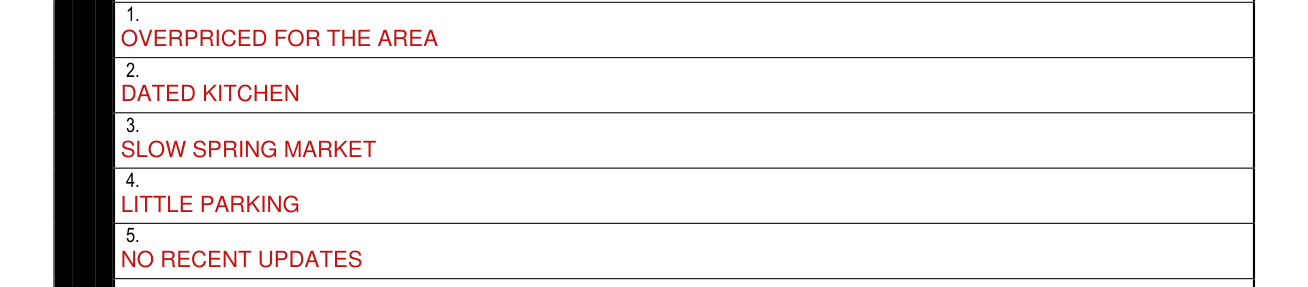
Write the three - five challenges to getting this property sold.
Actions necessary to address the challenges
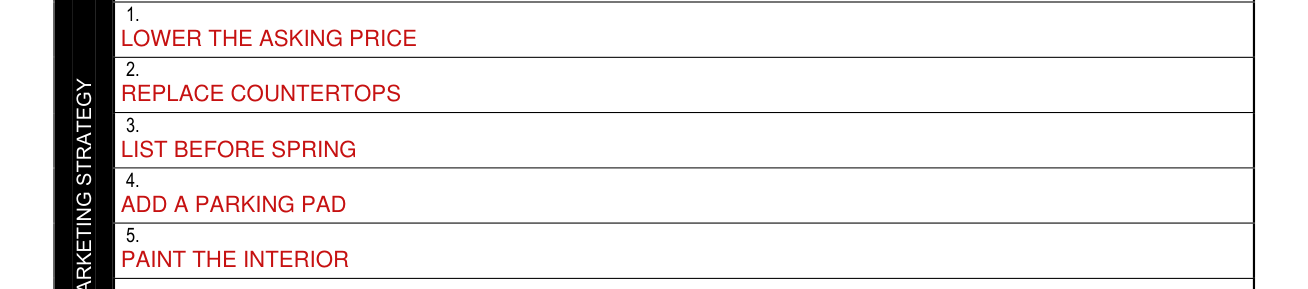
Write the three - five actions necessary to address the challenges identified.
Creative ideas for marketing this property
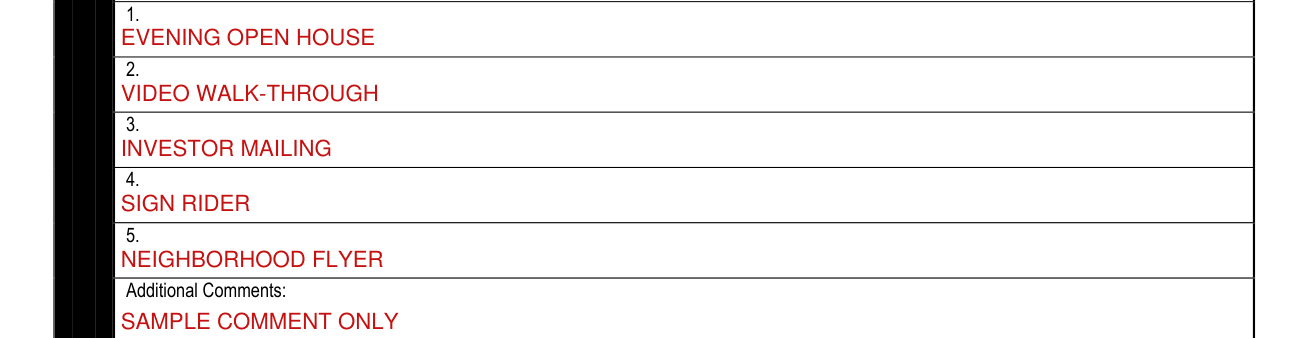
Write the top five creative ideas you will use in marketing this property, keeping in mind the challenges and actions identified.
Additional comments

Add Additional Comments.
Most Likely Sales Price and Suggested List Price

Under ANALYSIS and VALUE, enter the Most Likely Sales Price (MLSP) and the Suggested List Price (SLP). The MLSP is based on "as is" condition and a marketing time not to exceed the number of days you enter to a contract of sale.
Signatures

Under SIGNATURES, enter the File #, Real Estate Firm, Real Estate Firm Tax ID #, Date of Inspection, Contact Name and Agent Preparer Name.
Under SIGNATURES, the form has a Contact Signature and an Agent Preparer Signature.
More rules for Broker's Market Analysis and Strategy Report
Under ASSIGNMENT INFORMATION, enter the File #, Homeowner(s), Property Address, City, State, Zip, Home Phone #, Work Phone #, who requested the BMA (Co. & Contact), the Requesting Co. Address, the Real Estate Firm with its Contact Name and address, the Agent Preparer, the Homeowner's purchase price, the Date purchased and any improvements made by homeowner.
Based on this analysis, the broker is to estimate the subject property's Most Likely Sales Price. The Most Likely Sales Price (MLSP) is based on "as is" condition and a marketing time not to exceed 120 days to a contract of sale or as directed by the client.
Preparers of this form need to be aware of any state-specific disclosure requirements and include them in this form as appropriate.
For procedures on contacting homeowner, inspecting property, submitting report, and providing photos, follow the requesting company's guidelines.
This is not a home inspection. Nor is this an appraisal; it is not to be construed as an appraisal and may not be used as such for any purpose.
Under SUBJECT INFORMATION, mark Is the subject currently listed? Yes or No, then enter the Listing Company/Agent, and mark the Form of Ownership (Fee Simple or Leasehold), the Occupant (Homeowner, Tenant or Vacant) and the Type. Indicate any personal property that remains.
Mark the subject's location type: Urban, Suburban, Distant suburban, Rural, Farm or Resort. Explain the Lot Characteristics and the subject's view, positive/negative, and list locational issues of which you are aware that may affect the insurability of the property.
Under SUBJECT LOCATION, check all Site Characteristics of which you are aware that apply, check all Miscellaneous items of which you are aware that apply, and check all other items of which you are aware that may affect the marketability or value of the subject property and comment. One such item is Estimated time to sell is more than 120 days.
Under Property Condition, for all the following of which you are aware or observe in viewing the property, check the appropriate box(es) and describe.
Under Recommended Repairs and Improvements, check each Interior Items and Exterior Items box and enter the Estimated cost per item and a Comment. Then enter the Total Estimated Cost for Interior Repairs and the Total Estimated Cost for Exterior Repairs.
Under INSPECTIONS/DISCLOSURES, list all required, customary and additionally recommended inspections (e.g., municipal, certificate of occupancy, environmental, etc.), the subject property issues of which you are aware that may affect insurability, and all required disclosures.
Under FINANCING, identify the most probable means of financing for the subject (FHA, VA, Cash, Conventional mortgage-conforming or jumbo or Other) and describe the terms. Identify and describe any financing concessions that may be necessary to secure the sale of the subject property: Points, Closing Costs or Other.
Mark Yes or No: do you anticipate any issues that may affect the ability to secure financing for the subject property (e.g., condition, zoning, environmental, HOA, etc.). If yes, comment.
Enter the HOA Fees and how often they are paid: Monthly, Quarterly, Semi-annually or Annually. Check the items included in HOA Fees. If you are aware of special assessments covered by the HOA, indicate the amount of assessment and describe what the special assessment covers.
The subject neighborhood is defined by the preparer of this form. Identify what you regard as the subject neighborhood and then use statistics that you have gathered which reflect that market area. The neighborhood might be a MLS area, a particular section of a town, a specific subdivision, or an entire community.
Under MARKET CONDITIONS, mark Property Values are Increasing, Stable or Decreasing, enter the Price Range and the Average Days-on-Market (list to contract), and calculate the months supply of inventory (Absorption Rate): Number of active listings ÷ Avg. number of sales per month = Number of months needed for the last 6 months to sell existing inventory.
For Type of competing listings, enter New Homes %, Resale %, REO/Foreclosure % and Corporate %; the total must equal 100%. Describe all marketing concessions/incentives being offered to buyers and/or brokers on competing properties.
Recommend any marketing concessions/incentives that should be offered for the subject. Describe major corporation(s) in this neighborhood that are moving into, out of, or planning layoffs, and current economic conditions (positive or negative) that may have an effect on the marketability of the property.
The broader market area is the area beyond the subject neighborhood in which buyers will look for comparable properties. In some instances, the broader market area will be the same as the subject's neighborhood. If this is the case, indicate it.
Consider any specific issues in the broader market area which are not reflected in the specific neighborhood that might affect the sale of the subject property.
Under COMPETING LISTINGS, mark the Overall Rating of Listings as Compared to Subject: Superior, Similar or Inferior. For Listing #1, #2 and #3, enter the Date inspected and Comments.
For the Comparable Sales, select sales within the last six months which are suitable and similar to the subject property and within the same/similar market area.
Under COMPARABLE SALES, mark Inspected? Yes or No for Sales #1, #2 and #3 and add Comments.
If your situation is different
Common interest development
If the subject property is a common interest development (e.g., condo, townhouse, PUD), enter the ratio of owners to investors as Owners % and Investors %; the total must equal 100%. Check N/A if it is not.
Sources
[1] Worldwide ERC Broker's Market Analysis and Strategy Report (Rev. 01/07), the served form (the Official source link on this page).
