
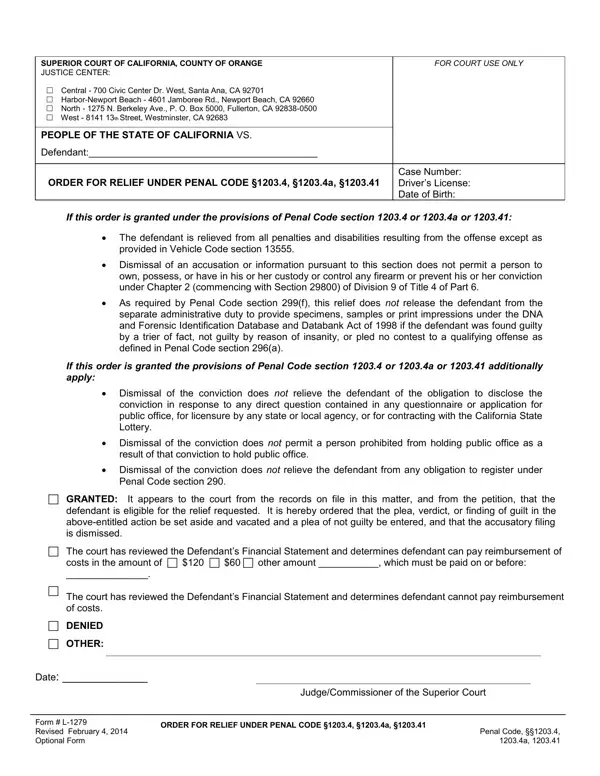
The quest for post-conviction relief is a path filled with various legal avenues, one of which is encapsulated in the L 1279 form, as recognized by the Superior Court of California, County of Orange. This essential document plays a crucial role for individuals seeking to alleviate the burdens of past criminal convictions under specific sections of the California Penal Code - namely, §1203.4, §1203.4a, and §1203.41. The form outlines a legal framework that, if eligibility criteria are met, enables defendants to be relieved from all penalties and disabilities resulting from the offense, with notable exceptions tied to firearm possession and obligations under the DNA and Forensic Identification Database and Databank Act of 1998. Furthermore, the document clarifies that being granted this relief does not exempt individuals from disclosing the conviction in certain scenarios, such as applying for public office or state licensure, nor does it allow one to hold public office if prohibited. Completing and submitting this form triggers a judicial review process, which can culminate in the vacating of a guilty plea or verdict, reinstating a plea of not guilty, and ultimately, the dismissal of the accusatory filing against the defendant. However, the court may also review the defendant's financial status to determine if cost reimbursement is warranted. Through delineating the conditions under which relief can be granted or denied, the L 1279 form represents a beacon of hope for many looking to rebuild their lives post-conviction.
| Question | Answer |
|---|---|
| Form Name | Form L 1279 |
| Form Length | 1 pages |
| Fillable? | No |
| Fillable fields | 0 |
| Avg. time to fill out | 15 sec |
| Other names | licensure, DNA, Fullerton, 13th |