
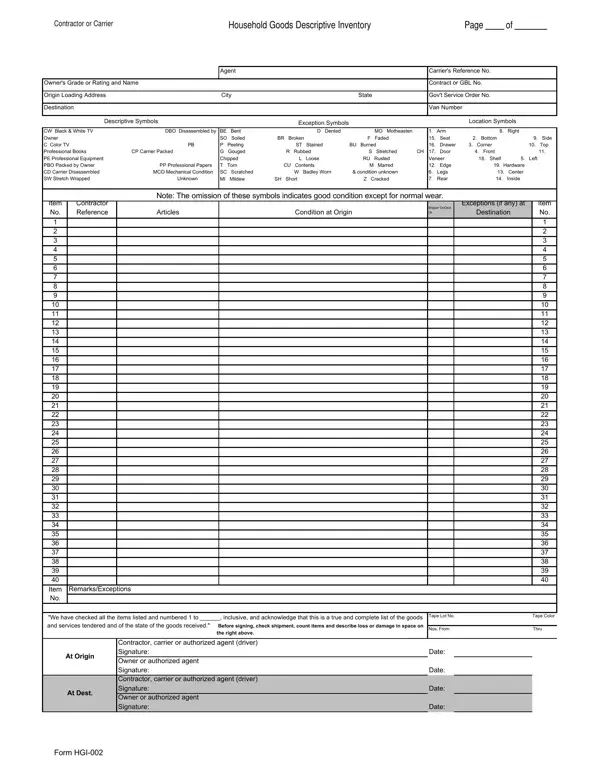
Moving homes is a life event filled with excitement and, let's face it, quite a bit of stress. Part of that stress comes from ensuring that all your belongings make it from point A to point B safely and without damage. That's where the Household Goods Descriptive Inventory Form, a critical document in the moving process, comes into play. It meticulously records each item being moved, along with its condition before and after the move. This form serves multiple purposes: it provides a detailed account for the moving company (referred to as the contractor or carrier) and the homeowner, it aids in the organization of items, and it is a key piece in accountability should any items be damaged or go missing. The form includes spaces to note the carrier’s details, the owner's information, the contract number, and specifics about the origin and destination. Items are listed with a unique system of descriptive symbols to denote the condition of goods, ranging from whether an item is soiled, stretched, dented, or if it has sustained more severe damage. Furthermore, it allows both the carrier and the owner to acknowledge receipt and condition of the goods at both ends of the move, making it an indispensable tool for ensuring transparency and understanding between all parties involved. This form not only provides peace of mind but also serves as a legal document should disputes arise about the condition of the transported goods.
| Question | Answer |
|---|---|
| Form Name | Household Goods Descriptive Form |
| Form Length | 1 pages |
| Fillable? | No |
| Fillable fields | 0 |
| Avg. time to fill out | 15 sec |
| Other names | inventory household goods form, form household goods inventory, household goods descriptive inventory pdf, household goods inventory list |
Household Goods Descriptive Form isn’t the one you’re looking for?