
Updated:
A Virginia limited power of attorney is a written document that lets you, the principal, appoint an agent (also called an attorney-in-fact) to act for you on specific matters only. It is also known as a special power of attorney. Fill out a free Virginia limited power of attorney form online or download the PDF. Under Virginia law, the principal signs it, or another person signs the principal's name at the principal's direction, and a signature acknowledged before a notary public is presumed genuine.[1]

Build Your Document
Answer a few simple questions to make your document in minutes
Save and Print
Save progress and finish on any device, download and print anytime
Sign and Use
Your valid, lawyer-approved document is ready
Virginia's Uniform Power of Attorney Act, in Title 64.2, Chapter 16 of the Code of Virginia, sets the signing rules for a limited power of attorney in Section 64.2-1603.[1] In short, the principal signs it, or directs another individual to sign the principal's name, and acknowledging the signature before a notary public makes it presumed genuine. The rules below are in plain words.
Section 64.2-1603 of the Va. Code Ann. states the effect of that acknowledgment in its own words:
A signature on a power of attorney is presumed to be genuine if the principal acknowledges the signature before a notary public or other individual authorized by law to take acknowledgments.
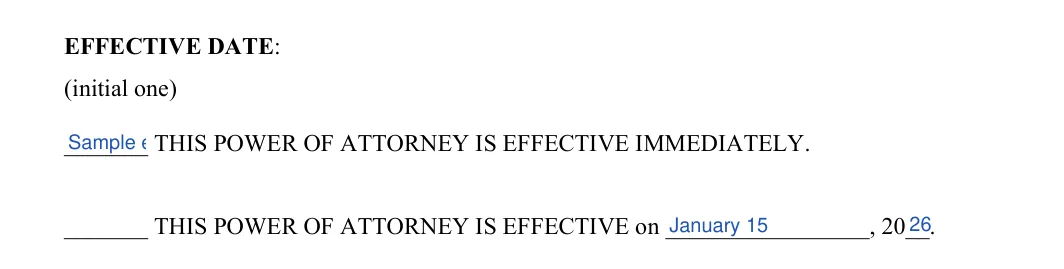
A power of attorney is effective when it is signed. The exception is when the principal provides in the power of attorney that it becomes effective at a future date or upon the occurrence of a future event or contingency.[2] The form has an Effective Date part for this choice, covered in step 3 below.
Under Section 64.2-1603 of the Va. Code Ann., a power of attorney in order to be recordable must satisfy the requirements of § 55.1-600, the statute that applies to instruments admitted to record.[1]
| Document Name | Virginia Limited Power of Attorney Form |
| Other Name | Virginia Special Power of Attorney |
| Relevant Laws | Va. Code Ann. § 64.2-1603, § 64.2-1607 and § 64.2-1608 |
| Avg. Time to Fill Out | 8 minutes |
| # of Fillable Fields | 32 |
| Available Formats | Adobe PDF |
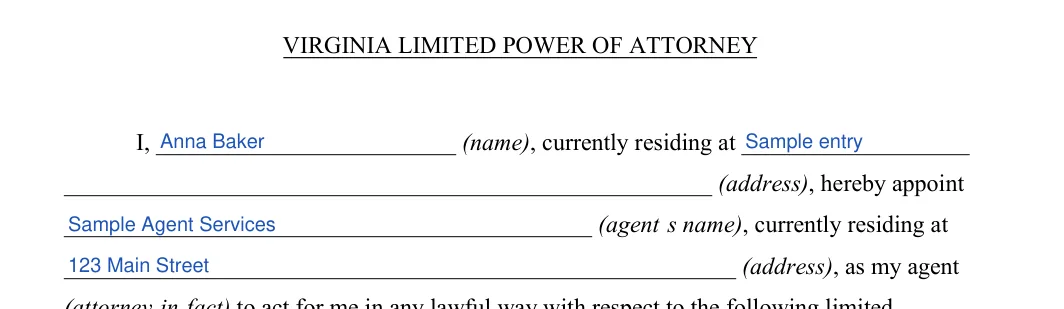
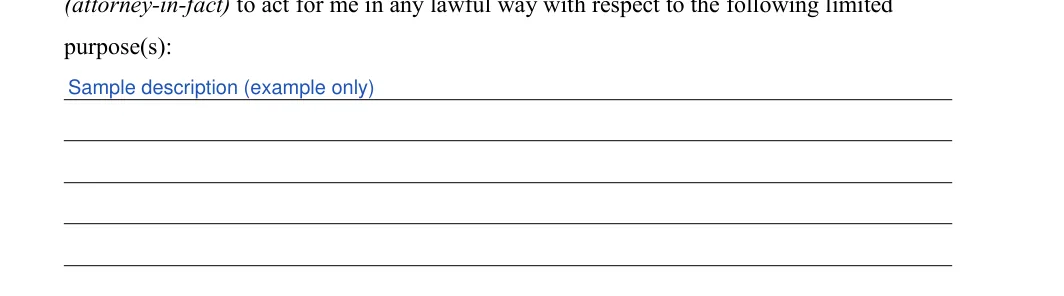
To fill out the Virginia limited power of attorney form, start on page 1 with the principal and the agent. Then list the tasks the agent may handle and choose the dates. The form has three pages, and the steps below follow its order. Download the PDF or build it online with the buttons above, or type into the PDF with our online PDF editor.
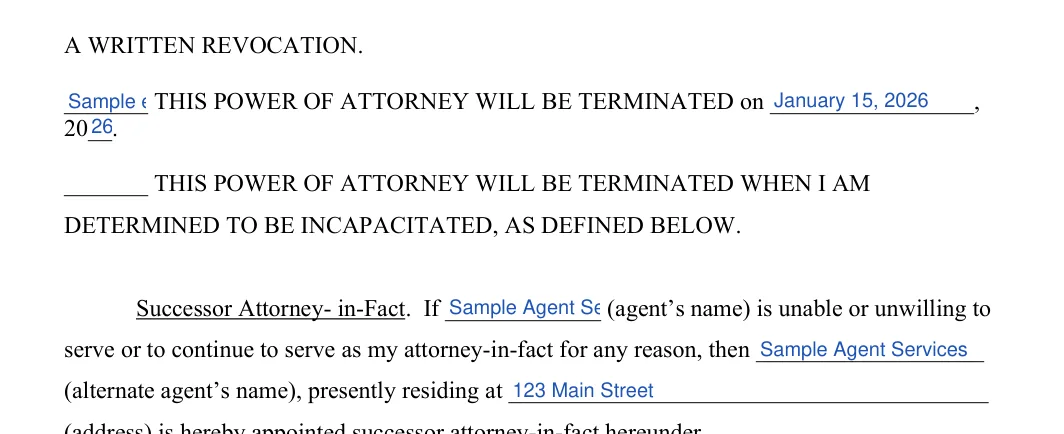
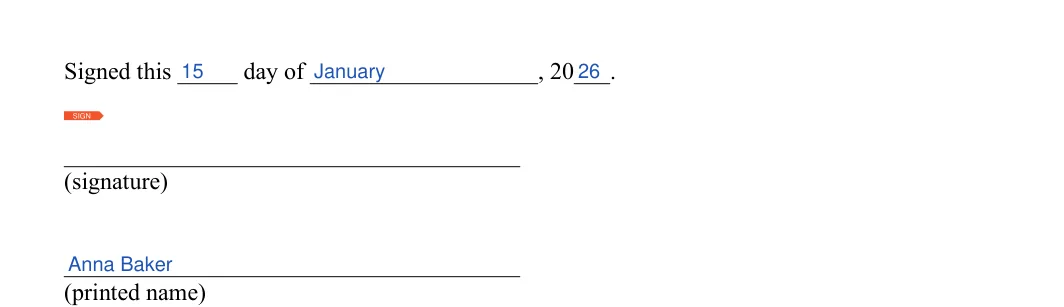
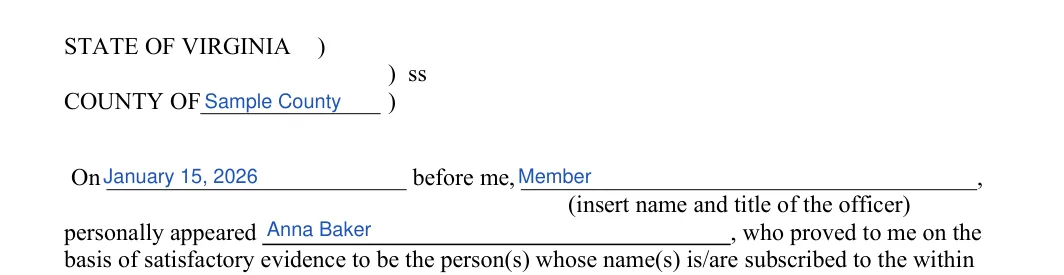
The screenshots under each step show the FormsPal Virginia limited power of attorney template filled with sample entries in blue, so you can see where each answer goes. The names, addresses, dates and amounts are examples only.


If you want an agent to handle your finances broadly, see our Virginia general financial power of attorney form instead. You can also browse all Virginia power of attorney forms on FormsPal.
A Virginia limited power of attorney ends when one of the events in Section 64.2-1608 of the Va. Code Ann. happens, such as the principal revoking it, the principal's death, or the purpose being accomplished. The agent's own authority can also end while the power of attorney continues.
The power of attorney terminates when:
An agent's authority terminates when:
Ending a power of attorney does not undo what others do in good faith. Termination of an agent's authority or of a power of attorney is not effective as to the agent or another person who acts in good faith under the power of attorney without actual knowledge of the termination.[3]
An act performed that way, unless otherwise invalid or unenforceable, binds the principal and the principal's successors in interest. If the power of attorney is not durable, the same protection applies when the principal becomes incapacitated. Incapacity does not revoke or terminate it as to an agent or other person who acts in good faith under it without actual knowledge of the incapacity.[3]
If you revoke a limited power of attorney, tell your agent and every person who may rely on it.
These answers cover notarization, signing for someone else, later documents, divorce and time limits. Each one comes from the Virginia Code sections listed under Sources at the end of this page.
Virginia's statute presumes a signature genuine if the principal acknowledges it before a notary public or other individual authorized by law to take acknowledgments.[1] The FormsPal template includes an acknowledgment on page 3 for that purpose.
Yes, in one situation. The power of attorney must be signed by the principal or, in the principal's conscious presence, by another individual directed by the principal to sign the principal's name.[1]
Not automatically. Signing a power of attorney does not revoke one the principal signed earlier. The later one revokes the earlier one only if it says so, either by naming the earlier power of attorney or by saying that all other powers of attorney are revoked.[3]
It can. Unless the power of attorney otherwise provides, the agent's authority terminates when an action is filed:
Not on its own. Unless the power of attorney otherwise provides, a lapse of time since it was signed does not end the agent's authority. The authority is exercisable until it terminates.[3]
General information, not legal or tax advice.
Unless noted otherwise, the sources below are from the Va. Code Ann.