
Updated:
Get Form Now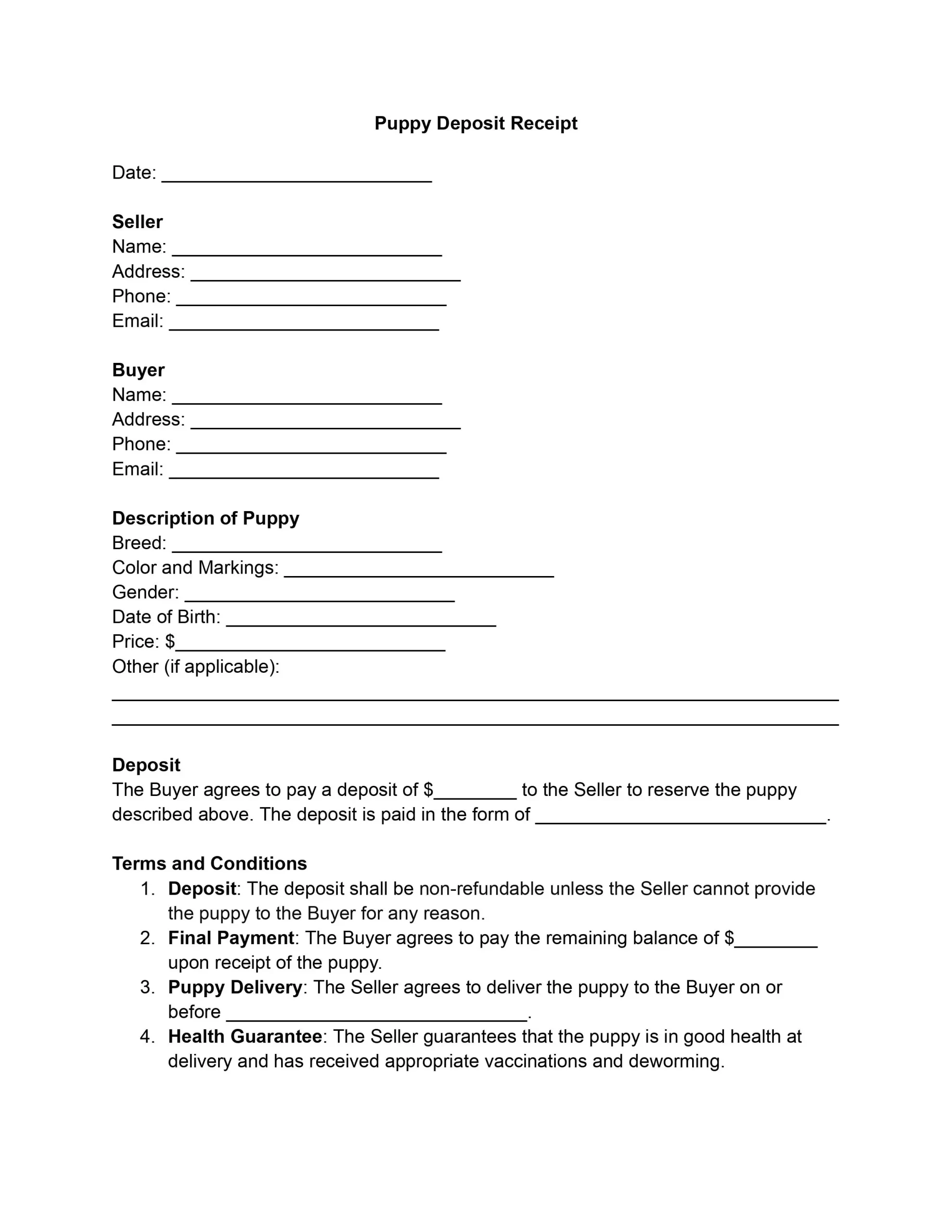
A puppy deposit receipt is proof of a deposit to hold a puppy. The receipt names the buyer and the seller, describes the dog, and shows the deposit and balance due. Breeders and private sellers use it when a buyer reserves a puppy before pickup.
Key facts
A puppy deposit receipt shows that money changed hands to hold one puppy for one buyer until the agreed pickup date. The seller gets proof of the payment. The buyer gets proof of which dog is being held and how much is still owed.
The receipt does a different job for each side:
Breeders often take deposits before a litter is old enough to leave its mother, and sometimes before the litter is born. The receipt works in both cases: it describes the puppy as far as it is known and notes how the buyer picks a puppy later.
A puppy deposit receipt confirms that a deposit was paid, while a puppy deposit agreement, also called a puppy deposit contract, sets out the full terms of the reservation. In practice, many sellers combine the two into one signed page.
The receipt part covers the payment: who paid, how much, how, and on what date. The agreement part covers the promises: the refund policy, the pickup date, the health guarantee and what happens if either side backs out.
The template on this page holds both parts. The "Terms and Conditions" section is where the agreement lives, so a seller who wants a fuller deposit contract edits and extends that section rather than starting a second document.
A puppy deposit receipt states plainly whether the deposit is refundable, because this is the term buyers and sellers argue about most. A receipt that says nothing about refunds leaves both sides guessing.
Sellers often make deposits non-refundable because they turn other buyers away while the puppy is held. A fair refund clause still names the cases where the money comes back or moves to another puppy. Common cases to address in the terms:
Each case gets one clear outcome in the terms: a full refund, a partial refund, a transfer, or no refund.
The receipt shows the deposit, the total price and the remaining balance side by side. The deposit counts toward the total price unless the terms say otherwise.
The deposit amount is a matter of agreement between the seller and the buyer. The receipt also notes the payment method and the date the deposit was paid, and the date the balance falls due.
Example: if the total price is $1,500 and the buyer puts down $300, the remaining balance is $1,200.
The health guarantee section sets out what the seller promises about the puppy's health and what the buyer can do if a problem turns up. The pickup terms set when and where the dog changes hands.
A clear health and pickup section answers these points:
Florida's pet sale law, Fla. Stat. § 828.29, gives a buyer remedies when a pet dealer sells an unfit dog, and other states set their own rules, so a seller outside Florida checks that state's law before writing this section.
In Florida, Fla. Stat. § 828.29 applies to a pet dealer: a seller of more than three litters, or 30 dogs or cats, per year, whichever is greater, including breeders who sell directly to a consumer (Fla. Stat. § 828.29(13)). Under Fla. Stat. § 828.29(5), the buyer has a remedy if, within 30 days after the sale, a licensed veterinarian of the buyer's choosing certifies the animal was unfit for purchase at the time of sale due to illness, disease or parasites other than fleas and ticks. Fla. Stat. § 828.29(5) gives the same remedy if, within 1 year after the sale, a licensed veterinarian of the buyer's choosing certifies the animal unfit for purchase due to a congenital or hereditary disorder that adversely affects its health. The buyer then chooses to return the animal for a refund, exchange it for an animal of equivalent value, or keep it, with reimbursement of reasonable veterinary costs in each case (Fla. Stat. § 828.29(5)).
The puppy deposit receipt template fills in from top to bottom, one section at a time. Have both people's contact details, the dog's description and the payment details ready before you start.
The receipt works best when it is filled in on the day the money changes hands, so the date and the figures match the payment. The seller and the buyer read the finished receipt together and check each point:
A puppy deposit receipt is only as useful as the seller behind it, so buyers check the seller and the puppy before any money moves. Fake puppy listings ask for a deposit for a dog that does not exist.
Steps that protect a buyer before paying a deposit:
The deposit is whatever amount the seller and the buyer agree on, and the receipt shows it next to the total price. Breeders usually set it as a part of the price, not the whole price. Whatever the amount, the receipt states whether it is refundable.
Yes, a deposit is a common way to reserve a puppy from a breeder, especially before the litter is ready to go home. A signed puppy deposit receipt protects the buyer's money and shows which puppy is held.
A complete receipt includes these details:
The buyer and the seller each keep a signed copy. The seller's copy shows the deposit that was received. The buyer's copy shows which dog is being held and how much is still owed.
No. The receipt records the money put down to hold the dog. A dog bill of sale records the sale itself when the dog changes hands. You can use the receipt first and the bill of sale at pickup.
Yes, the same layout fits a deposit on a kitten or another pet. Change the description section to fit the animal, and keep the deposit, refund and pickup terms.
General information, not legal or tax advice.
