
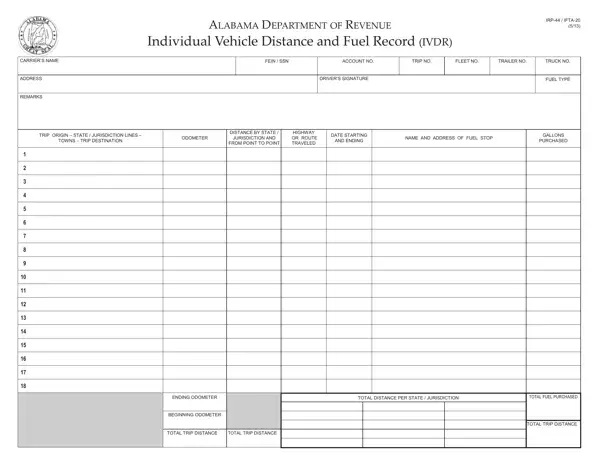
Alabama IRP 44 Form PDF Details

The IRP-44/IFTA-20 is the official Individual Vehicle Distance and Fuel Record for commercial carriers operating across two or more IFTA member jurisdictions. Carriers must maintain a completed record for each vehicle trip and retain those records for at least four years in case of an audit by state revenue authorities.

Regulated by the Alabama Department of Revenue, the form requires carriers to document trip routes, odometer readings, and fuel purchases. Each entry must capture the following required information:

Fuel purchase records allow each state to calculate its apportioned fuel tax based on miles driven within its borders. Carriers who also file the Individual Vehicle Distance and Fuel Report will recognize the overlapping data requirements. Related IRP forms include the IRP-5 and IRP-29.

The Alabama Department of Revenue may audit these records to verify IFTA quarterly returns and IRP apportionment calculations. Keeping organized, trip-by-trip records protects carriers from penalties for underreported mileage or fuel data.

QuestionAnswer
Form NameAlabama IRP-44/IFTA-20 Form
Form NumberIRP-44 / IFTA-20
Form Length2 pages
Fillable?No
Fillable fields0
Avg. time to fill out30 sec
Other namesIRP 44 IFTA 20, Individual Vehicle Distance Record, Alabama IVDR

How to Edit Alabama Irp 44 Form Online for Free

How to Fill Out the Alabama IRP 44 Vehicle Distance Record

Gather all trip records, fuel receipts, and vehicle registration documents before you begin. Each vehicle operating under IRP requires a separate record per trip. Use the following steps to complete the form accurately.

  1. Carrier Information (Section 1): Enter your company name, complete mailing address, and your Federal Employer Identification Number (FEIN) or Social Security Number (SSN). This identifies the carrier responsible for fuel tax reporting to the Alabama Department of Revenue.
  2. Vehicle Data (Section 2): Record the truck unit number, trailer number, and driver full name. Indicate the type of fuel used (diesel, gasoline, or alternative fuel). If the vehicle uses multiple fuel types, list each separately.
  3. Trip Route (Section 3): Enter the starting point and final destination of the trip. List every state and major highway traveled in the order they were entered. Accurate routing ensures correct mileage allocation to each state.
  4. Odometer Readings (Section 4): Write down the odometer reading at the very start of the trip and again at the end. Subtract start from end to find total trip miles. Report this figure on your IFTA quarterly return as the total miles for that jurisdiction.
  5. State Mileage Breakdown (Section 5): Separate the total trip mileage by state. Record the miles driven in each state or Canadian province entered. This breakdown determines your IRP apportionment fees and your IFTA tax liability for each jurisdiction.
  6. Fuel Purchases (Section 6): Log each fuel purchase made during the trip: the date, city and state of purchase, number of gallons, and the total dollar amount. Keep the original fuel receipts attached to the record for at least four years in case of an audit.

Frequently Asked Questions

Who must complete the Alabama IRP 44 form?
Commercial carriers based in Alabama that operate qualifying vehicles in two or more IFTA member jurisdictions must maintain a completed IRP-44/IFTA-20 record for every trip.

How often must this form be submitted?
IFTA returns are filed quarterly. The vehicle record itself is not submitted with each trip but must be available on request during an audit. Retain completed records for at least four years.

What happens if mileage or fuel data is incorrect?
Incorrect records can result in underpayment of fuel taxes to one or more states. During an audit, discrepancies may lead to penalties, interest charges, and corrections to your IRP registration fees.

What other forms are used with IRP and IFTA compliance?
Carriers often pair this record with the Fleet Vehicle Inspection Form and the IRP-29 Form for complete fleet documentation and renewal management.