
Application Bond Form PDF Details

What Is an Application Bond?

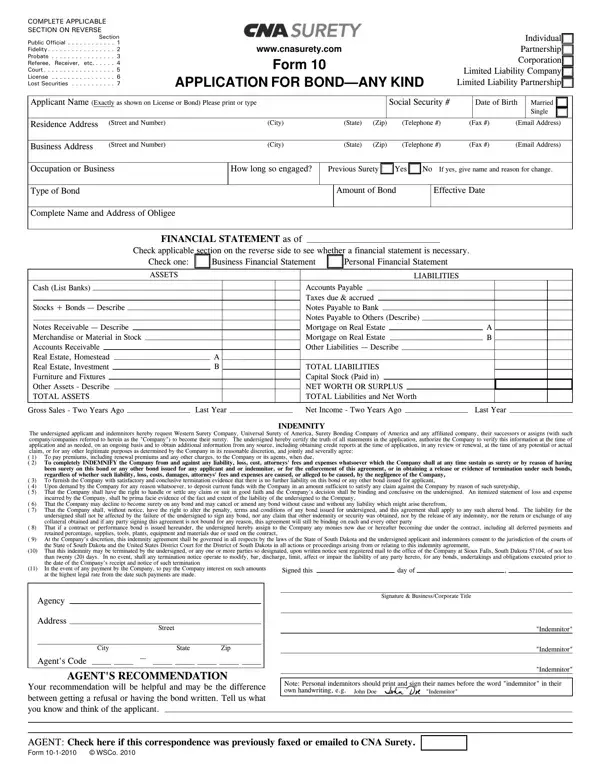
A surety bond is a three-party agreement involving the principal (the person or entity requesting coverage), the obligee (the party requiring the bond), and the surety (the provider issuing the guarantee). The application document collects all information the surety needs to evaluate the applicant's risk and approve the request.

Types of Bonds Covered

This application covers several bond types. Fidelity bonds protect employers against employee dishonesty. Probate bonds cover estate administrators. Court bonds meet judicial requirements. License bonds satisfy state licensing requirements. Lost securities bonds cover replacement of missing financial instruments. The surety uses your application to assess eligibility and set premium rates for the specific bond type you need.

Information the Application Collects

To complete an application bond, you must provide accurate details across several key categories:

Indemnity Agreement

The application includes an indemnity agreement that requires the applicant to reimburse the surety for any claims, costs, or expenses resulting from issuing the bond. By signing this section, you accept responsibility for timely premium payments and agree to provide documentation to support or terminate your liability under the bond.

Related Bond Applications

If you need other bond documents, you may also find the bail bond form or the bond application form useful for your specific surety requirements.

QuestionAnswer
Form NameApplication Bond Form
Form Length4 pages
Fillable?No
Fillable fields0
Avg. time to fill out1 min
Other namescna form 10, cna surety bond online, surety application for bond, cna surety application for bond

How to Edit Application Bond Form Online for Free

How to Complete the Application Bond

  1. Click the "Fill Out" button above to open the document in our online PDF editor.
  2. Enter your personal details: full name, address, date of birth, and social security number.
  3. Complete the business information section, including entity type, federal tax ID, and years in operation.
  4. Provide financial disclosures, including current assets, liabilities, and bank references. Complete all financial fields accurately to help the underwriter assess your eligibility.
  5. Select the bond type, then enter the required bond amount and effective date. For a license bond, also note the license number and issuing authority.
  6. Review the indemnity agreement carefully and sign to confirm your obligations.
  7. Save or print the completed document and submit it to your surety to finalize the request. Include any supporting documents they require.

Common Questions About Bond Applications

Do I need a new application to apply for each bond type? Yes, each bond type requires a separate submission. The questions and documentation differ depending on whether you want to apply for a fidelity, probate, court, license, or lost securities bond. Complete each section carefully to avoid processing delays.

What is the difference between a surety bond and an insurance policy? A surety bond and an insurance policy both provide financial protection, but they work differently. An insurance policy pays the policyholder directly for covered losses. A surety bond pays the obligee on behalf of the principal, who must then repay the surety for any amounts paid out. Unlike an insurance policy, a surety bond is a credit instrument rather than a risk transfer tool.

How long does approval take when I apply for a bond? Straightforward submissions are typically processed within 1 to 3 business days after you apply. Requests that require a more complete financial review may take longer. Having all your financial documents ready before you apply will simplify and speed up the review. Complete all required fields to prevent processing delays.

What if I make an error on the submission? Contact your surety immediately if you discover an error after sending your request. Providing inaccurate information can result in a claim being denied or the bond being voided, so accuracy is critical throughout the process.